


By Jon Chown
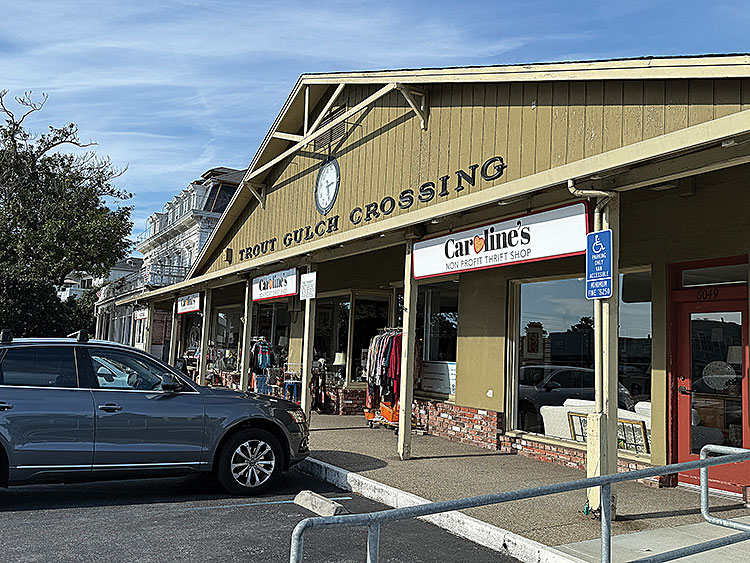
Aptos property owner Laurie Negro says her court victory over the Santa Cruz County Regional Transportation Commission should be the end of the legal fight over her parking lot and open the door to a trail plan that helps local businesses, rather than threaten their livelihood.
The RTC sued Negro and neighboring property owners in 2023, claiming it owned about 3,452 square feet of parking needed for the Coastal Rail Trail through Aptos Village. Negro argued that the agency held only a railroad easement, not ownership of the land. On Oct. 19, Santa Cruz County Superior Court Judge Syda Kosofsky Cogliati ruled in Negro’s favor.
Negro said she is relieved by the ruling, but worried the agency could appeal or try to acquire the property through eminent domain.
“I’m just really thankful that the legal clarity is there, that the ownership is firmly established,” she said.
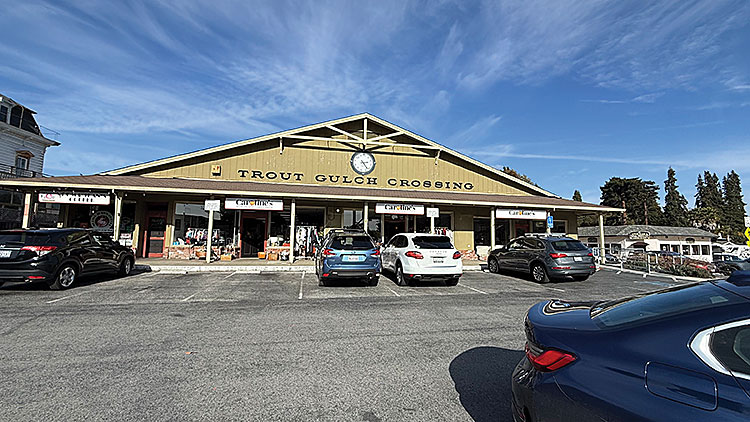
“Is the county going to replace the hundreds of thousands of dollars Caroline’s raises for kids?” Negro asked.
Caroline’s, which raises money for local children’s charities, has grown from one space to taking over three of the building’s four spaces. Workers process donations at the back of the building while customers shop in the front, but that arrangement depends on people being able to reach the shop and find parking, she said.
“But without parking, or with far fewer parking spaces and no public parking around, how are people going to park and shop?” Negro asked.
She said the loss of parking would threaten the shop’s ability to remain at the location. Negro estimated that Caroline’s provides about $550,000 a year to local children’s charities.
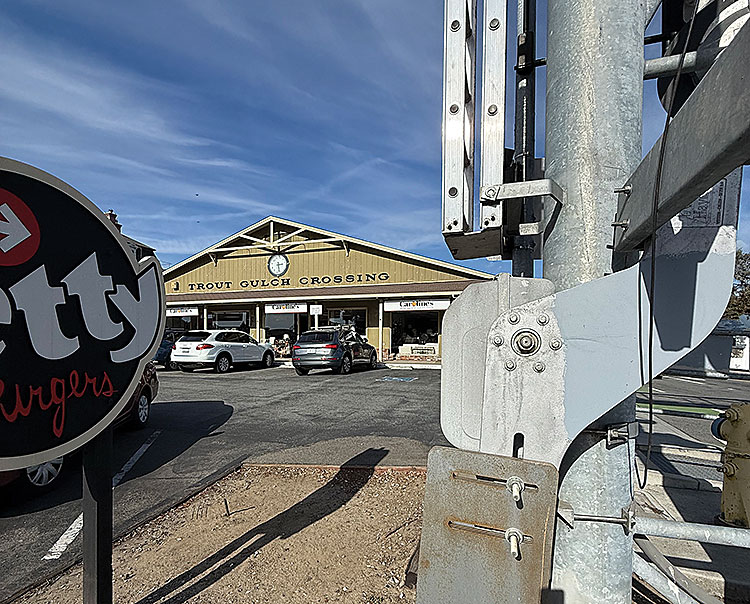
Norma Jean’s would face its own challenges, she said. Negro, who also owns Betty’s Burgers, said her experience in the restaurant business has taught her how expensive it can be to relocate a food business. She said preserving those businesses should be part of the commission’s decision about what to do next.
“We are evaluating our options for next steps, which may include acquiring the additional property rights necessary to construct the project and/or appealing the decision,” she said in a prepared statement.
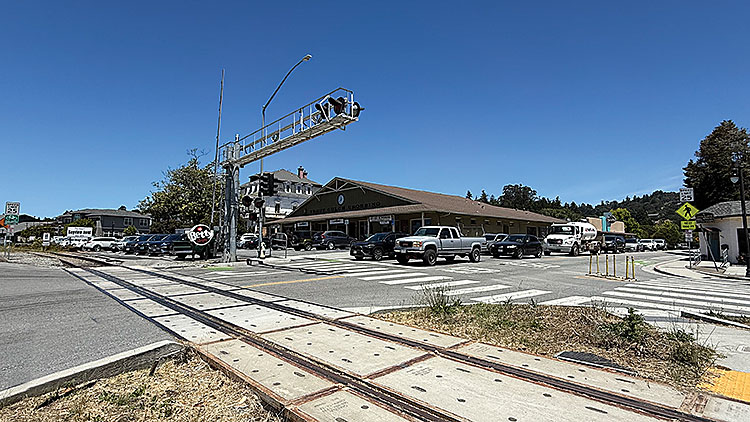
The RTC filed the lawsuit Oct. 2, 2023, asking the court to settle competing ownership claims to about 3,452 square feet of parking. The property dispute affects plans for Segment 12 of the Coastal Rail Trail through Aptos.
“The project will improve safety and connectivity for people walking and biking, provide more mobility options, connect residents with schools, businesses and transit, and support local economic vitality. The RTC remains committed to this project and advancing transportation improvements that benefit our community,” Munz said.
The legal arguments reach back nearly 150 years.
A deed signed by Jose Arano on Dec. 30, 1876, and recorded in January 1877 granted property rights to the Santa Cruz Railroad Company for a railroad right of way, tracks and a depot. Both sides traced their claims to that deed but disagreed about what it transferred.
The RTC argued that the railroad received full ownership, known as fee simple. The agency said those rights passed through later railroad companies and eventually to the RTC when it purchased the Santa Cruz Branch Rail Line from Union Pacific in 2012.
But Negro said a much newer agreement became the turning point in court.
In 2020, she entered an agreement involving Swenson Builders and the closure of the Bayview railroad crossing. The closure was part of arrangements to open another crossing serving the Aptos Village development.
By then, Negro said, she knew the RTC was claiming ownership of the parking area. She said she made sure the agreement clearly identified her ownership and the railroad’s easement rights. The RTC signed that agreement.
“They signed off on an agreement that clearly stated we owned the property,” Negro said.
Under the arrangement, she said, the developer paid her compensation for closing the crossing and made improvements that included paving the parking lot. If the RTC had owned the property, the developer would have paid it, not her.
Negro said the agreement gave the judge a basis to resolve her portion of the dispute in one day, without a longer trial over the historic deeds and other records. She had expected to win, she said, but getting to that point required substantial legal resources. Negro said her title insurance company paid more than $600,000 for her defense. She credited the attorneys provided through that coverage with helping her protect the property. Without the insurer’s support, she said, she might have been forced to abandon the fight.
“I mean, I would have probably had to give up a long time ago,” Negro said. “I don’t have $600,000 to spend on a law firm.”
She also questioned how much public money the RTC had spent pursuing the lawsuit. The Times Publishing Group has filed a FOIA request for the information. Negro said the possibility of another legal fight worries her because an effort to acquire the parking lot through eminent domain would leave her defending the same businesses and property again. She wants commissioners to consider an alternative: an interim trail on the railroad that would leave the parking available to her tenants. Negro said she would work with the RTC to explore that approach.
“I would be certainly happy to work with them to facilitate that,” she said.
She questioned spending more money fighting over parking for a trail beside the tracks while passenger rail remains a future project. In her view, the commission should focus on getting a usable trail built while protecting businesses already operating along the route.
Negro described herself as a fourth-generation Santa Cruz County resident whose father, grandfather and great-grandfather had also lived in the community. She said the lawsuit has been frustrating because she never believed the disputed parking belonged to the RTC. Still, she said a trail could be good for Aptos Village, bringing people to the area and helping local businesses. She hopes the court decision leads to that.
“It would be great for business,” Negro said of a trail along the tracks. “It would be great for the community.”