


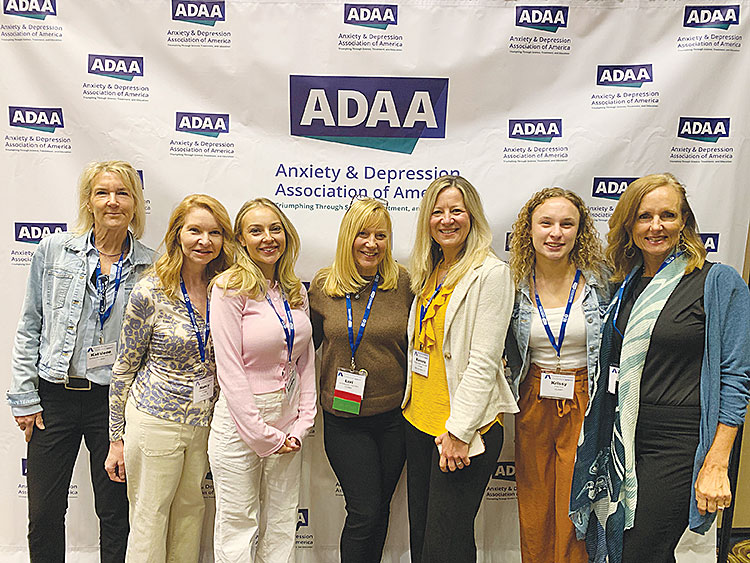
While today’s youth are experiencing higher rates of anxiety, depression and other mental health challenges, a nonprofit organization in Soquel is working to improve the quality and availability of their mental health care.
The Center for Youth Mental Health, known as the Center, was established in 2023 with a mission of expanding access to evidence-based mental health care for youth. Located at 4630 Soquel Drive, Suite 10, the Center serves families seeking mental health support at a time when demand for services continues to outpace supply in Santa Cruz County.
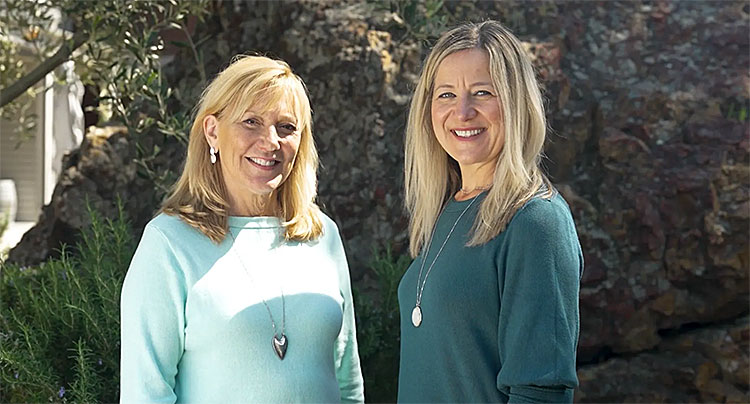
Dr. Lori Butterworth and Dr. Ramona Friedman
The Center was co-founded by Dr. Lori Butterworth, a clinical psychologist, known for her work with children, including founding Jacob’s Heart Children’s Cancer Support Services; and Dr. Ramona Friedman, a child and adolescent psychologist.
The pair launched the organization after recognizing the growing gap between the need for youth mental health services and the availability of qualified providers.
“When COVID hit and kids became isolated, it struck me to the core that we would be facing an unprecedented crisis in youth mental health,” said Dr. Butterworth. “If we have kids suffering with their mental health in the wake of COVID, and we don’t have enough therapists trained to treat it, that’s a problem.”
The Center’s approach is committed to evidence-based treatment, a term used to describe psychotherapies that have been extensively studied and shown through research to be effective. Butterworth says that not all mental health interventions are created equal and that kids and families should have access to treatments supported by scientific evidence.
“Dr Friedman and I saw that access to evidence-based treatments for youth mental health was lacking in Santa Cruz County,” she said. “Cognitive behavioral therapy (CBT) is the gold standard treatment for anxiety, but many therapists are not trained to provide CBT in an effective way that is effective for kids. So we decided we would dedicate time to closing that gap.”
The Center provides assessments and counseling services for a range of conditions affecting children, adolescents, and young adults. These include anxiety disorders, obsessive-compulsive disorder, depression, mood disorders, trauma-related conditions and other behavioral health challenges.
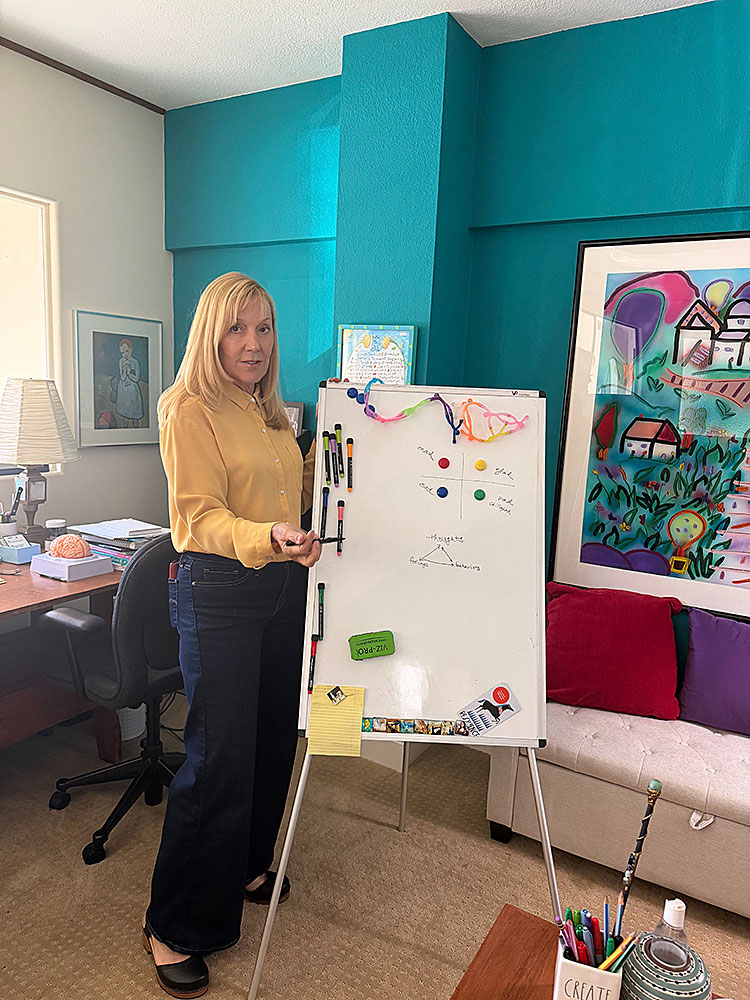
Dr. Butterworth adds that “bullying” has become a capture term for a lot of behavior. “Some of it is benign, but some of it is psychologically devastating to the young victims. I’ve heard so many stories where kids are just downright cruel. This causes anxiety, self-doubt, and depression. Many kids need help building resilience to navigate these challenges,” she said.
Dr. Butterworth said COVID and the response to it was terrible for children’s mental health, but social media is worse. “People say COVID caused this anxiety surge. But, social media pre-dated COVID, and there was a 134% increase in adolescent anxiety before COVID. Put simply, social media and anxiety are directly correlated. COVID exacerbated it.”
Butterworth adds that not every child with anxiety or depression needs professional help. But if the condition is getting in the way of living life, then it’s right to get help. “For instance, everybody has some anxiety. Humans need some anxiety to survive. But if your child is avoiding things and is unable to do activities they want to do, therapy can help. Or depression, all of us get sad, that’s normal. But if sadness and lack of motivation are getting in the way of living a full life, it’s good to get professional help.”
Beyond therapy for youth, the Center has created the Parent Center, which provides education, support groups and opportunities for parents and caregivers to connect with mental health professionals. Monthly Parent Drop-In sessions allow parents to ask questions and receive guidance from youth mental health experts, while support groups offer a place for families to share experiences and resources.
“For every chid we see, we do an assessment and provide parents with a treatment plan,” said Dr. Butterworth. “Parenting is part of that treatment plan. Whenever appropriate, the treatment plan should include parents. When therapists and parents work as a team, it helps kids get closer to the goals of care.”
Dr. Butterworth said that founding the Center is another step in her life’s journey in improving the well being of children. When she just a fourth-grader her teacher inspired her to want to help youth learn and grow. “I wanted to be like my teacher, to make a difference in lives of kids,” said Butterworth.
So she grew up to become a teacher herself, teaching high school for 13 years. Then, in 1998, after seeing first-hand how a little boy with cancer needed help, she founded Jacob’s Heart and the Children’s Hospice Coalition of California. And now, with the Center for Youth Mental Health, she’s expanding her life mission and improving the quality of life for thousands of children and families.
“I’ve dedicated my life to helping kids learn and grow to be strong and resilient,” Dr. Butterworth said. “It’s been a lifelong mission of mine to improve the quality of life for children. That’s why I decided to dive into youth mental health. It’s the crisis of our time.”
The organization’s work has already received national attention. In 2024, the Center received a $100,000 Children’s Mental Health Innovation Award from Morgan Stanley.
As demand for youth mental health services continues to rise, Butterworth plans to expand beyond its current locations and establish additional Centers throughout California. Dr. Butterworth’s long-term vision is a future in which every young person can quickly access effective mental health care and develop the confidence and resilience needed to thrive.
“We owe a lot to this generation of youth. Think about it, when COVID first struck, kids were not at risk. It was older and medically fragile people,” she said. “We shut down the lives of kids to keep others safe, and they paid a heavy price. We did that to them, and we owe them our best efforts to heal their emotional wounds.”
But, she said, thankfully young people can bounce back with support and caring.
“Kids are resilient. In my office I see that inside there is this amazing, beautiful young person just crying to get out. They want to get better and they want to be the best that they can. It’s inspiring to see kids move towards becoming the best version of themselves. To see them break through that, that’s what gives me hope, seeing kids get better and reclaim their lives.”