


By Jon Chown
The California Coastal Commission, at its Aug. 12 meeting in Scotts Valley, is expected to clear up two big issues in Capitola, clearing the way for more housing development.
The first issue is an amendment to Capitola’s Local Coastal Program that would make it easier to build accessory dwelling units and allow higher-density multifamily housing at five sites in the city’s coastal zone.
In a report, Commission staff determined the proposed revision qualifies as a “de minimis” change, meaning it would have no significant effect on coastal resources and could be approved without a full public hearing unless at least three commissioners object. The proposal is scheduled to be considered Aug. 12 during the commission’s meeting in Scotts Valley.

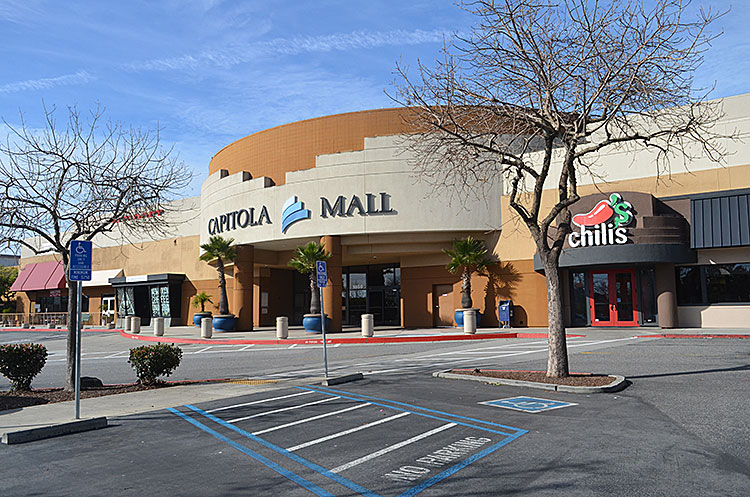
Zoning changes to Capitola Mall to allow for redevelopment are expected to get a final approval when the Coastal Commission meets in August in Scotts Valley.
The amendment would update Capitola’s coastal zoning rules to match recent state housing laws and help the city meet its state-required housing goals. The city must plan for 1,336 new housing units between 2023 and 2031, including hundreds of units affordable to low- and very low-income households.
Among the proposed changes, the city would remove homeowner association approval requirements for ADU applications, limit historic resource standards to ADUs associated with designated historic properties in the coastal zone, allow up to eight detached ADUs on parcels with multifamily housing instead of two, and require ADUs to be rented for periods longer than 30 days. Staff described most of the remaining changes as clarifications needed to bring the city’s Local Coastal Program into compliance with state law.
The proposal also would create two new multifamily residential zoning districts allowing up to 30 and 40 housing units per acre. Those designations would be applied to five locations: 600 Park Ave., the Rosedale Avenue and Hill Street area, the Capitola Avenue and Hill Street area, Capitola Cove and Capitola Gardens. The sites are currently zoned for between 10 and 20 units per acre.
Coastal Commission staff concluded the changes would not weaken existing protections for environmentally sensitive habitat, coastal bluffs, public access or scenic views. The higher-density zoning would primarily affect sites near the inland edge of the coastal zone rather than shoreline neighborhoods such as Depot Hill and Capitola Village. Any future development would still have to meet Coastal Act requirements and Local Coastal Program standards.
The Coastal Commission is also expected clear up how local coastal rules apply to the future redevelopment of Capitola Mall, even though the mall property is outside the coastal zone.
In its report on the proposal, the commission’s staff determined that the amendment is only a “minor” change because it does not change what can be built on the site. Instead, it is meant to remove confusion between the city’s Local Coastal Program and newer city rules that were written specifically for the mall redevelopment.
The Capitola Mall property is one of the city’s top redevelopment priorities. The City Council has approved future development at the site, including housing that will help Capitola meet its state-required housing goals. Capitola’s 2023-2031 Housing Element requires the city to plan for 1,336 new housing units, including 430 units for very low-income households and 282 units for low-income households.
According to the Coastal Commission staff report, some language in the city’s certified Local Coastal Program could be interpreted to mean that older zoning rules also apply to the mall redevelopment. The amendment, according to the report’s conclusions, would only clarify that those coastal program sections do not apply to the project because the property lies entirely outside the coastal zone. Because of that, Executive Director Dan Carl determined the proposal qualifies as a minor amendment under state regulations.
The City of Capitola determined the proposal is exempt from review under the California Environmental Quality Act because it supports implementation of the city’s state-approved Housing Element.
If fewer than one-third of the commission’s appointed members object to the Coastal Commission’s staff reports on these issues, the amendments will automatically become part of the city’s certified Local Coastal Program on Aug. 22 without a separate public hearing.
If four or more commissioners object, the amendments would instead be scheduled for a future public hearing as a major Local Coastal Program amendment. Staff is also recommending that commissioners extend the deadline for final action by one year if that occurs.