


By Jon Chown
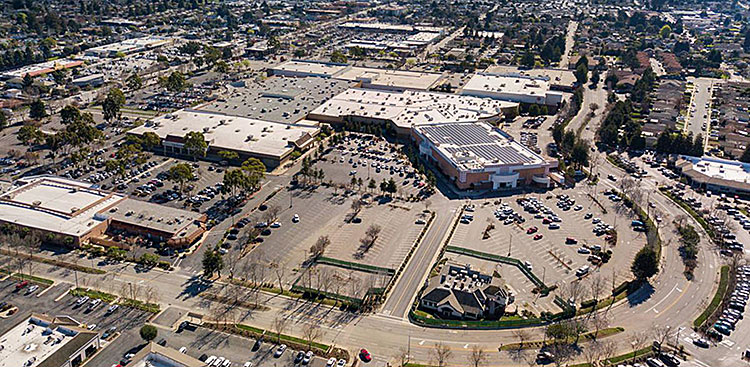
The Capitola City Council on March 16 approved major zoning and land-use changes for the Capitola Mall, adopting a slate of revisions designed to make the property easier to build housing on in order to advance the city’s state-mandated housing goals.
“I think this is one of the biggest decisions that I think maybe any City Council in Capitola might ever have made,” said Vice Mayor Gerry Jensen.
The action followed a public hearing on Feb. 23 when council members were ready to rezone the mall.
But a decision was then delayed after Merlone Geier Partners, which owns a majority of the property, submitted a late letter requesting 10 changes to the proposed rezoning.
After deliberation by the council, the plan was sent back to city staff, which met with the developer in the intervening weeks and returned with a modified plan that incorporated many of the developers suggestions.
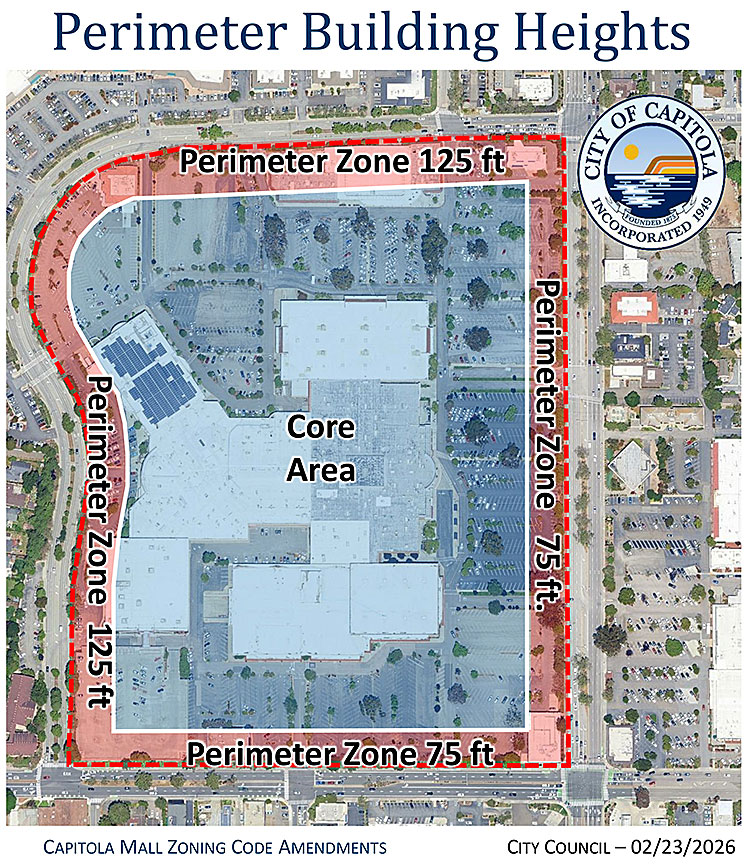
A graphic showing how close buildings can be from Clares Street, 41st Avenue and Capitola Road.
The new zoning changes are meant to transform the mall property into a high-density, mixed-use area with more than 1,700 housing units, accompanying commercial space and hopefully a large hotel. At the center of the new plan is a tiered redevelopment system intended to encourage a mix of housing, retail and hospitality uses. It also intends to reduce the visual impact of taller buildings that could be approved, such as an 85-room hotel.
Tier 1 allows residential-only development. Tier 2 and Tier 3 allow increased building heights and more residential density in exchange for including specified amounts of commercial space and, in some cases, hotel development.
As revised, Tier 2 projects now must include between 25,000 and 35,000 square feet of new commercial space, down from the 30,000 SF threshold of the previous plan. It’s one of the requests the developer made. Other requests were also granted. Minimum ground-floor height requirements for required commercial space were reduced from 18 feet to 16 feet. Staff said the adjustment would still support a range of tenants while reducing construction costs.
Requested changes were also made to the “perimeter zone,” where lower height limits apply along surrounding streets. The depth of the perimeter zone was reduced from 125 feet to 75 feet along 41st Avenue and Capitola Road, allowing taller buildings to be located closer to those corridors. The deeper 125-foot buffer was retained along Clares Street.
Within the site, building heights can reach up to 75 feet in most areas, with certain commercial uses, such as hotels, permitted up to 85 feet under Tier 3.
The council also approved revisions to how residential density is calculated, allowing developers to include public rights-of-way, easements and publicly accessible open space in the overall site area. Staff said the change could encourage open space without reducing space for new housing.
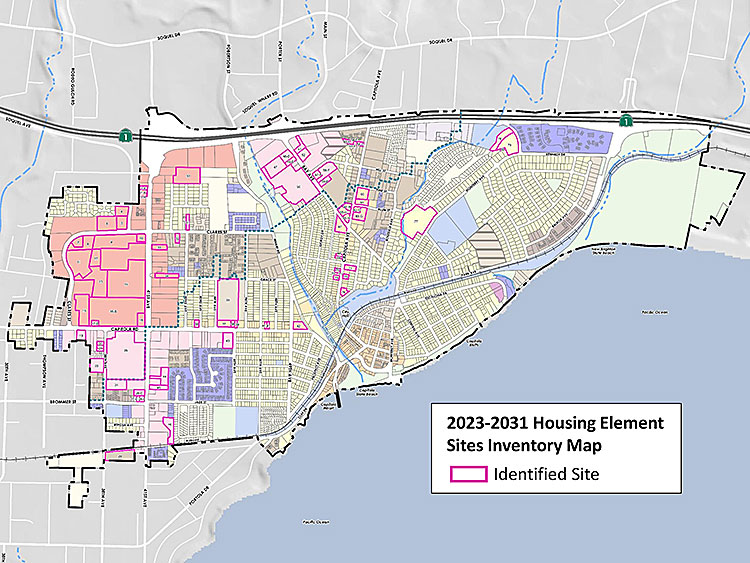
A graphic showing housing expansion plans through 2031, including the newly-approved Capitola Mall housing.
The city mostly kept its previous standards requiring buildings designed to face the street with pedestrian-oriented entrances and varied façades, as well as limitations on surface parking between buildings and streets. And despite requests from the property owner, the council retained requirements for dedicated bicycle lanes on new internal streets, citing the need to accommodate more bicycles and pedestrians in the denser, mixed-use environment.
New phasing requirements were also adopted to ensure that commercial and hotel components are developed alongside housing. However, the City Council was cautious, recognizing that every demand might make the project less desirable to build.
“I worry that we won’t get a project if we make it so difficult,” said Council member Melinda Orbach.
The city coffers will take a hit during the development, according to city staff, who projected a temporary reduction in sales tax revenue of about $400,000 annually when businesses are closed.
Capitola resident Kevin Mcguire voiced some concern, not just about the short-term, but the long-term effects. “It seems like we have really good sales revenue from the mall right now. So to lose 300,000-plus square feet of retail, and lose those jobs, to go down to 30,000-40,000 square feet, that doesn’t seem to add up,” he said.
James Gwilliam, representing MGP, assured the city that the project would be an asset and not a drain on the community.
“We are fully committed to making this a project that the city is proud of,” he said. “We want a hotel to happen. … We’re happy with the work that gone into this. Hopefully the feedback we’ve provided has been helpful. We want to continue to be a part of this process as it moves forward.”
The zoning changes will help Capitola meet the requirements of the city’s Housing Element for 2023-2031. Under California law, every city must update its Housing Element every eight years to assess housing needs, identify adequate sites for development and adopt programs to meet current and future demand.
Capitola must plan for 1,336 housing units, including 497 units for low-income households, 169 for moderate-income households and 455 above moderate-income, or market-rate, units. Cities don’t have to build the housing but are required to properly zone and accommodate the construction of it. If a city doesn’t have a Housing Element in place, or doesn’t follow it, developers can use a variety of new laws to bypass local control and construct projects without much regard for zoning or setback requirements. Parking requirements may be reduced, and noise concerns may not be considered.
Jensen noted that the plan for mall housing doesn’t include much that will be affordable. “What I hear constantly is the housing is too expensive, and I’m not convinced that a ‘build more to lower the prices’ or a ‘supply and demand’ analogy is the best plan of action for our community,” he said.
Council member Joe Clarke agreed and said he, too had a number of concerns and wondered if the council shouldn’t “pump the brakes a bit” on the whole idea.
However, with the alterations adopted by the City Council, the zoning changes were approved unanimously. The council determined the action is exempt from CEQA because it implements the Housing Element.