


By Claudia Iseman
It takes a village to build a village was the refrain ringing through the pews at the Westview Presbyterian Church in Watsonville on May 18, as officials from Santa Cruz and Monterey Counties celebrated the unveiling of Hope Village.
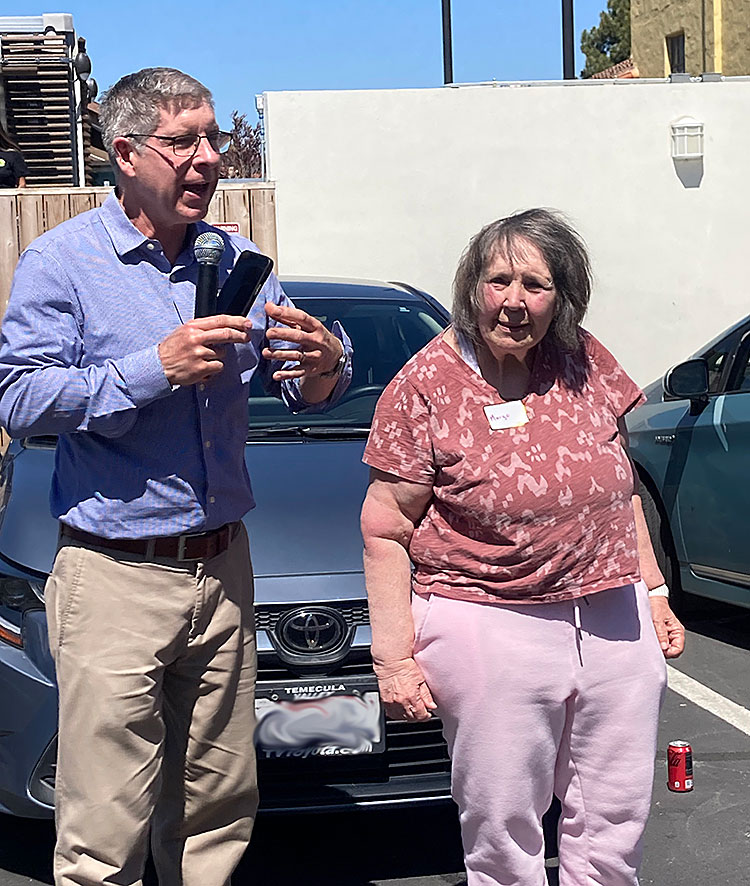
Pastor Dan Hoffman of Westview Presbyterian Church blesses Hope Village with Margo Loehr from Sonrise Kitchen.
A unique regional partnership between Monterey and Santa Cruz Counties built the 34-bed shelter with the goal of housing the individuals living on the Pajaro River levee. The levee is located in Monterey County, yet a stone’s throw away from Watsonville city limits.
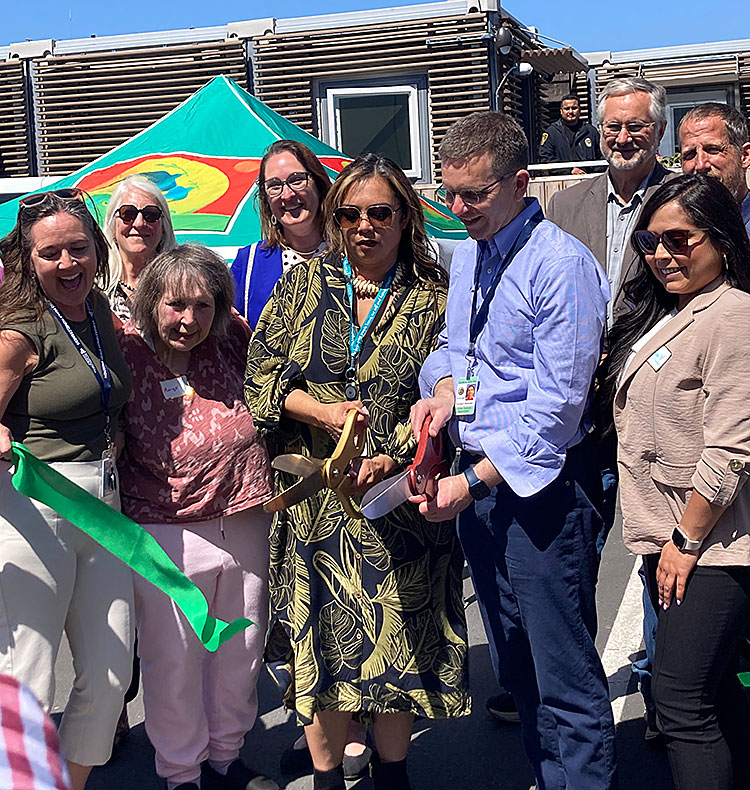
“We are bringing down the boundaries,” said Monterey County Supervisor Glenn Church. Church’s district includes the Pajaro River levee. “We are one region, one community,” Church added. For years officials struggled through a mire of bureaucratic red tape, trying to protect the vulnerable homeless population living along the river and the environmental impact of the tent encampments on the river itself. After three years of hard work, the red tape gave way to a green ribbon that signifies hope and collaboration.
“I feel tears of joy today,” said pastor Dan Hoffman of Westview Church. Hope Village is operated by Community Action Board of Santa Cruz.
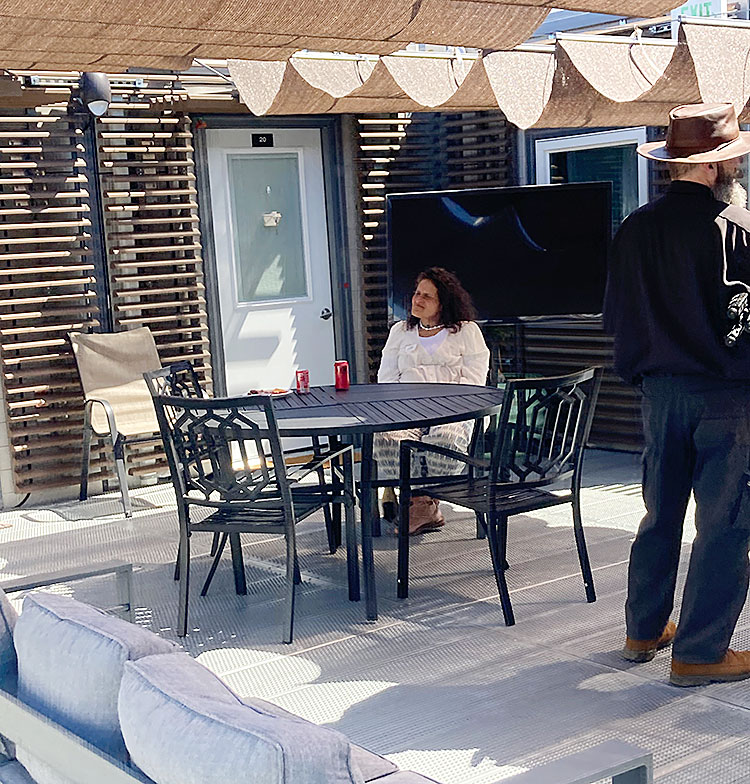
Common area in Hope Village
The low barrier navigation center provides individual bedrooms, showers, laundry services, storage and meals. Pets are allowed and residents are provided with mental health and immigration services and employment opportunities. Finding permanent housing is a priority but residents are welcome to stay six months.
According to case worker Marina Ramos, most of the residents are male and the biggest challenge they face is obtaining their lost citizenship documents and proof of identity, so they can begin applying for benefits. Many things are either lost or stolen when living in tent encampments. Hope Village is described as “low barrier” which means there aren’t rigid requirements for participation.
According to Mike Kittredge, Director of homelessness prevention for Community Action Board, there were roughly 100 unhoused individuals living along the levee. Officials would conduct “homeless sweeps” removing the individuals from their encampments only to have them move to a different spot up or down river
“Homeless sweeps are traumatic,” said Kittredge.
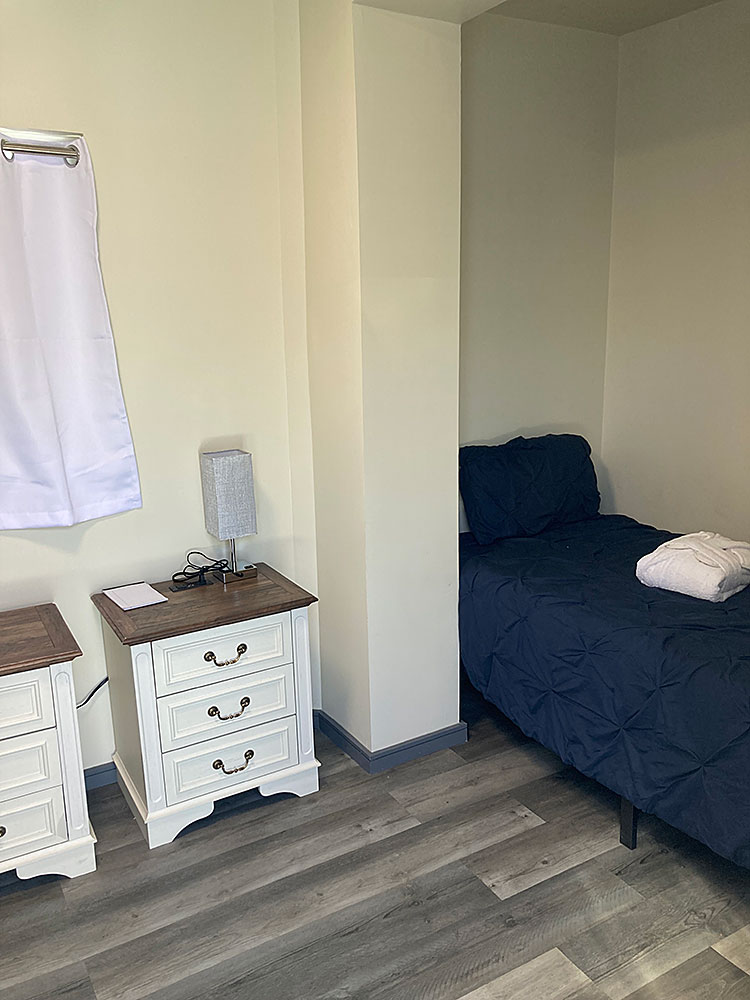
Bedroom in Hope Village.
Pastor Hoffman and Margo Loehr from the non-profit Sonrise Kitchen, have been serving breakfast to the unhoused five days a week and have witnessed the suffering first hand.
“Now when I walk in the village, I see them happy and there’s a spark in their eyes,” said Hoffman.
Westlake church agreed to rent the space to build the village on a portion of its large parking lot.
According to Hoffman, it cost approximately $8 million dollars to construct the facility and the primary funding sources are Monterey’s Encampment Resolution award and the Central California Alliance for Health.
Donations are accepted at Hope Village and those items most in need are men’s clothing, especially underwear and socks. Women’s clothing, underwear, toiletries and dog food are also high on the list.
TOP PHOTO: Robert Ratner, director of Santa Cruz Housing for Health Partnership, and Roxanne Wilson, director of Monterey County Homeless Services, cut the ribbon for Hope Village as Margo Loehr from Sonrise Kitchen and Dania Valdez from Monterey County Services look on.