


By Jon Chown
A revision of Santa Cruz County’s draft ordinance regulating the construction and operation of battery energy storage systems was approved by the Board of Supervisors, one step in a long process that might see a final ordinance ready for a vote in November.
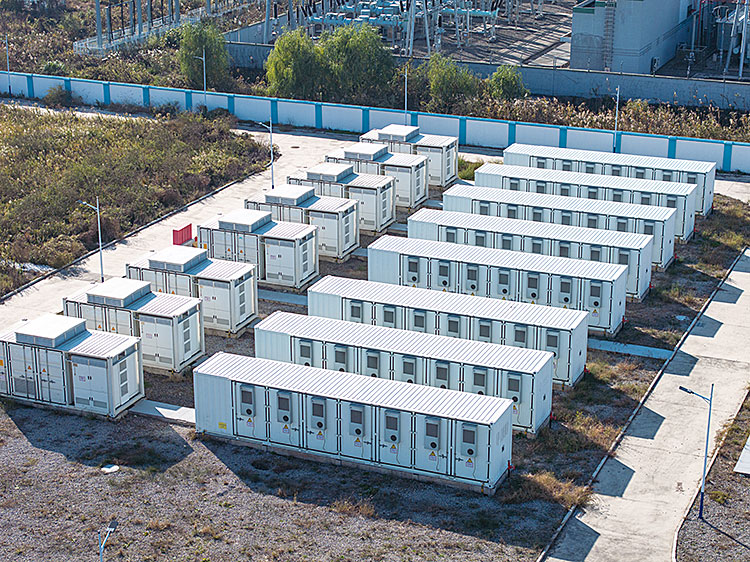
The new draft, according to the staff report, “seeks to balance the need for renewable energy storage infrastructure to meet the county’s green energy goals, improve grid resiliency, reduce blackouts and address climate change with the county’s commitment to public safety, land use compatibility and environmental stewardship.” The draft is the culmination of more than a year of careful planning and consideration, a press release announcing the revisions states.
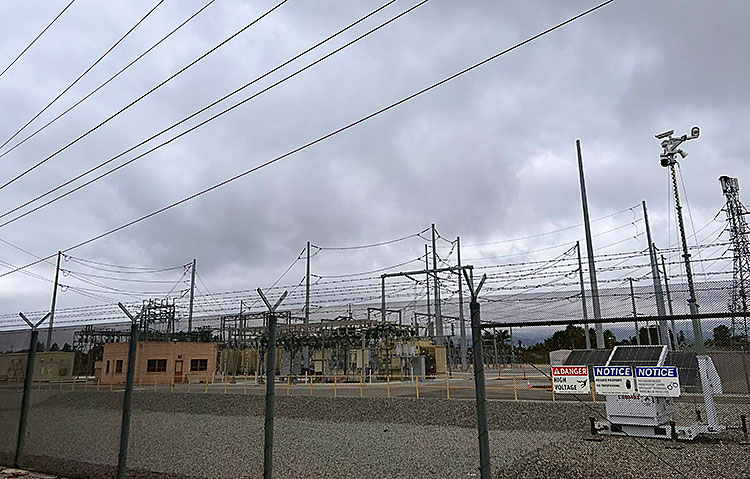
Supervisors approved the revisions to the draft ordinance while New Leaf Energy is proposing to develop a 200-megawatt BESS project on 14 acres that would connect to the PG&E substation on Minto Road near Watsonville. New Leaf could seek approval from the state, bypassing local control. Representatives from New Leaf Energy have consistently said they will do so if a local ordinance is delayed.
At the Jan. 13 meeting, during public comment, Aptos resident Becky Steinbrunner said the revisions were not nearly enough to make any BESS project safe and asked the supervisors to continue the discussion to a later date. She said she was not worried about New Leaf going bypassing local control of the project.
“I say let them go to the state because the state will make them do a full EIR. The state will hold them accountable for impacts to disadvantaged communities,” she told the board.
Study Prompts Revisions
In December, a few weeks after supervisors voted to send the ordinance back for revision, researchers at San José State University’s Moss Landing Marine Laboratories released a study on the effects of the January 2025 Moss Landing Vistra fire. The study showed that 55,000 pounds of heavy metals were deposited in areas surrounding the Moss Landing BESS facility, with much of it landing in the environmentally sensitive Elkhorn Slough.
“It seems that if it wasn’t for our work this could have gone largely undetected,” said Dr. Ivan Aiello, who led the study. “Our data show evidence of battery fire metals up to four kilometers away from the storage facility.”
What Aiello and his team of scientists discovered was troubling. Surface concentrations of nickel, manganese and cobalt increased dramatically — in some areas as much as 10 to 1,000 times above pre-fire levels — with the pollution clustered in distinct hot spots. Aiello’s study highlighted the importance of having baseline air and soil data before a BESS facility is present.
Santa Cruz County’s new draft ordinance appears to recognize the study’s findings and also addresses many of the public’s concerns raised during earlier hearings. It specifically requires reports analyzing baseline air quality, surface water, groundwater and soils within at least one mile of any installation, and potentially farther depending on site conditions. It also requires thorough consultation with the local fire district, including annual on-site training paid for by the BESS operator.
However, different methods of soil and water sampling can result in dramatically different findings. Moss Landing Marine Laboratories researchers used field portable X-ray fluorescence, or FPXRF, technology — similar to a mobile X-ray device — to study samples. They also concentrated collecting soil samples where most of the pollution was found, in the upper soil layers.
Water and soil samples collected by Vistra’s scientists using different methods have shown little to no pollution resulting from the fire. Santa Cruz County’s new draft ordinance does not specify how sampling must be conducted.
What the Revisions Address
The ordinance does address the rapid advancement in BESS technology. New types of batteries are being developed that are less volatile than the lithium-ion batteries with nickel, manganese and cobalt chemistry used at the Moss Landing facility. The ordinance does not specify battery chemistry, but requires that systems “utilize best available technology to avoid thermal runaway.”
Among the additional requirements included in the ordinance:
- A sensor network around the perimeter of the facility to continuously monitor air quality, along with an on-site meteorological station.
- A catchment system to collect and retain all runoff liquids used to suppress a fire or otherwise released.
- A 20-foot landscaped buffer to screen the facility from public view, including large trees. At least 50 percent of the landscaping must consist of native or drought-tolerant species.
- Thorough site plans showing battery locations.
- For projects proposed on agricultural land, a study confirming that the project minimizes the loss of high-quality farmland.
- A fire risk assessment evaluating where smoke and pollution could drift and the potential impacts on nearby communities in a worst-case scenario.
- A dedicated water supply for fire suppression.
- An emergency response plan addressing all phases of the project, from construction to operation and eventual decommissioning.
- Financial assurances, including liability insurance, to cover costs associated with hazardous incidents, pollution or environmental damage caused by the facility, as well as an agreement indemnifying the county.
- Noise limitations.
- A requirement that utility lines be placed underground.
Even though the draft ordinance is approved, supervisors cautioned that there will still be a lot of time for public input and more changes to be made before the final vote in November. “Part of this timeline is also opportunity for public input. Environmental review is also part of that,” said Supervisor Felipe Hernandez.