

By Tiffany Mitchener, DVM
The Walk
It can be the bane of every dog owner, this overwhelming need on the part of one’s canine to stop and sniff every bush, tree, light pole, fence post, and fire hydrant. What is supposed to be a brisk walk for moderate exercise often turns into an exercise of patience as the dog stops every ten feet or so for a long sniff. If one is walking a male dog, this will often be followed by a quick leg lift and urination of a few drops before happily trotting on to the next spot a mere ten feet away for an instant replay.
But why the urination? Male dogs scent mark. Their urine offers a chemical communication for other domestic dogs; it marks this territory as theirs. Interestingly, the next male dog to come along will “overmark” the spot to compete with the first. It may go back to the age-old competition for mates and territory. It is interesting that female dogs will sniff just as often as males on a given walk, but normally only male dogs scent mark. Also, neutered males urine mark less than intact male dogs. This is particularly true if the male was neutered at a younger age before the behavior was learned and ingrained in his daily walks.
The Dance
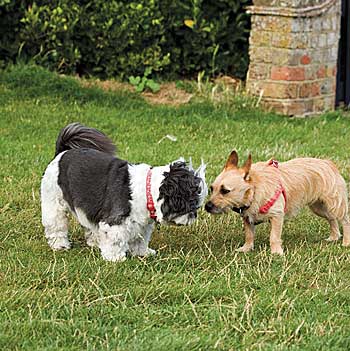
Every dog owner knows “the dance.” Dog meets dog on a walk; it starts with a brief nose touch and ends with an extended sniff of the other’s rear end. Often the dogs will circle to get a particularly long scent from each other at the same time. What are they doing? Call it the “doggy dance” or simply “doggy meet and greet.” Dogs are using those incredible noses of theirs to get a good sense of identity from the other dog. But why the rear-end smell?
Dogs have internal scent glands near their anus. This scent marks stool, and the deposition of stool marks their territory. But unfortunately, the glands can also become impacted and anal sac emptying becomes painful. This will lead the dog to “scoot” with his anus on the ground. Impaction is the number one cause of scooting in dogs, followed by tapeworms, fleas, and allergies. Small breed dogs and overweight dogs are particularly susceptible. A veterinarian should examine any dog that exhibits scooting behavior, a foul odor, redness, or discharge. High fiber diets and laser therapy can help to prevent impaction. It is important to talk with your veterinarian about a plan to treat and prevent this disease.
The Meal
Many dogs bring that instinctive behavior inside where they routinely patrol the kitchen counters and garbage containers for food. Their rummaging is often rewarded with the pleasurable discovery of something edible. Because of this inborn trait, owners must be extra vigilant because scavenging can lead to parasites, toxin exposure, gastroenteritis, and obstruction. A veterinarian should evaluate any dog with vomiting and diarrhea. Owners should scan the sidewalks for scavenging items when walking their dogs, keep the kitchen counters free of food, and dog-proof their garbage and trash cans in the kitchen.
It is clear that dog behaviors can differ vastly from human ones. Whether it is on our walks, our greetings of strangers, or our feeding behaviors, humans and canines do not react the same. The more we understand our canine companions’ special traits, the more we can appreciate what amazing creatures they are!
•••
Courtesy of the Capitol Veterinary Hospital. Website: capitolaveterinaryhospital.com