


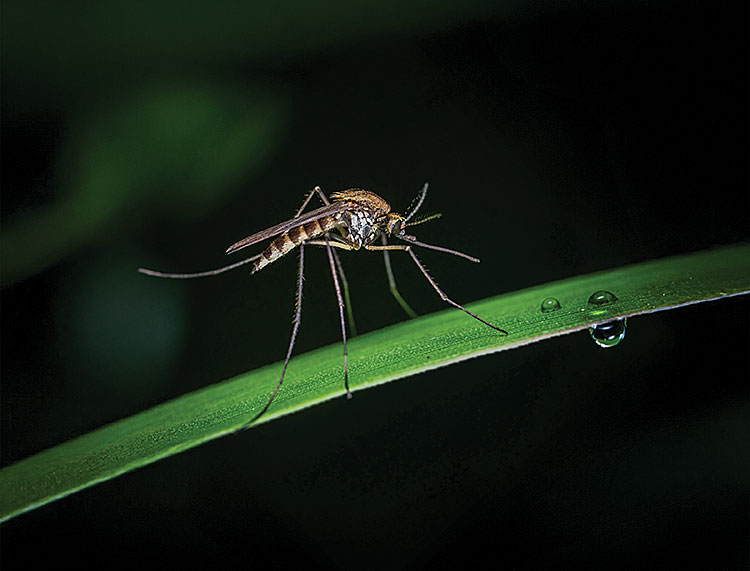
Santa Cruz County officials are urging residents countywide to take precautions after an invasive mosquito capable of spreading serious tropical diseases was detected near downtown Boulder Creek.
The discovery of Aedes aegypti, confirmed by the California Department of Public Health, marks the second time the species has been found in Santa Cruz County. The first was in Watsonville in 2022, where mosquito control officials successfully contained the population before it could spread.
In 2024, Los Angeles and San Diego counties reported locally acquired dengue cases — an indication that the mosquito-borne diseases are moving closer to the Central Coast.
County vector control teams have launched an intensive response in Boulder Creek, deploying traps, sampling water sources, and inspecting properties for breeding sites.
Field workers are also conducting door-to-door visits to educate residents and eliminate standing water where mosquitoes lay their eggs.
Officials emphasized that community cooperation is essential to contain the species. Residents are urged to dump even small amounts of standing water and to clean containers where eggs might stick.
Residents across the county are advised to:
- Empty and scrub bird baths, pet water dishes, and plant saucers weekly.
- Wear long sleeves and pants, and use repellents with DEET, picaridin, oil of lemon eucalyptus, or IR3535.
- Repair window and door screens to prevent mosquitoes from entering homes.
Those experiencing daytime mosquito bites — unusual for native species — are asked to report them immediately to the county’s Mosquito and Vector Control District at mvc.santacruzcountyca.gov or by calling (831) 454-2590.
Health officials also urge travelers returning from areas where mosquito-borne illnesses are common to stay indoors if they develop fever, headache, or joint pain, to avoid the possibility of local transmission.
As temperatures remain warm and recent rains leave behind puddles and containers full of water, officials warn that Aedes aegypti could spread quickly if unchecked.
•••
For more information, visit the county’s Invasive Aedes Mosquito page at mvc.santacruzcountyca.gov/Learn/InvasiveAedes.aspx or the California Department of Public Health.