


By Raphael Schmidley
With summer in full swing, now is a better time than ever to explore the local nature of Aptos. However, those chilly mornings can make it seem less like summer than it is. Even with the cold, I highly recommend an early morning walk: the earlier the better.
I quite enjoy walking from 6 to 7 in the morning. I can hear swallows chirping, I see elusive black squirrels scampering around the black walnut trees. A quick walk down Moosehead Drive, and a look over the bridge allows me to see dozens of ducks in the river. Some flying in a hurry, and some just lazing around. I reach into my pocket and toss in some snacks I brought them: oats and blueberries. Further down the river, the brackish water churns as it merges with the bay. Seacliff State beach gets the most traffic once the sun has untangled itself from the morning fog, but, in my view, the beach is just as beautiful during the shadier part of the day. Seagulls squawk and fly overhead, often towards the shipwreck at the site of the old pier.
Walking down the wet sand, all sorts of animals can be seen if one is patient and observant. Sea lions, dolphins, and even whales can be seen in the water, while the occasional crab scurries on the sandy beach. Aptos is a beautiful place to be, and there is no better way to experience it first thing in the morning than going on a lovely stroll. Get your blood pumping, get those legs moving, and open your hearts to the beauty of Aptos.
(And a note for readers who enjoy feeding the ducks: Please do not feed them bread, it has been shown to be very unhealthy for waterfowl. Instead, steel cut oats, small chunks of watermelon, peas, blueberries, and seedless grapes of any color are recommended.)
This month’s featured animal is the California brown pelican (Pelecanus occidentalis) whose impressive aerial prowess and long lifespan make it a specifically treasured bird to me. The brown pelican can live up to 40 years, which was the life expectancy in England during the 1840s. Pelicans are the only remaining genus of the family Pelecanidae, as the other two genera have died out, leaving only the nobel pelican. Brown pelicans, while native to California, rarely stay here year-round. Pelicans primarily nest in Mexico, with the exception of several islands off of the California Coast. The full range of the Brown Pelican is vast, stretching from the Channel Islands off the coast of France, all the way past the west coast of Mexico.
Good news for Brown Pelican admirers, it has been classified as a Species of Least Concern. Unlike many of the native animals of California, we do not have to worry about the Brown Pelican disappearing anytime soon.
I would be remiss to discuss this wonderful bird without including a story from my friend Doug:
“The Brown Pelican is not a creature to be taken lightly. They are lovable and friendly, but they can be dangerous. One time, about 15 years back, I was out on my boat, and was preparing to gut a fish. Just as I was about to toss the fish into my bucket, a Brown Pelican swooped down and grabbed it. We had a tug-o-war. I lost and nearly tumbled into the water. Moral of the story? Give back to nature.”
•••
Raphael Schmidley is an Aptos resident who enjoys nature and writing.
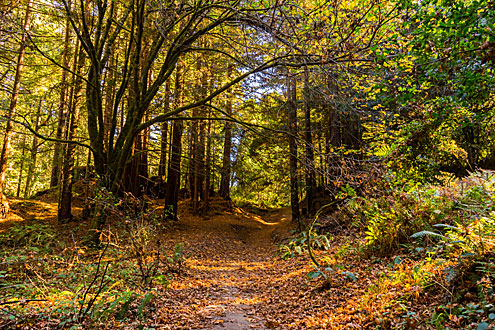
TOP PHOTO: A quiet trail in Aptos’ Niscene Marks Park