

By Tiffany L. Mitchener, DVM
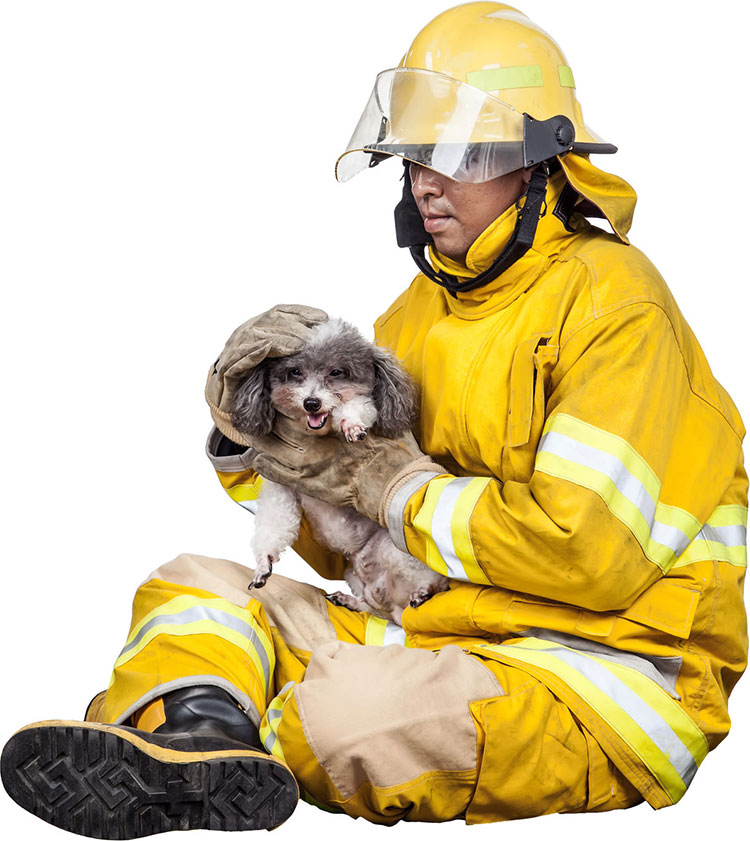
While we all hope our communities remain safe, disaster can strike at any time. It is important to be prepared not only for the humans in our household, but also for our animal companions. We all want to ensure that rescue or evacuation can happen as smoothly and quickly as possible. Disaster does not allow the luxury of time and thought. Advanced preparation can be the difference between a safe evacuation and tragedy.
Hurricane Katrina was a turning point for our country in terms of preparing for natural disasters for our pets. Striking in August 2005, Hurricane Katrina was a Category 5 hurricane that hit the Gulf Coast of the United States causing damage from Florida to Texas. Due to the structural design of the city of New Orleans, massive flooding was predicted, and its residents were ordered to evacuate.

Important lessons were learned in the aftermath and devastation of Hurricane Katrina which fundamentally changed how the federal government plans for disasters. Two acts were passed by Congress in 2006: The Pet Evacuation and Transportation Standards (PETS) act and the Post-Katrina Emergency Management Reform act. Both of these acts added companion animals to already existing guidelines for disaster planning. This recognition elevated the issue of animal safety to a priority in the event of a natural disaster.
Additionally, two new groups formed in 2006 to enhance communication and cooperation between animal welfare organizations, state agencies, and emergency volunteers in the event of a disaster. These were the National Animal Rescue and Sheltering Coalition (NARSC) and the National Alliance of State Animal and Agricultural Emergency Programs (NASAAEP). These groups promote collaboration between state programs allowing them to share information, hold summits, and conduct in-depth trainings.
•••
How to keep your pets safe in a disaster
- Identify pets before disaster strikes.This piece of advice is absolutely essential. It is helpful to maintain collars and identification tags on pets, but for permanent identification, nothing is more helpful than microchipping your pets. Your local veterinarian or animal shelter can provide this service. Remember to update your contact information regularly!
- Keep current photos of your pets in your wallet or on your smartphone.A current photograph of your pet can play an important role in identification. Just four months ago in July 2018, the Carr Fire broke out in Northern California burning over 200,000 acres and destroying over 1000 homes. Today, four months later, volunteers continue to find and rescue dogs and cats displaced by the fire. Photos of lost pets posted on social media have been a key component helping rescuers return lost pets. To date, more than eighty families have enjoyed happy reunions with their pets due to the tenacity of a small group of volunteers, social media, and proper pet identification.
- Make a plan.It is important to have a plan before disaster strikes. Establish exit routes from your home or property. Keep pet carriers accessible for quick use. Know the locations of animal shelters, pet-friendly hotels, or friends who would be willing to house your pets for you if you need to evacuate.
- Identify clearly that animals live inside your home.In the event of a single house fire or other disaster, it can be very helpful for emergency personnel to know that pets live inside a house. Be sure to keep signs or stickers prominently displayed on windows or front doors detailing the animals who live inside. Be sure to keep this information up to date.
- Maintain an emergency kit.In the event of a natural disaster, it may take several days for help to arrive. It is important to keep emergency kits for people and animals. For your pets, be sure to maintain pet carriers, bottled water, canned food, bowls, first aid kits, blankets, and copies of any prescription medication.
•••
No one knows when disaster will strike. Thanks to hard lessons learned, our government now has plans in place to help coordinate relief efforts for humans and their pets. To ensure safety in a disaster, every pet owner needs to be responsible and prepared.
Addendum: At the time this is written, rescuers have been called into action again to help in the devastating Camp and Woolsey fires in Northern and Southern California. Our veterinary hospital has helped to shelter evacuated pets from Butte County. We sincerely hope for the safety of all rescue volunteers, and we hope for swift reunions between people and their animals.