



Seabright businesses are suffering, so the Santa Cruz County Regional Transportation Commission and the City of Santa Cruz are going to work together to develop a temporary pedestrian and bicycle connection across the railroad bridge at the Santa Cruz Harbor that should be around for two years or more.
The Santa Cruz City Council agreed to the idea on Aug. 12, but first needed the approval of the Regional Transportation Commission, which wasn’t assured.
The commissioners agreed during a semi-contentious emergency meeting held Aug. 7 in Scotts Valley where they voted to allow the city access to the railroad bridge and directed RTC Executive Director Sarah Christensen to help expedite the move.
“The closure has only been for four months, and total closure for a month, and the effects have been devastating,” Patrice Boyle, owner of La Posta restaurant, told the RTC commission at the Aug. 7 hearing. She said her business, which has been operating for 20 years, and other businesses in the neighborhood are down 20 to 40 percent. “We will be going out of business if we don’t get help. There’s not even a bus that goes down there,” she pleaded.
Other business owners echoed her sentiment and confirmed that their revenue had fallen 25 percent or more. However, there were concerns about doing something rash that might have unintended consequences. Quite a number of community members at the Aug. 7 hearing decried the move as a backhanded way of rail banking — a process that could preserve the rail’s right of way, without necessarily having the rail there.
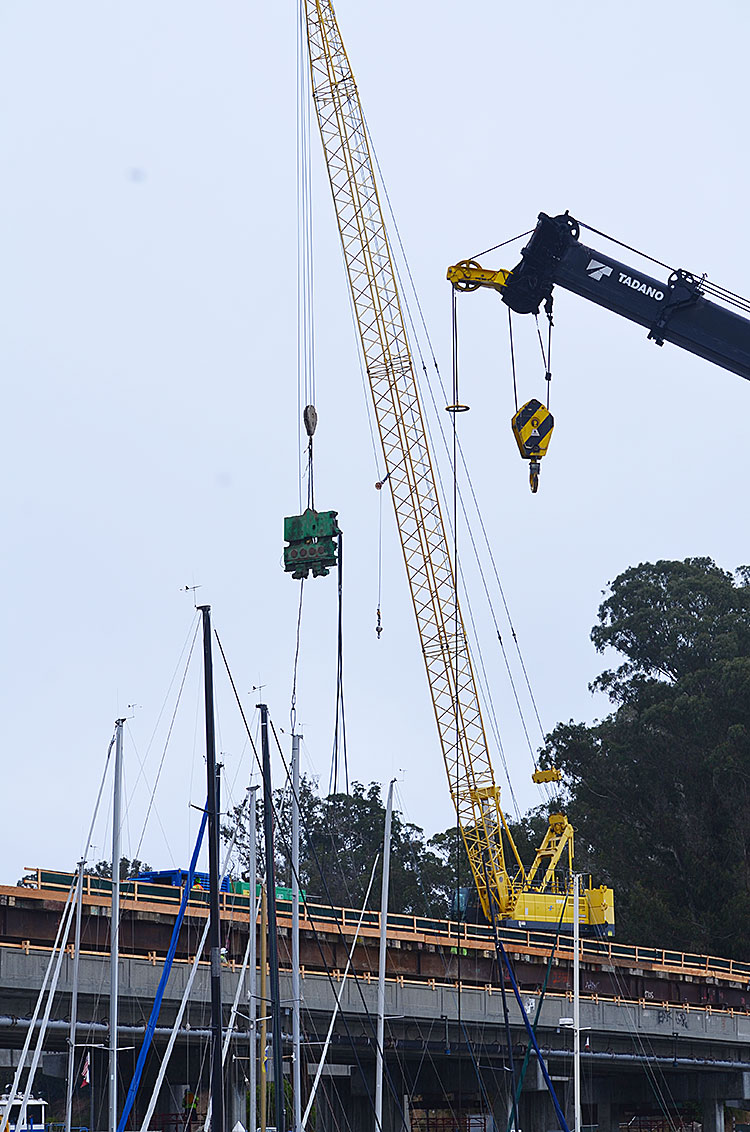
While explaining the need, Mayor of Santa Cruz Fred Keeley, who serves on the commission, said the Murray Street bridge project was big and complicated. “I don’t mean to be flippant about this,” he said. “We are trying to address a very temporary issue brought on by a major reconstruction project.”
“As someone who lives in the area, I can tell you the impact is profound,” said Commissioner Manu Koenig, District 1 county supervisor. “It’s a ghost town. Nobody is biking or walking … There simply is not an easy way to get through this neighborhood.”
With the reasons why made clear, the details of how, what, where and when were all extremely vague in the proposal. After listening to the concerns of the half of the public that spoke against the idea, Felipe Hernandez, representing the county’s District 4, and a few others in the commission were not entirely sold on the idea.
“I just think it’s a big political decision right now and it came to us with very little time,” Hernandez said.
For instance, how would this project be funded?
“We are obviously constrained by funding,” said RTC Executive Director Sarah Christensen. “But we are committed with the city to figuring this out.”
The commission approved the bridge. More details about how, when, where and what are promised to be forthcoming by local officials.