




By Lara Ferroni
Sasquatch Books. $19.95. (Rating-Very Good)

Have you ever considered nachos and eggs, crab chipotle cob salad with eggs, spinach and egg lasagna or baked eggs with honey? Of course not, but you will after reading this cookbook.
To get the egg rolling here, the author begins with an explanation on how to select the best eggs available and then how to prepare them by boiling, frying, scrambling, poaching, baking or pickling them. There are also instructions on how to whip up either basic meringue or Italian meringue.
Once she’s “eggducated” her reader on the basics, Ferroni turns to breakfasts, starters, salads & soups, and lunches. Then it is on to main dishes like an egg-topped deep-dish pizza or “New Mexico-style Christmas” enchiladas and sweets. And if you are adventurous enough to want to try some unusual cocktails using eggs, there are six recipes, including one for a lime meringue margarita.
If you need to ease yourself into this culinary “eggperience,” try the grilled cheese and egg sandwich, the fried-egg tacos or the hot dog with scrambled eggs and hot sauce. Once you’ve broken the shell, so to speak, you’ll want to try other recipes.
Dream It! Do It!: My Half-Century Creating Disney Magic Kingdoms
By Marty Sklar
Disney Editions. $24.99. (Rating-Very Good)
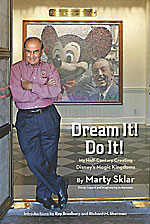
This fascinating behind-the-scenes look of how the various Disney World parks were developed and how the eye-popping special effects were created will keep readers spellbound. From the problems that nearly deep-sixed the first park in Anaheim to the challenge of turning a swamp into Epcot in Florida, Sklar shares his experiences in one of the most demanding jobs in the Disney empire.
Besides sharing what it was like to work for Walt and other members of the Disney clan, the author also delves into what he terms “riding the Michael Eisner roller coaster.” You’ll also get a sense of the challenges that went along with opening Disney Parks in other countries.
There have been a number of books written on the entertainment empire that Walt Disney created and this one certainly ranks among the top five thus far published.
Encounters in Avalanche Country: A History of Survival in the Mountain West, 1820-1920
By Diana L. Di Stefano
University of Washington Press. $34.95
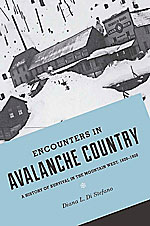
From the early trappers, miners and pioneers heading west to railway workers and the passengers on the trains that chugged through the track bed cleared by huge rotary plows, all these intrepid people braved the constant winter threat of having the snow pack break loose and come roaring down the mountainsides.
An assistant professor of history at the University of Alaska, Fairbanks, Di Stefano discusses some of the famous avalanches, including those that struck mining operations in Colorado and Utah plus those that occurred along railroad right-of- ways in places such as Wellington, Washington, and a mountain pass east of Revelstoke, British Columbia.
From what triggered these events and how the inhabitants of the mountains pooled their knowledge to cope with them to the some of the legal ramifications that came in the aftermath of a slide, Di Stefano offers a comprehensive view of this frigid and deadly reality of mountain life.
“Workers living in the regions were not alienated from their surroundings but rather were forced to build an understanding of the mountains based on the environmental realities of their work situations,” the author writes.
How this was accomplished and how the game plan had to adjust to the economic realities that brought more people into Avalanche Country is the subject of this informative book.
Unprecedented: The Constitutional Challenge to Obamacare
By Josh Blackman
Public Affairs. $26.99 (Rating-Good)
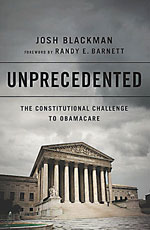
Josh Blackman, the president of the Harlan Institute, a nonprofit dedicated to raising awareness about the Supreme Court and the Constitution, offers the inside story, or at least his version of it, on how this landmark act narrowly squeaked by with a 5-4 Supreme Court decision in 2012.
There were two major surprises when this piece of healthcare reform was challenged in this manner. First, no one really believed that the highest court in the land would agree to hear the legal challenge to the constitutionality of this legislation and, secondly, perhaps the Court’s ruling surprised even more experts.
Based on a series of interviews including academics, lawyers and politicians, Blackman offers his take on how key decisions were made and why the justices voted as they did. An assistant professor of law at South Texas College of Law, Blackman also shares his opinion on what he feels this decision means for the future of the Constitution, the limits on federal power and the Supreme Court itself.
“In the blink of the eye, the ACA went to the brink of unconstitutionality and back,” writes Blackman. “Along that rapid journey, lawyers and scholars from across the philosophical spectrum were so focused on developing, refining, and advancing constitutional arguments at breakneck speeds that they were often unable to pause and appreciate the monumental importance of what was happening.”
This, I am certain, is just the first of a number of books that will debate just what did happen and what ramifications that Court decision has for the future. No doubt John Blackman’s views set forth here will be seriously challenged by other and perhaps more illustrious legal scholars.