


Area 1 Candidates
Three candidates are running for PVUSD Trustee Area 1: Andrew Goldenkranz, Robin Sukow and Meilin Obinata. Unfortunately, Sukow’s contact information was not included on the county elections website as it was for the other two candidates, and late efforts to reach Sukow were unsuccessful.
Here are Goldenkranz’s and Obinata’s responses to our questions.
This school district is confronting declining enrollment, possible school consolidation and budget reductions, and it has a mostly dysfunctional board. What programs or services should be protected from further cuts? Or should any?
Meilin Obinata
It’s important to think about the problems the district is facing as structural and not a patchwork quilt of issues. I believe the district needs a meaningful strategic plan that goes well beyond the requirements of an LCAP. We need to be thinking generationally because that is what families do.
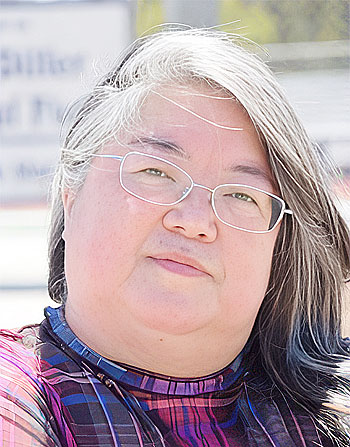
Meilin Obinata
A good strategic plan could address student achievement, student well-being and the budget as a unified set of goals.
There are so many programs and services that are hurting because of the overreach of the job cuts. Special education, mental health and the arts come to mind. Families who have children with special needs should not need to sue the district to get its attention and make sure students have equal access to education.
Providing access to mental health personnel makes for a better environment for students and staff.
The arts are a graduation requirement for high school and are required for minimum eligibility for many colleges, such as the University of California and California State University campuses, so it is best to help prepare students for this by supporting the arts when students are younger. I am extremely familiar with what colleges are looking for in terms of applicants because I currently work as a college counselor, something I have been doing for the last 14 years.
I am open-minded about which programs other trustees would want to prioritize, of course.
Andrew Goldenkranz
- Special Ed is one example of a program that is legally mandated. I would investigate whether it is in our interest to merge into the county SELPA to save administrative costs rather than running our own program.
-

Andrew Goldenkranz
In a strong district, talent is grown and utilized from within. We are currently spending too much on consultants and outside help for budget, bond management, school closure considerations and professional development. I think we can effectively use our own talented staff for this.
- In general, once the board is clear on accepted goals and guardrails for student outcomes, budget decisions would follow that and be more consistent with our direction as a district.
- While the teachers’ contract is settled for now, I think a more appropriate frame for budget considerations is to build it around total compensation rather than treating salaries and benefits as separate issues. Then the unions would own the distribution.
- I would support changes to the funding formula, from attendance-based to enrollment-based.
- The reserve should be in play. In my family, while we all like to have money in a rainy-day account, sometimes you need to take care of present needs. Our current reserve of 10% plus millions extra is arbitrary and should be negotiated.
- In general, my bias is to work from the kids and classroom up as priorities for funding.

How would you rebuild trust and civility among trustees, administrators, teachers and families? Do trustees have a responsibility to act civilly toward other duly elected trustees?
Goldenkranz: Yes, they do. Trustees, and adult public speakers, have a responsibility to model the behaviors we expect from kids in personal interactions and problem-solving.
- My career in community advocacy has been around “relational organizing.” This means taking the time to listen and understand motivations behind the debate of the moment. Currently, we have lots of agitation without the underlying solid relationships, and that is simply irritation.
- I would propose a set of behavioral norms for the board, as we have in classrooms and most organizations: Don’t interrupt, criticize ideas, not people, presume positive intentions, respect time, etc. We could take some ideas from the Legislature and Board of Supervisors on imposing time limits for outside speakers and putting a “me too” rule in place to accommodate many speakers when needed. We should read them at the opening of each meeting as part of our mission.
- Unruly board meetings can also be addressed by more advance planning. Board meetings are fundamentally for making decisions. Thepre-planning, discussions, negotiations, Q&A, etc., can mostly be handled offline between meetings. A draft agenda, time for Q&A, staff preparations and moving the agenda posting deadline from three days to at least 10 days can help streamline meetings while allowing for public input.
- Making sure unions and other stakeholders have an ongoing seat at the table and are treated as true partners is an important guardrail that will improve conduct at meetings.
Obinata: Yes, absolutely, trustees should be civil toward each other.
I would do my best to remind my fellow trustees of why we are all here: to solve problems and move forward. I would encourage all of us as trustees to learn about the rules and procedures so that we can understand how to use them most effectively.
There are many missed opportunities for the board leadership to use existing rules, procedures and just plain old communication skills to make meetings more productive and peaceful. I have worked as a mediator to resolve conflicts between hostile parties and also have informally settled disputes when I worked in tech and in other roles. I know that we can get so much done if we actually want to reconcile.
To establish trust, we need transparency because transparency and trust go hand in hand.
Transparency about money would especially go a long way toward building trust. There is a lot of miscommunication and confusion about the district’s money. I’ve heard multiple narratives about reserves, for example.
The budget tells us what is or is not important.
We need to make sure that people have easy access to the budget information and can see clear connections between what we are spending and what we are getting out of those dollars. We also need to make sure our budgets reflect how closely trustees and administrators are listening to teachers and families. There is a huge demand for change at this moment because there has been a lack of listening.
Along with a foundation of trust, yes, we can and should pursue civility. Toward that goal, I would do my utmost to establish productive relationships and help others do the same. I have more thoughts regarding civility in my response to the next question.
What is the most pressing educational need in your trustee area, and what specific action would you take to address it?
Obinata: Since the start of this school year, I’ve been hearing about how extremely difficult things have been. I am hearing about burnout and stress among staff. One parent told me she was even worried about the mental health of teachers.
Bad decisions were made in the past. The administration wanted, and a board majority voted for, sweeping cuts without a sufficient plan, leaving the district scrambling to re-recruit for essential roles that it realized too late were critical — and recruitment costs money.
If we need to restore other key frontline positions, I would advocate for that, not by adding to our deficit but by restructuring top-heavy central office administrative roles and eliminating non-classroom overhead to pay for them.
Goldenkranz: While I’m hearing about a lot of different issues, school closures, the seven-period day and the presence of SROs are three Aptos-specific issues that keep coming up.
- School closures: We need three things that I’d fight for: 1) taking some time to reimagine and redesign schools so movement to desired programs is an opportunity more than a disruption; 2) a clear plan for the disposition of any sites to be closed, which gets back to the budget; and 3) a clearly described service plan for continuity of student learning. For example, if Valencia, a strong, high-functioning school, needs to close because of facility and transportation fragility, then rather than split up those kids, teachers and programs, we should move the whole school as an integral package.
- Seven-period day: I worked in a seven-period environment for almost 20 years and see the clear educational and mental health benefits. But the need for fairness means that we achieve equity by expanding opportunity, not shrinking it. I’d like to see a seven-period day in all high schools and would start with a full cost analysis and by engaging the union in an equitable approach to staffing in this model.
- SROs: I wish we lived in a world that didn’t require SROs, active shooter drills and other safety measures. The history of policing is complicated, and people have different lived experiences that influence their positions on this issue. But we need a current partnership with the Sheriff’s Department on issues ranging from e-bike safety to gun violence prevention. I’m encouraged that Sheriff Clark and his team understand community policing and the need to collaborate on training, scope of work and selection of officers who fit the school community. A large majority of Area 1 respondents support the presence of SROs, and we need to carefully proceed toward best practices with a light touch consistent with protecting kids.
•••
Area 7 Candidates
Incumbent Misty Navarro is facing challenger Mads Stockwell Realmuto. We had some questions.
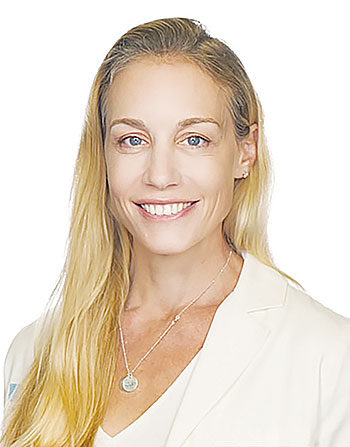
Misty Navarro
Emergency Physician / Mother
PVUSD is confronting declining enrollment and possible school consolidation. What programs or services should be protected from further cuts? Or should any?
PVUSD spends over 90 percent of its unrestricted budget on salaries and benefits while enrollment keeps falling. With ESSER funds gone, we have a gap of about $20 million to close by 2028-29 to avoid state receivership. That requires hard votes.
Misty Navarro
Our three-year plan was staffing reductions in years one and two, then consolidation and possible closures in year three. Because we didn’t make the year-one reductions, the December 2025 layoffs were more painful than they needed to be. But the retirement incentive and reassignments saved many jobs and significantly reduced layoffs.
Should anything be protected? Yes, using four tests: Is it redundant? How many students does it reach? Does it protect vulnerable students? Does the logic hold up? Programs that pass, like LETRS reading training, Swun Math, our 26 CTE pathways and PV Elevate dual enrollment, are where I’d hold the line. They build reading, math, and career and college readiness.
Mental health shows what that test looks like in practice. I resisted cutting those positions for over a year. As an emergency physician, I know firsthand how great the need for pediatric mental health care is, and how hard it can be to access. In early 2025, I met with clinicians to discuss improving documentation and billing so the district could recover part of the cost. The cost per student served still wasn’t sustainable. I remain committed to expanding student mental health support, though it will look different. I’m actively working with the County Office of Education and community partners, and I’m open to other partnerships. As a board, we must make sure students can still get the support they need. I consider psychological safety as essential as physical safety to a student’s ability to learn.
Solvency is what keeps the programs that work open, and that’s what I’m fighting for.
How would you rebuild trust and civility among trustees, administrators, teachers and families? Do trustees have a responsibility to act civilly to other duly elected trustees?
Trust is a two-way street, built on honesty and a shared vision. On a board of seven, no one person accomplishes anything alone. It takes respecting different viewpoints and genuine curiosity about them. As Stephen Covey put it, seek first to understand, then to be understood.
Yes, trustees have a responsibility to treat each other, and every duly elected colleague, with respect and civility. Bullying has no place in our schools or our boardroom. We have a policy on this, but no actionable way to enforce it, and I’ve been advocating for one that does.
Most of the board has led with that approach, and you can see it in the goals and guardrails we set for Superintendent Contreras. We spent months gathering input from across the district, end to end, and found consistent themes in what families, teachers and staff wanted.
We turned those into specific, measurable, time-bound goals we can check and adjust along the way: 4th grade reading, 7th grade algebra readiness, critical thinking and media literacy, and college and career readiness. The details are on the district website and in our board meeting minutes.
Rebuilding trust with families and teachers also means following through. That’s why we invested in LETRS literacy training with stipends for teachers, adopted Swun Math, built 26 CTE pathways including a Joby Aviation and FAA partnership at PV High, and launched PV Elevate dual enrollment, which reached 200 students in its first year.
When a decision affects daily life at school, like our new phone-free policy or updated bell schedules, we made sure staff and families had a voice before it took effect.
With classified staff, trust means safety and fairness on the job, which is why I’ve been working on a CSEA-focused equity and safety platform.
Trust with trustees themselves starts with honest, straightforward conversation. That’s why I answer my emails, meet face to face and take phone calls. I don’t avoid difficult conversations, even when they’re uncomfortable. Families and teachers deserve trustees who show up, listen first and follow through on what they hear.
What is the most pressing educational need in your trustee area, and what specific action would you take to address it?
The most pressing need in Area 7 is recovering ground in reading and math. Many districts across the state have recovered from pandemic learning loss. PVUSD has not, and our students can’t afford to lose more time.
As an emergency physician, I’m trained to look at the data, identify the root cause, and act on evidence rather than guesswork. I’ve brought that same discipline to this problem as a trustee. Instead of scattering resources across many initiatives, we focused on a data-driven curriculum and sustained, structured support for teachers.
We invested in LETRS literacy training with ongoing stipends for teachers, not a one-time workshop, because durable change requires durable support. We adopted Swun Math districtwide to bring consistency to how we teach math across schools. And we set specific, measurable, time-bound goals for Superintendent Contreras anchored in 4th grade reading and 7th grade algebra readiness, so the board can track real results and adjust course if something isn’t working.
We’re just beginning to see the fruits of that labor, and I intend to stay on this board to see it through. That matters because these investments are competing for dollars against a roughly $20 million structural budget gap. It would be easy to cut professional development or curriculum adoption to save money in the short term. I won’t. Reading and math are foundational to everything else, including the career and college readiness pathways, like our CTE programs and PV Elevate dual enrollment, that depend on students arriving prepared.
In medicine, you don’t declare success halfway through treatment; you follow the data to confirm the intervention is actually working and adjust if it isn’t. I hold our academic investments to that same standard. It’s why I supported specific, measurable goals rather than vague commitments and why I’ll keep pushing to protect what the data shows is working, even as we make hard budget choices elsewhere.
Area 7 families deserve a trustee who treats their children’s education with the same rigor I bring to patient care: evidence-based, closely monitored and adjusted when the results demand it.
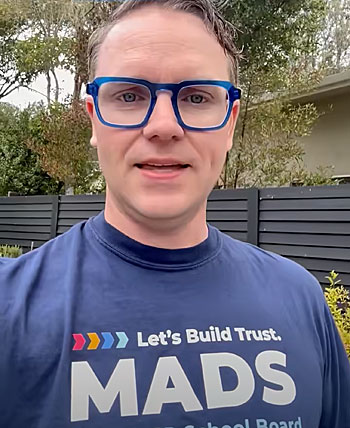
Mads Stockwell Realmuto
Parent / Education Advocate
PVUSD is confronting declining enrollment, possible school consolidation and budget reductions. What programs or services should be protected from further cuts? Or should any?
We should protect programs and services that directly support student learning, safety and well-being: classroom instruction, reading and math intervention, special education, counselors, nurses, psychologists and instructional and behavioral support. Arts, physical education and career technical education also belong in a well-rounded public education.
Mads Stockwell Realmuto
Declining enrollment compounds our difficult budget realities, requiring decisions about staffing, facilities and spending. Those decisions must reflect students’ actual needs. Eliminating a position does not eliminate the need or the work.
That is why I joined parents and educators in opposing last year’s nearly 160 position cuts. We challenged the underlying data and the lack of a student-impact assessment or credible continuity plan. This school year has exposed the consequences: understaffed special education classrooms, inadequately prepared substitutes and supervision gaps that have put children and staff at risk. Principals are covering staffing gaps, while teachers face greater needs with fewer resources. Rehiring coupled with expensive temporary agency staffing calls projected savings into question.
Before cuts to student programs and services, the board has a responsibility to pursue other avenues, including:
- Stronger contract oversight. Scrutinize costs, use consultants selectively and draw on internal expertise. Where consultants fill ongoing skill gaps, establish a plan to build internal expertise to reduce recurring expenses.
- Thoughtful school consolidation. Fewer, more fully utilized campuses could help sustain programs and stretch Measure M dollars. Savings are not guaranteed: proposals must demonstrate educational benefits and address impacts on students and families.
- Increased Medi-Cal reimbursement. Expand billing for eligible services, including the $750,000–$1.1 million in potential mental health reimbursements identified by the Sustainable Budget Team.
- Increase adoption of voluntary benefit alternatives that increase take-home pay. Partner with educators to improve access to and awareness of lower-cost health care plans under the available cost-sharing model, helping participating employees and the district save.
Before approving reductions, I will require clear answers: What will students lose? Who will absorb the work, and do they have capacity? What alternatives have been considered? How will student outcomes be affected? What happens to projected savings if services require expensive outside providers?
I cannot promise to preserve every position or program. I can commit to protecting student services, preventing disproportionate harm to any student group, and working with educators, families and district leadership to develop workable solutions.
How would you rebuild trust and civility among trustees, administrators, teachers and families? Do trustees have a responsibility to act civilly to other duly elected trustees?
Yes. Trustees have a responsibility to treat fellow elected trustees, employees, students, families and community members civilly, including those with whom they strongly disagree.
Civility must make room for rigorous questions, honest disagreement and accountability. It must never be used to silence someone, dismiss legitimate concerns or avoid uncomfortable issues. The entire board shares responsibility for listening to understand, de-escalating tension without minimizing concerns and keeping discussion focused on evidence, options and student needs. We should model how to work through disagreement with courage and respect.
Discriminatory or derogatory language toward any person or group is unacceptable and should be addressed calmly and directly.
For nearly two decades, my work in public policy and stakeholder engagement involved bringing together people with competing priorities, differing views and, sometimes, deep distrust of one another. Progress began with careful listening, understanding disagreements, identifying shared interests and establishing a process people could trust.
I will work with fellow trustees to establish clear goals for student success, consistent meeting rules and shared expectations for our conduct. Those expectations should include coming prepared, listening without interruption, avoiding side conversations and personal attacks and disagreeing on the merits.
Governance training and regular evaluation should reinforce those commitments.
Rebuilding trust also requires improving how decisions are made. Families and employees need understandable information and meaningful opportunities to ask questions and shape proposals before decisions are effectively settled. Major proposals should include clear alternatives, trade-offs, anticipated student impacts and sufficient time for review.
The board and district must provide more meaningful opportunities for public input beyond the boardroom. I will build on my engagement with school site councils, PTAs and other school groups while advocating for additional ways to participate, including digital public comment options like those offered by other public agencies. The board and district must also clearly explain what concerns and ideas community members have raised, how that input has shaped decisions and why some suggestions are not adopted.
Trust grows when people see that their input matters, commitments are kept and mistakes are acknowledged.
My responsibility will be to model that behavior consistently and help the board keep its attention on students.
What is the most pressing educational need in your trustee area, and what specific action would you take to address it?
Students living in Trustee Area 7 generally attend Mar Vista, Rio del Mar, Valencia, Aptos Junior High and Aptos High. For these students, and across PVUSD, the most pressing educational need is meaningful academic progress and preparation for life after graduation, whatever pathway they choose. That requires strong foundational instruction, broader opportunities and healthy learning environments.
We need to aim higher. A goal of only one in three third graders reading at grade level by 2031 is not ambitious enough. I will press the district to identify what stronger progress requires and align the budget accordingly. Literacy and mathematics improvement plans must include ambitious, measurable goals, regular public progress reviews and direct input from teachers about classroom challenges and needed support. Evidence-based instruction, early identification of struggling students and timely intervention and tutoring should anchor that work, alongside enrichment opportunities that keep students who are excelling challenged and engaged.
Area 7 schools generally do not receive Title I funding, making community support especially important. I will work to remove recent district barriers that make it harder for parent associations to fund additional support, including reading aides.
We must also expand career and technical education alongside strong college preparation. Partnerships with community colleges, employers, unions and apprenticeship programs can connect introductory courses to advanced training, internships, recognized credentials and employment. I will ask the district to identify gaps and address scheduling, transportation and capacity barriers. Every student should graduate with a realistic next step connected to their strengths, interests and goals.
Students also need to feel safe, included and connected to learn. I will seek a review of mental health staffing reductions, caseloads and access to support, alongside stronger accountability for addressing bullying and discrimination. I will advance age-appropriate, evidence-informed expectations for technology, cellphones and AI literacy while protecting hands-on learning, arts, music, physical activity, outdoor education and relationships with trusted adults.
As a PVUSD graduate, district parent and Special Education Community Advisory Committee chair, I want families to be able to rely on our schools. The board must align spending with these priorities, provide effective oversight and communicate clearly with the public about what is improving, where student needs are not yet being met and what steps the district will take next.