

By Tiffany L. Mitchener, DVM
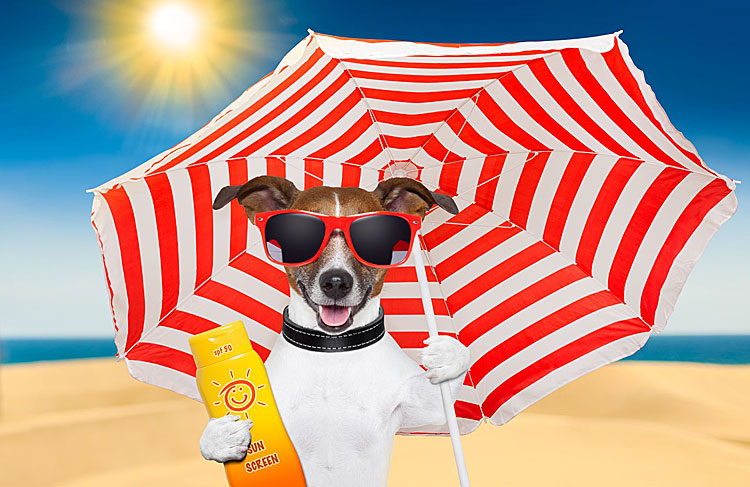
Do pets get sunburned?
Yes, pets can suffer from sunburns, too! Overexposure to ultraviolet rays, both UVA and UVB, can lead to sunburn. Dogs and cats can get red, inflamed skin, just like in humans, which can become irritated and painful. The sunburn can lead to hair loss and scaly skin.
What causes sunburn?
Exposure to the ultraviolet (UVA and UVB) rays of the solar spectrum can damage epithelial structures in the skin, which can lead to inflammation and destruction of the skin immune system. Prolonged and repeated exposure can cause permanent damage and can fundamentally change skin cells, resulting in malignancies and skin cancer.
Which pets are most at risk?

Animals are most likely to get sun damage where their haircoat is thinnest. Cats will show signs of sun damage on the tips of their ears, eyelids, and their noses. Dogs are most susceptible on their muzzles, armpits, abdomens, and groins.
What if my pet gets sunburned?
If you suspect your pet has a sunburn, schedule an exam with your veterinarian. Often pet owners do not realize that their pet has been suffering from sun overexposure until skin cancer develops.
Damaged skin may appear thickened and scarred with ulceration or crusting. Sometimes a secondary bacterial infection may occur. Masses may emerge or the tips of ears may curl. It is important to have any abnormal skin examined by a veterinarian. Frequently, a biopsy will be recommended for a definitive diagnosis.
How do I protect my pet from too much sun?
Because repeated, prolonged sun exposure can be harmful to pets, it is important to follow a few tips to protect your pet:
- Avoid sun exposure from 10 a.0.m-4 p.m. In the summertime, the UV exposure is at its peak. It is important to avoid the sun during the middle of the day when the sun’s rays are most intense. Seek the shade whenever possible, or simply keep pets indoors during these hours.
- Use sunscreen. Be careful to note that it does not contain PABA (para-aminobenzoic acid) or zinc oxide – both chemicals can be toxic to our companions! Dogs and cats can benefit from carefully applied sunscreen. It is important to apply it to the most vulnerable skin surfaces: those with little to no haircoat, like ear tips (cats), top of muzzle (dogs), armpits, abdomen, groin. There are dog-approved sunscreens available, or a safe alternative is to use a waterproof, fragrance-free sunscreen made for babies with an SPF of 30 or higher. To start, apply the sunscreen to a small spot on the body first, to confirm no allergic reaction. If tolerated well, apply a generous amount twice daily (and always after swimming) to the skin surfaces most at risk. It may be helpful to apply the sunscreen and then provide a distraction, such as food, a walk, or a game of ball, in order to prevent the pet from licking off the sunscreen immediately.
- Avoid a very short haircut. If your dog is regularly groomed, avoid a very short haircut in the summer as a longer haircoat will still offer some protection from sun exposure.
- Wear sun protective clothing. Dog sun protective clothing does exist! A large t-shirt will do in a pinch, but there are several companies that offer dog sun protective bodysuits. Remember nothing beats shade for sun protection. Be sure your active companion receives plenty of rest, shade, and water to avoid the more immediate risk of sun exposure – heatstroke.
- Protect your pet on cloudy days. Up to 80% of the sun’s UV rays can penetrate clouds, so it is important to consider sun protection for your pets even on cloudy days.
- Protect your indoor pets. Windows filter out UVB rays, but not UVA, so indoor animals that like to lie in the sun are still at risk for sun damage. This is especially true for white cats.
The “dog days” of summer are fast approaching. Be sure to consider your pet’s sun protection whenever you reach for the sunscreen and hat yourself this summer. Then enjoy the great outdoors together!