


By Jim Rummonds
Everyone knows the old adage: “I’m from the government, and I’m here to help.” It comes to mind when we look at the Santa Cruz Metropolitan Transit District. Despite a large service area, ridership remains thin and the finances even thinner. If you’ve ever watched buses go by mostly empty, you see it.
Would METRO exist if it had to survive on basic supply-and-demand? If not, why does it exist? Are there better options that serve both taxpayers and riders? In theory, transit reduces emissions by moving many people with one vehicle. Underused buses, however, are neither green nor frugal.
The Money
In FY 2024, METRO spent about $62.25 million to operate and made $9.2 million in operating revenue. The $53 million gap is covered by sales taxes, grants, and other subsidies from taxpayers. Public transit is expensive, but a deficit that large should force us to ask whether our model matches our geography and demand.

A big slice of funding comes from Measure D, the half-cent sales tax voters approved in 2016. In FY 2023/24, METRO received about $4.3 million from Measure D, plus additional state and federal grants for zero-emission buses and transit-oriented housing. Laudable goals, but they don’t fix ridership, cost per ride, or route mismatch. We should distinguish between good intentions (cleaner fleets, new buildings) and effective transportation (people actually using the service).
Who’s on the Bus?
Ridership ticked up about 7% in Q4 FY 2024 over the prior year, but it remains roughly 28% below pre-pandemic levels. The Highway 17 Express was down about 52% compared to the same quarter in 2019. Building a countywide system around low-utilization routes is a recipe for red ink.
METRO’s “Reimagine Santa Cruz METRO” aims to boost ridership 35% over five years with more frequency, simpler routes, and greener buses. The operative word here is reimagine. If frequency is paired with route redesign, demand-responsive service, and performance metrics (e.g., cost per passenger, riders per service hour), then we’re talking reform. If not, it’s a slogan.
Mass transit is often invoked for equity and environmental reasons—and those matter. But a system that few use fails the very communities it’s supposed to serve. Politicians can win headlines with new buses and ribbon cuttings; riders win when service is reliable, affordable and convenient.
The Uber/Microtransit Alternative
On-demand models flip the script from one-size-fits-all to right-size-for-this-trip. Instead of forcing riders to fit fixed routes and rigid schedules, you meet them where they are.
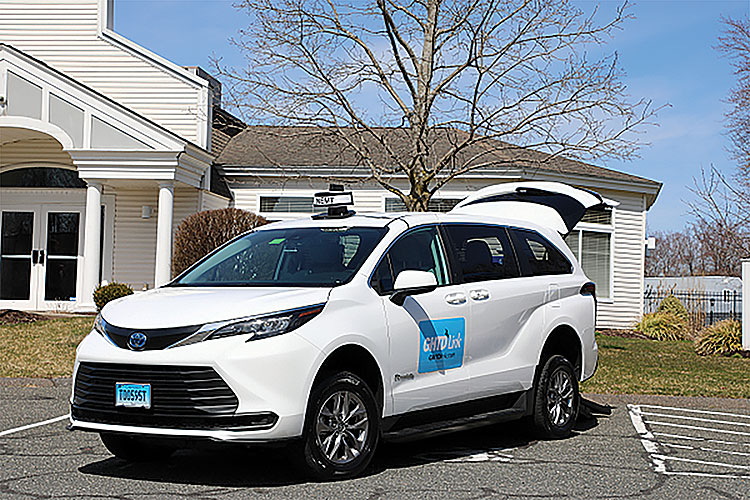
A county could contract with ride-hail companies or operate its own microtransit (think EV vans or shuttles) that pool rides to lower cost per trip. Phone apps could be used and coverage could focus on first/last-mile gaps and low-density areas. Fares could be tied to equity discounts without the overhead of empty buses.
Transparent metrics (cost per passenger, average wait time, on-time pickup, emissions per trip) could be published so the public can judge performance.
This isn’t theory, Cities from Arlington, TX (Via), to West Sacramento (microtransit), to Summit, NJ (rideshare in lieu of new parking) have shown that targeted, on-demand service can reduce costs and increase satisfaction where fixed-route isn’t a fit.
We don’t have to blow up what works. A sane plan would protect high-performing corridors and convert chronically low-ridership routes to on-demand microtransit. Deploy EVs first where utilization is strong, then scale as charging and duty cycles match real-world needs. Tie all grants and capital purchases to clear ridership and cost-per-ride outcomes.
The Bottom Line
The gap between $62.25 million in operating costs and $9.2 million in operating revenue isn’t a rounding error. If we avert our eyes from that discrepancy, we’ll keep taxing more to transport fewer. Voters should expect quarterly dashboards: ridership by route, load factor, cost per passenger, subsidy per trip, and on-time performance.
If a route misses targets for several quarters, change it. If a microtransit zone beats fixed-route performance, scale it up. Accountability isn’t anti-transit; it is pro-transit done well.
There is no shortage of demand for public money. There is a shortage of discipline in how we deploy it. In a county with steep hills, dispersed neighborhoods, and variable demand, a hybrid network—fixed routes where they truly pencil out, on-demand everywhere else—will move more people, spend fewer dollars, and better meet environmental goals.
If METRO’s ridership remains too low to justify the expense and emissions of running large buses on fixed routes, then flexible alternatives—Uber-style partnerships, county-run microtransit, shared EV fleets—shouldn’t be taboo. They should be the plan.
This is an issue hiding in plain sight. The facts are knowable; the math is public. As Jefferson might put it: If a people in a democracy expect to be ignorant and still have a fiscally responsible government, they expect what never was and never will be.
Let’s match our means to our needs, our routes to our riders, and our ideals to what actually works.
TOP PHOTO: The Connecticut Department of Transportation awarded $19.5 million to fund microtransit pilot programs for nine state districts over a two-year period starting in March of 2024.