


SANTA CRUZ COUNTY — The 2025 homeless Point-in-Time count reveals a mixed but hopeful picture for Santa Cruz County, as overall homelessness dropped 20% from last year to the lowest total since the count began.
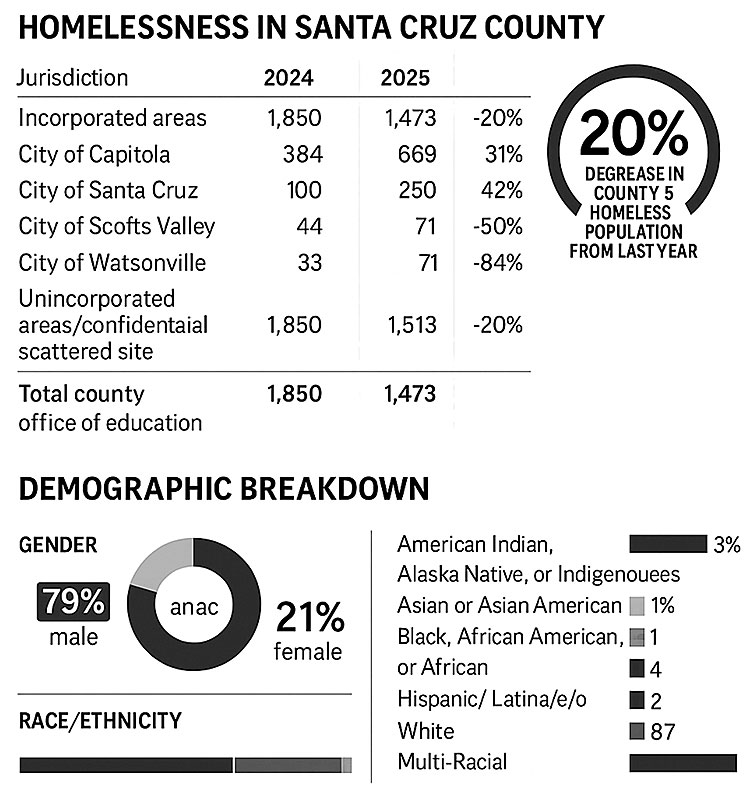
The total number of people experiencing homelessness fell from 1,850 in 2024 to 1,473 in 2025, according to the Housing for Health Partnership, which coordinates the annual effort.
However, while the countywide numbers show progress, the count also highlights stark disparities among cities.
The city of Santa Cruz saw a 31% increase, rising from 659 people counted in 2024 to 862 this year. Nearby Capitola saw a 42% increase, from 50 to 71 individuals.
In contrast, other jurisdictions reported steep declines: the city of Watsonville’s homeless population dropped by half, from 673 to 335, while Scotts Valley’s count plummeted 84%, falling from 44 to just 7.
“These mixed trends highlight the complex nature of homelessness in our region,” said Robert Ratner, director of the Housing for Health Partnership. “While we are encouraged by the countywide reduction and significant progress in places like Watsonville and Scotts Valley, the sharp increases in Santa Cruz and Capitola are deeply concerning and underscore the urgent need for targeted, localized interventions.”
Snapshot of Homelessness
The annual Point-in-Time count, held this year on Jan. 30, is a federally mandated effort conducted nationwide to provide a snapshot of homelessness on a single night.
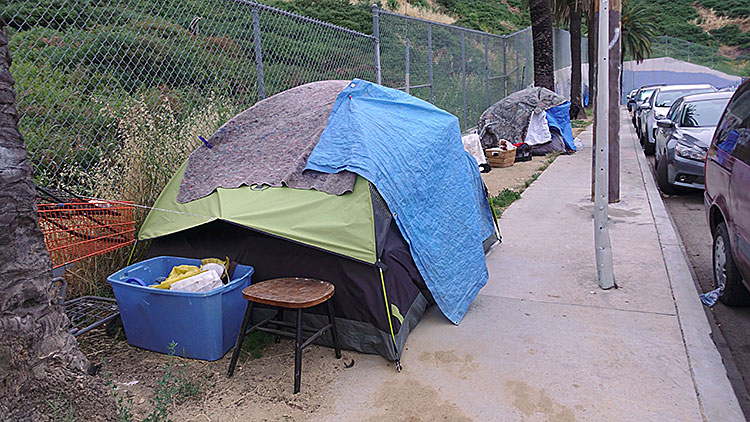
The count includes people staying in emergency shelters and transitional housing programs as well as those who are unsheltered — living outdoors, in vehicles, tents, parks or abandoned buildings.
It excludes individuals who are unstably housed but temporarily staying with friends or family, in hotels without assistance or institutionalized in jails or hospitals.
Santa Cruz County’s count is notable for its thoroughness. About 85 volunteers — many with lived experience of homelessness — canvassed the county from early morning to identify unsheltered individuals.
Specialized outreach teams covered remote and hard-to-reach locations. Shelters and transitional housing providers reported occupancy numbers from the night before the count.
In addition to the main count, a supplemental youth count targeted unaccompanied minors under 18 and transition-age youth (ages 18-24), groups often underrepresented in the main sweep.
Trained peer youth enumerators surveyed known gathering places in the afternoon to capture a more accurate picture of youth homelessness.
After the count, an in-depth survey was administered to a representative sample of individuals experiencing homelessness, gathering detailed demographic information, service needs and barriers to housing.
Demographic Overview
The 2025 count also collected detailed demographic data to better understand the composition of Santa Cruz County’s homeless population:
- About 79% identify as male and 21% as female.
- Approximately 94% identify as heterosexual.
- About 3% identify as American Indian, Alaska Native or Indigenous (including those also identifying as Hispanic or Latino).
- About 1% identify as Asian or Asian American (including those also identifying as Hispanic or Latino).
- About 1% identify as Black or African American (including those also identifying as Hispanic or Latino).
- About 4% identify as White or White and Hispanic or Latino.
- About 2% identify as multiracial (including those who also identify as Hispanic or Latino).
- Very small percentages identify as Middle Eastern or North African or Native Hawaiian or Pacific Islander, with or without Hispanic or Latino ethnicity.
This data highlights the diversity within the homeless community and the need for culturally responsive services and outreach.
Causes of Homelessness
Survey data revealed several causes contributing to homelessness:
- 41% cited loss of job, high cost of living or eviction as primary factors.
- 15% identified substance use as a key cause.
- 8% reported homelessness due to divorce or separation.
Regarding assistance:
- 55% receive food stamps.
- 67% receive Medicare, up from 37% in 2024 and 30% in 2023.
- Only 17% receive no government assistance, down from 28% in previous years.
Understanding the Data
While the overall 20% decrease is significant, it masks localized variations:
- The city of Santa Cruz now has the largest concentration of people without housing in the county.
- Capitola’s 42% increase signals new challenges in the smaller coastal community.
- Watsonville and Scotts Valley reported dramatic declines, suggesting recent housing initiatives are having impact.
- Unincorporated areas saw a 34% drop in homelessness.
The PIT count data is more than a tally — it’s a critical tool for guiding efforts to prevent and end homelessness.
Housing for Health Partnership receives about $7 million annually from HUD’s Continuum of Care grants, funding crucial housing and services.
Maintaining this funding depends on accurate counts and reporting.
“We are at a critical juncture,” Ratner said. “The numbers show progress but remind us homelessness is not solved. We need ongoing commitment, especially to support vulnerable populations.”
Funding Uncertainties Threaten Progress
Officials warn upcoming budget cuts at state and federal levels could jeopardize gains.
California’s Homeless Housing, Assistance and Prevention grant program faces reductions, and federal budget cuts threaten HUD funding.
HUD funding supports Section 8 vouchers for about 10,000 residents, including seniors, veterans, children and people with disabilities.
Cuts could increase homelessness and strain local services.
Santa Cruz County’s commitment to annual counts—including efforts to count youth—shows dedication to addressing homelessness.
But rising numbers in Santa Cruz and Capitola highlight urgency for targeted investment.
“We’ve seen positive impact in many parts of the county,” Ratner said. “Now we must act swiftly to address increases to ensure everyone has a safe, stable place to call home.”