


By Claudia Iseman
In August of 1961 a dark cloud descended over Capitola. It turned out to be a huge flock of sooty shearwater birds that seemed to have gone crazy, flying into buildings, striking power lines, crashing on the beach and acting disoriented.
The unusual event became the premise for the famous 1963 horror film “The Birds.”
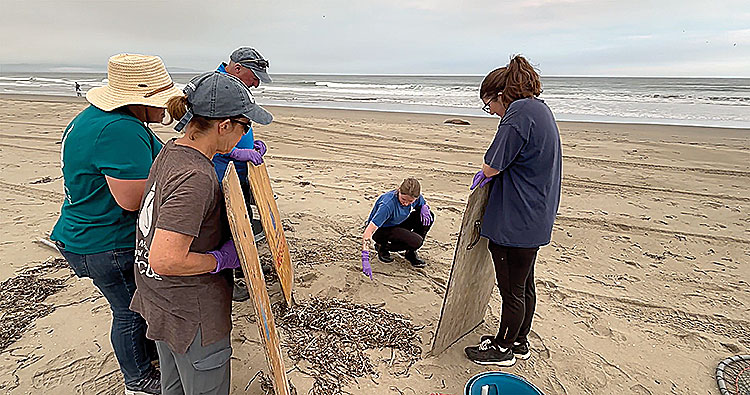
Rescuers map out a plan to save a sea lion on the beach behind them at Pajaro Dunes State Beach.
A few weeks ago, on Oct. 12, a huge herd of disoriented California Sea Lions waddled their way onto busy Sandholdt Road in Moss Landing.
The mammals were not affected by the passing cars or attempts by humans trying to coax them back into the water for their own safety.
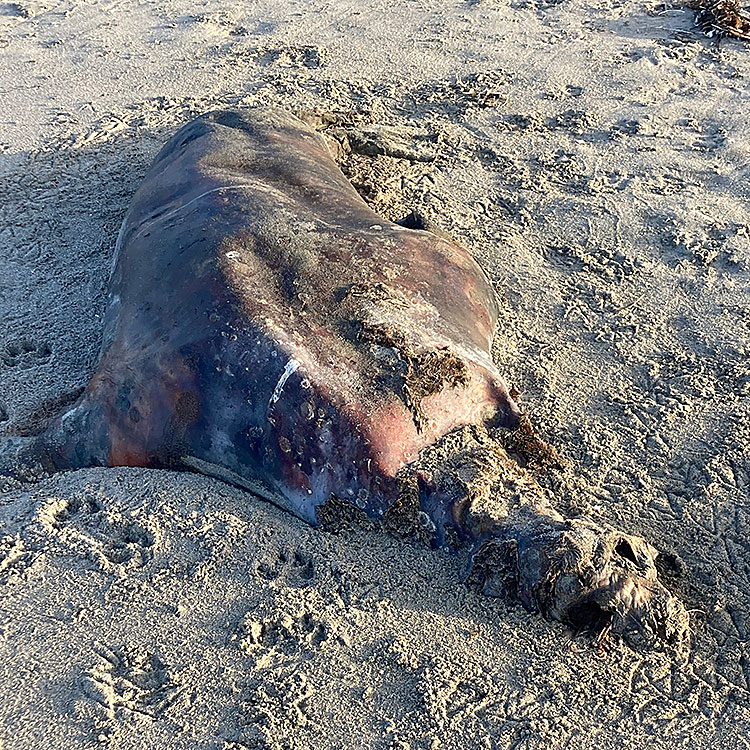
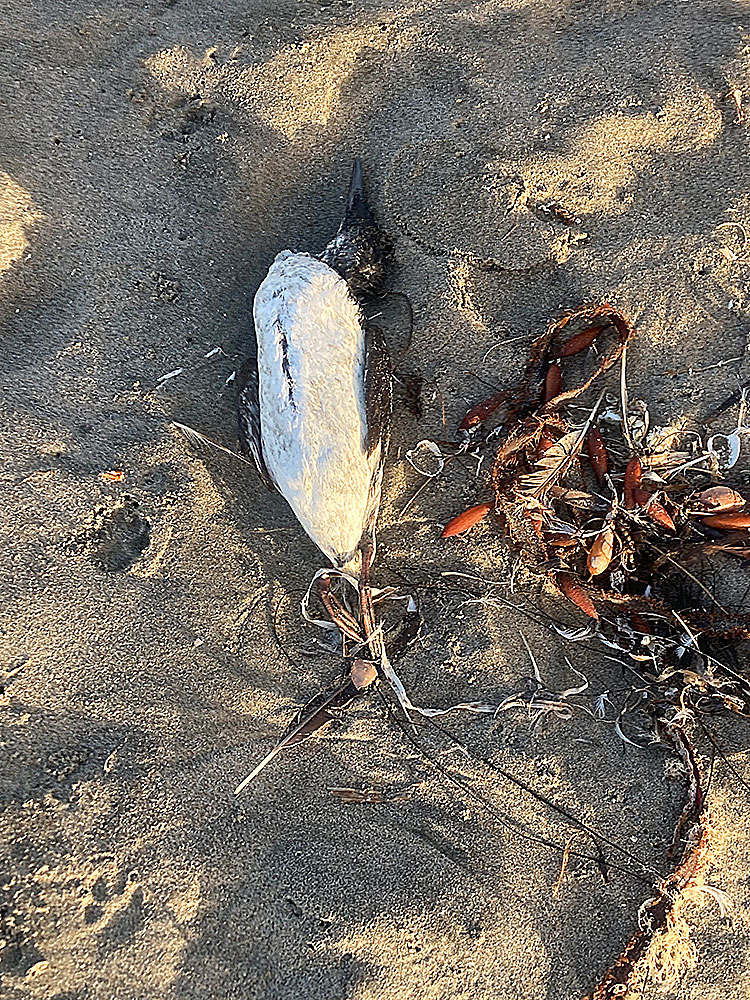
Years after the bird event in Capitola, researchers discovered domoic acid as the culprit for poisoning the sooty shearwater birds. According to Professor Rafael Kudela from UC Santa Cruz, domoic acid causes brain damage and confusion in marine life. No doubt, local beachgoers have noticed the sad sight of numerous dead sea lions and birds blanketing the shores in Santa Cruz County since July.
“Our team here at the Marine Mammal Center has been responding to a an unusually high number of California sea lions and seals suffering from domoic acid toxicosis (poisoning), with 266 being rescued since the beginning of the year,” said Giancarlo Rulli, spokesperson for the MMC in Sausalito.
The MMC has a 600-mile response range. The majority of sick sea lions are in Monterey, Santa Cruz and San Mateo counties.
“For context, the average response is roughly 75 to 90 cases a year,” said Rulli.
At the Kudela Lab at UCSC, Marine biologists have recently made a break though in understanding domoic acid and the toxic algae pseudo-nitzschia. Kudela has been studying poisonous algae in the ocean and it affects on marine life for 25-years and what the scientists are discovering at the wharf in Santa Cruz gives them some hope.
According to Kudela, researchers are using solid phase absorption toxic tracking. “That’s the passive chemical sampler we put in the ocean,” he said.
Through the use of copepods that the trackers collect, experts are able to detect early warning signs of domoic acid before it builds up.
The discovery is helpful to humans who consume some types of fish, as scientists can alert the public. Yet alerting the sea lions and birds is a different matter.
“Today the water is 63 degrees, that’s six to seven degrees warmer than normal,” says Nate Mantua, a National Oceanic Atmospheric Administration research scientist stationed at Long Marine Lab in Santa Cruz. Mantua says there’s an abundance of anchovies this year in the Monterey Bay, which is a great food source for marine life, except the anchovies are tainted with domoic acid. “There’s a lot of changes in the ocean due to the warmer temperature,” says Mantua.
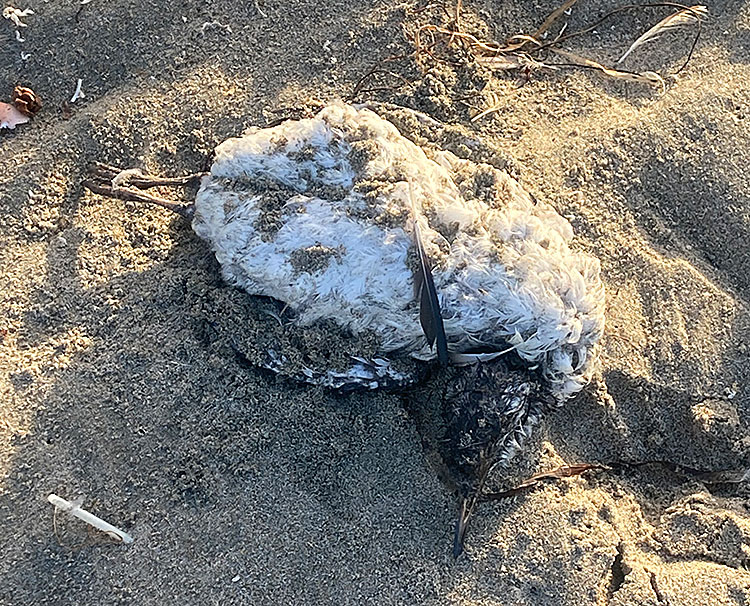
Because the ocean water is warmer, the fish are diving deeper into the colder water. The murres can’t dive that deep, especially when they don’t have the proper feathers.
One thing Kudela, Mantua, Rulli and Bergeron all agree on, is that the warming ocean temperature spells disaster for the wildlife. While toxic algae blooms have been occurring for decades, Kudela says since 2011, the poison has become increasingly worse.
“The toxic algae bloom is now bigger, it lasts longer and it’s more toxic,” says Kudela.
He predicts with the super El Nino expected this winter, the marine life will suffer.
•••
If you would like to volunteer or learn more, please see: Marinemammalcenter.org and internationalbirdrescue.org