


By Jon Chown
A new round of Measure Q grant funding could close a critical funding gap for the Watsonville City Plaza Revitalization Project, while also supporting a wide range of environmental, recreation and flood management efforts across South Santa Cruz County.
Measure Q, a voter-approved funding measure, supports projects that improve disaster preparedness, climate resilience and recovery. The program is overseen by the county’s Office of Response, Recovery & Resilience, with proposals ranked based on readiness, community benefit and long-term impact. Preliminary rankings and detailed evaluation comments were recently released.
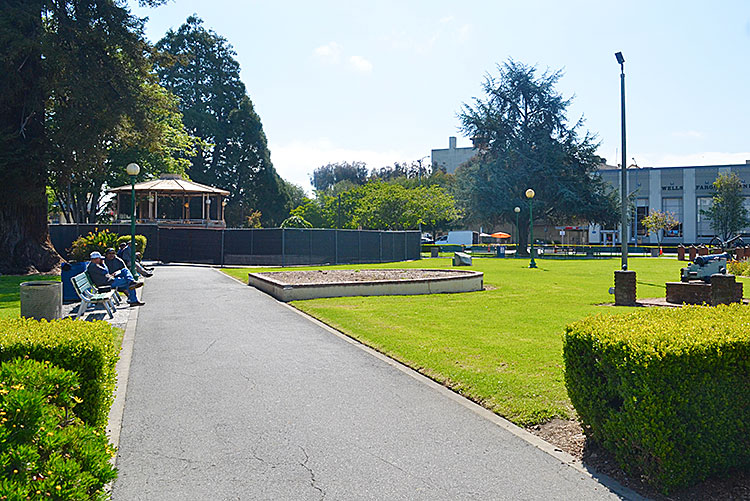
The City of Watsonville requested $600,000 to renovate Watsonville Plaza.
In South County several projects were ranked at the top of Tier 1 and Tier 2, making them highly likely for funding when the final decisions are made. Among them, is the Watsonville City Plaza Revitalization Project. The project requested $600,000 and ranked No. 3 in Tier 2. City officials say the project is currently about $600,000 short of full funding — making Measure Q dollars a potential bridge that could allow the project to move forward.
“While the process is still ongoing and no final funding decisions have been made yet, it’s encouraging to see the project recognized in this way,” said Watsonville Deputy City Manager Nick Calubaquib. “The Plaza has long been considered the heart of Watsonville and has served as a gathering place for community events, celebrations, and everyday life for generations.”
Calubaquib noted that the site is listed on the National Register of Historic Places. If awarded, the Measure Q funds would support Phase II of the project, including landscaping and lighting improvements, a permanent stage and seating areas for annual community events, upgraded infrastructure for performances and the weekly Farmers’ Market, public art, picnic areas, bicycle parking, and accessibility improvements.
“The City is currently about $600,000 short of fully funding the project. Measure Q funding would help close that gap and allow the city to move forward … without reducing the overall project scope,” Calubaquib said.
Evaluation comments underscored the plaza’s importance as a central gathering place in Watsonville. Reviewers said improvements could strengthen community cohesion while also providing a safer, more functional space during emergencies. While some comments noted the project’s high cost, they still recognized its value as a key community asset.
Beyond the plaza project, other South County projects regarding environmental health, recreational access and flood preparedness also scored high.
In Tier 1, the Pinto Lake Water Quality Monitoring project ranked No. 2 with a request of $48,000. The project would expand monitoring efforts at Pinto Lake, which has faced ongoing issues with pollution, algae blooms and poor water quality for decades. Increased monitoring would provide more consistent data to track conditions and guide future restoration work. Evaluation comments highlighted the project’s clear environmental benefit and relatively low cost, noting that the scope of the problem can’t even be fully understood without first gathering the data.
In Tier 2, the highest-ranked South County proposal is the Pajaro Valley Watershed Stewardship, Habitat Restoration and Outdoor Access and Equity Project, which requested $350,000. The project focuses on improving watershed health while expanding public access to outdoor spaces through habitat restoration, stewardship programs and new opportunities for residents — particularly underserved communities — to connect with natural areas.
Reviewers praised the project’s broad scope and strong alignment with Measure Q goals, emphasizing its combination of environmental restoration and community access, as well as its focus on equity in a region where access to open space can be limited.
Also in Tier 2, the Pajaro Valley Unified School District’s Rolling Hills Middle School Track and Field Recreation Access Project requested $500,000. The proposal would upgrade and expand recreational facilities at the school, allowing greater community access outside school hours. Improvements are designed to create safe, accessible space for exercise, youth activities and community gatherings.
Evaluation comments highlighted the project’s community benefit, particularly in an area with limited recreational infrastructure, noting that school-based facilities can serve multiple roles including public health, youth engagement and emergency gathering space.
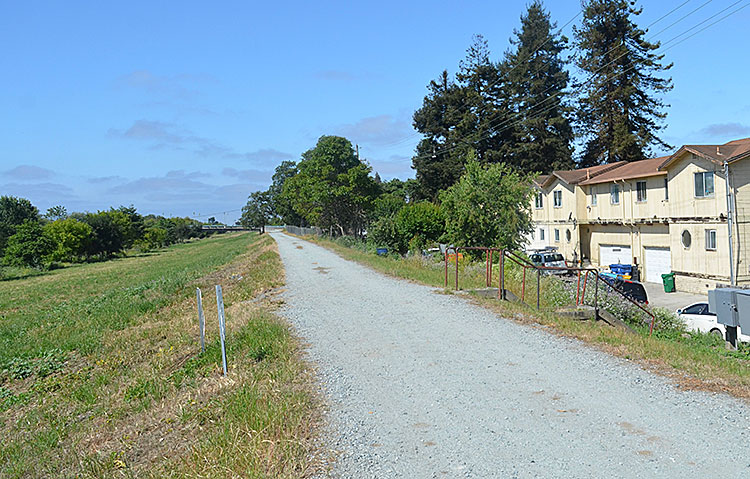
Flood management is another major focus in South County proposals. The Pajaro River Bridge to Bay Project Feasibility Study & College Lake Borrow Study, led by the Pajaro Regional Flood Management Agency, requested $390,000 and ranked No. 6 in Tier 2. The study would evaluate flood control improvements along the Pajaro River system, including sediment management and strategies to reduce flood risk from the river to the coast.
Reviewers emphasized the importance of long-term planning in a region that has experienced significant flooding, noting that while the project is a study rather than a construction effort, it lays the groundwork for future projects that could provide substantial protection for South County communities.
Final funding decisions are still pending and will be announced in June.
TOP PHOTO: Trees and other growth have spread below the Pajaro River Levee as seen on May 7. Flood management proposals are a big focus of Measure Q funding requests.