


By Joe Ortiz
If you’ve been to the Louvre or, in fact, any European or American art museum perhaps you’ve seen students copying works of the great masters.
This practice has been common for art students throughout the history of art instruction. “The art of the copy” helps students to “get inside an artist’s process” by attempting to replicate a particular style or method.

Such processes certainly support Michelangelo’s dictum: “Stupidly copy everything” to challenge artists to capture a representation on paper of what one sees in nature. But copying at the Louvre goes beyond that.
Many instructors note that few beginning artists know how to finish a drawing and ask their students to spend multiple hours on a single copy of an old master’s drawing or painting.
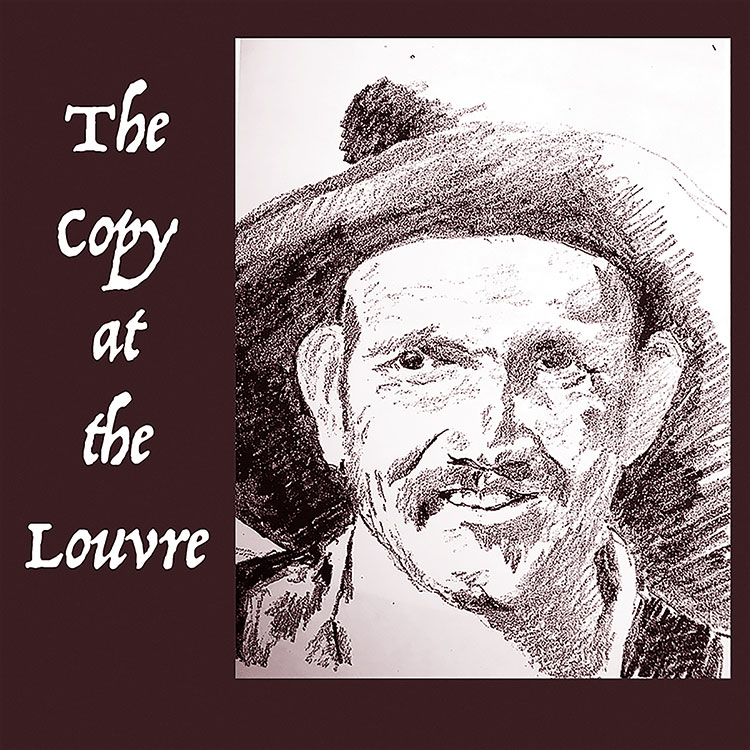
My copy from a painting by Velasquez above was done from a photograph not from a painting, but it satisfied a creative need in me to see if I could attain a credible likeness and spend an extended amount of time getting the details right.
I used the techniques of eyeballing and measuring mentioned in a previous installment. What I learned: the practice of making spontaneous marks; a new understanding of planes and contours that comprise a face; how the combination of line, shadow, and intense value help to create depth and form; and the idea of not being too fussy. In other words, make a mark and leave it alone.
My advice to myself? Don’t try to edit the drawing; instead, take another stab at it!
What Artists in Other Genres Have Done: Paul Simon’s method for songwriting is to play along with an existing recording and re-harmonize (find new chords) for the original. He would then write his own melody over the new chord progression—proving that “sampling” or “copying” existing forms and frameworks has some honorable place in the creation of something new.
What We Can Do: I’ve always believed that it is easier to make a representational copy from a photo than from nature, because all the visual relationships have been established. Copying from a photo can teach us something about value, contrast, and synthesis. But remember that copying only gets us so far. Eventually the practice can often block an artist’s original vision — easily becoming too easy and leading to rote image production. So, most instructors would encourage students to go back to copying from nature.
In the end, when picking an exercise—or inventing one for oneself—it’s always safe to revisit what Michelangelo said: “Stupidly copy everything.” My translation: Copying is a valid technique in art; it’s not cheating. By attempting to accurately replicate a given subject, artists bring their own unique thumbprint to the original and therefore make a work of art their own.
•••
Reader Response: I’d love to hear your comments and questions. Email me at joe@gocapitola.com