


By Jon Chown
The Scotts Valley City Council approved a revised Town Center Specific Plan this week that reflects dozens of changes made in response to public comment, particularly around land uses, building design and parking requirements.
City staff said feedback received before, during and after a November Planning Commission study session led to changes intended to address concerns from residents and business owners. The updated 2025 plan governs future development of the former Skypark Airport area and surrounding parcels.
Among the most visible changes are adjustments to what businesses will be allowed, and under what conditions, in the new mixed-use districts. Bars, tasting rooms, taphouses and taverns will now be permitted unless they propose operating after 10 p.m., in which case a conditional use permit would be required. Boutique alcohol sales stores were also added as permitted uses.
The changes appeared to be mostly embraced.
“It’s a very quiet, sleepy town and it would be wonderful to have this kind of vibrant community,” said Malaka Thompson.
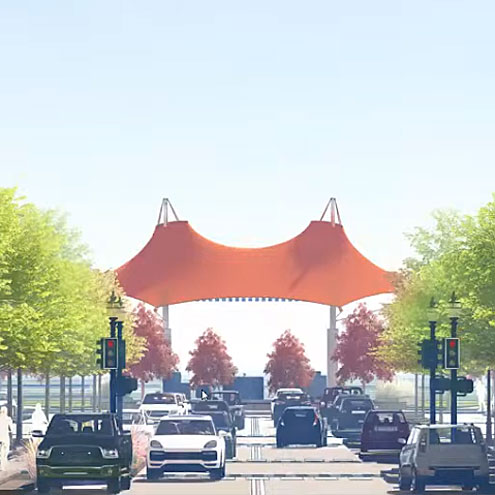
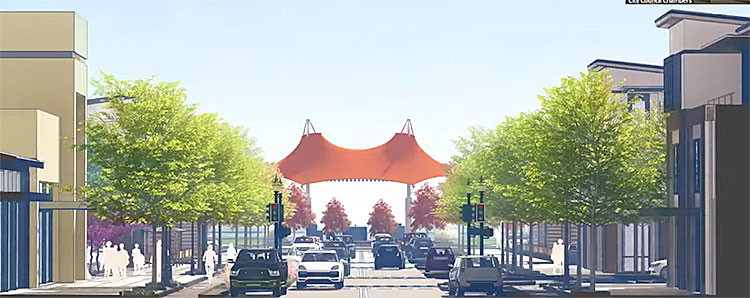
Resident Robert Aldine said he and others he had talked to really liked the conceptual drawings the splash pad water park features that were included. “I love the direction and what I’m seeing and I just want to keep that in our minds,” he told the council.

Design standards were revised to improve compatibility with surrounding streets. Along Mt. Hermon Road, a new stepback requirement limits building heights to 40 feet for the first 120 feet from the curb, down from the originally proposed 50 feet. Setbacks along Kings Village Road were increased, while rules governing internal connections, storefront depth and trash enclosures were refined to improve site design and pedestrian experience.
Parking proved to be one of the most debated topics. In response to concerns that minimum parking ratios were too low, the city increased requirements for general retail, restaurants and office uses, and added new standards for small-scale recreational businesses. The plan now clarifies that changes in use — even without building expansion — can trigger additional parking review if the new use is more intensive.
The city also tightened rules around shared parking. Minimum parking requirements generally may not be met using on-street spaces, and shared parking districts would initially apply only within the Town Center core. To address long-term concerns, the plan now requires a master parking management plan as part of any future development agreement.
Other changes addressed circulation and land-use flexibility. Labels suggesting specific uses, such as townhomes on certain blocks, were removed to allow a wider range of options.
Maps showing future streets and pathways were clarified as conceptual, allowing for easier future adjustments. The city also explained how the Senior Center site could either remain city-owned or be incorporated into future Town Center development, potentially with senior housing.
City staff said additional comments not incorporated into the plan will be considered later during project-level reviews, when specific development proposals and agreements come before the city.