
By Tad Stearn
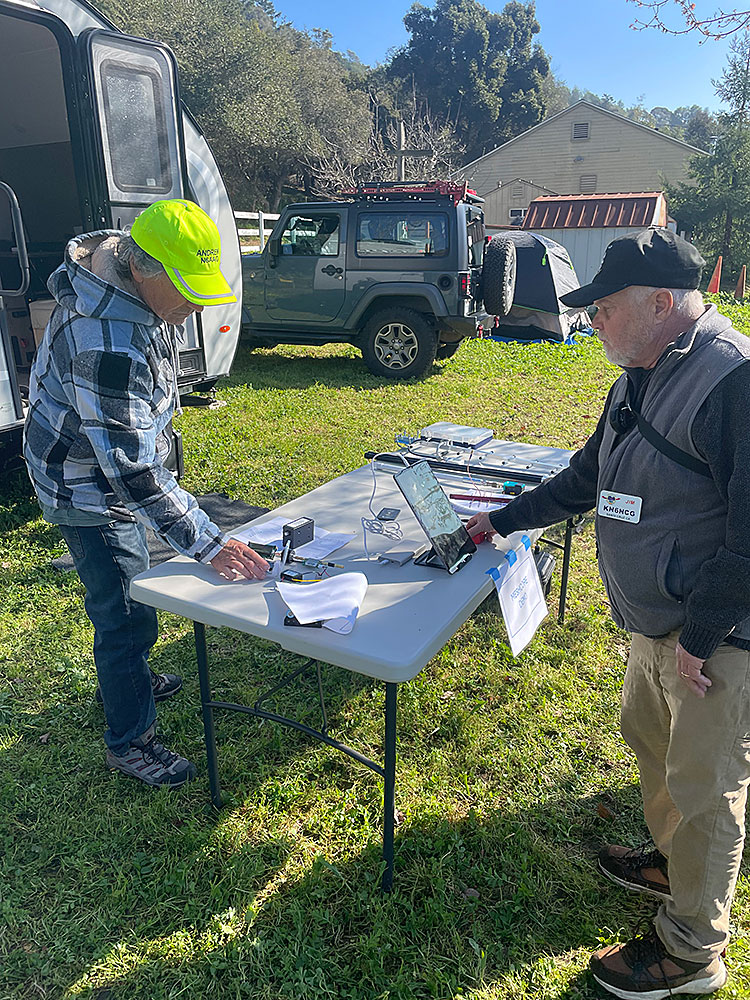
The Santa Cruz and San Lorenzo Valley Amateur Radio Clubs hosted a weekend long “Winter Field Day” Jan. 24-25 at the Santa Cruz County Mounted Posse House and equestrian grounds.
Winter Field Day, organized by the Winter Field Day Association, is a training and educational event for amateur radio operators to practice setting up field stations in remote locations and connect with other participants around the world. The annual event takes place on the last full weekend in January.
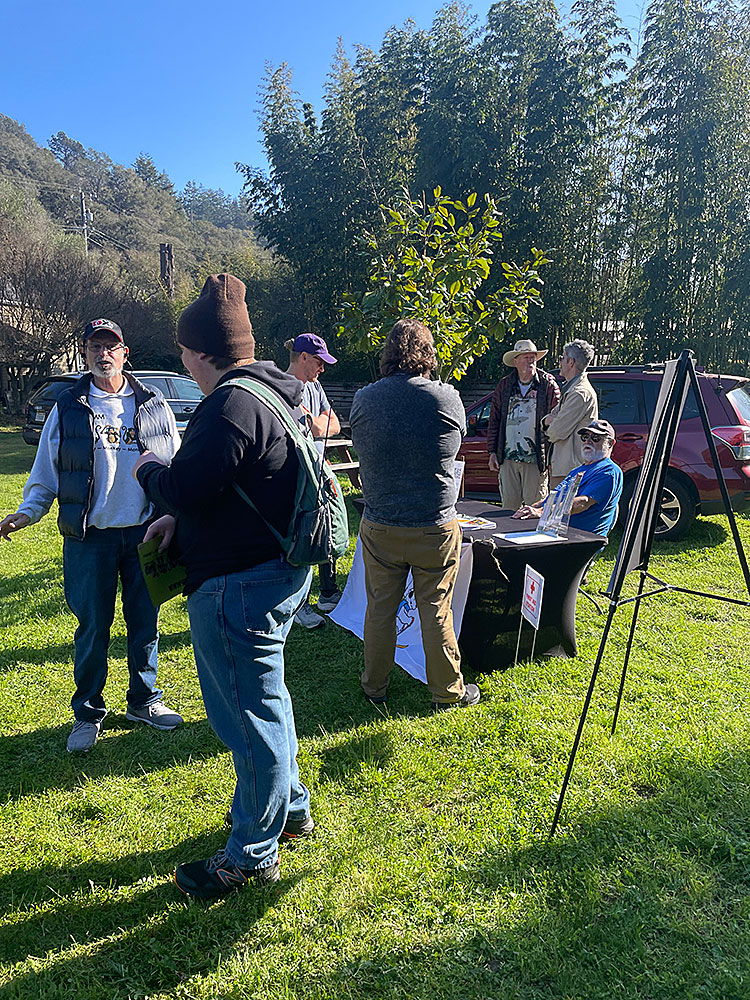
Amateur radio enthusiasts gather on Jan. 24-25 for Winter Field Day.
Amateur radio, or ham radio, has been around as long as radio itself, dating back to the early 1900s. Since that time amateur radio has evolved from early unregulated tinkering to a global network of licensed hobbyists. The Santa Cruz Amateur Radio Club, founded in 1916, dates back to those early days of radio.
The unique call signs used by ham radio are assigned by the FCC to identify individual licensed radio operators, their location and license type. If you’ve seen a license plate on a car with a series of five or six letters and numbers, usually starting with a K or W with a 6 in the middle, chances are it was an amateur radio enthusiast’s call sign, with the 6 indicating the California region.
Jim Wason, vice president of the Santa Cruz Amateur Radio Club, is a long-time radio operator and a wealth of information about amateur radio in general. While he acknowledges there’s a world of complex radio gear out there, Wason says people who may be interested in amateur radio shouldn’t be intimidated by the technology.
“There are so many different aspects to ham radio. You don’t need to get into the tech side if you don’t want to” he reassures. “You can start with a $19 handheld radio that goes in your pocket. And a license. You can get as far into it as you want.”
One of the most powerful things about ham radio, he says, is there’s always somebody out there to talk to.
Locally, Winter Field Day is organized as a fun opportunity for radio club members to socialize, share tips and technology, practice communications and hold in depth training sessions.
A “Get-on-the-Air” (GOTA) station allowed anyone to try amateur radio firsthand, and a contest took place where participants worldwide contacted as many other stations as possible to hone their operating skills.
But fun and games aside, the event also has a very serious purpose. Winter Field Day’s main objective is to help radio operators improve their preparedness for emergencies and enhance their skills in adverse conditions.
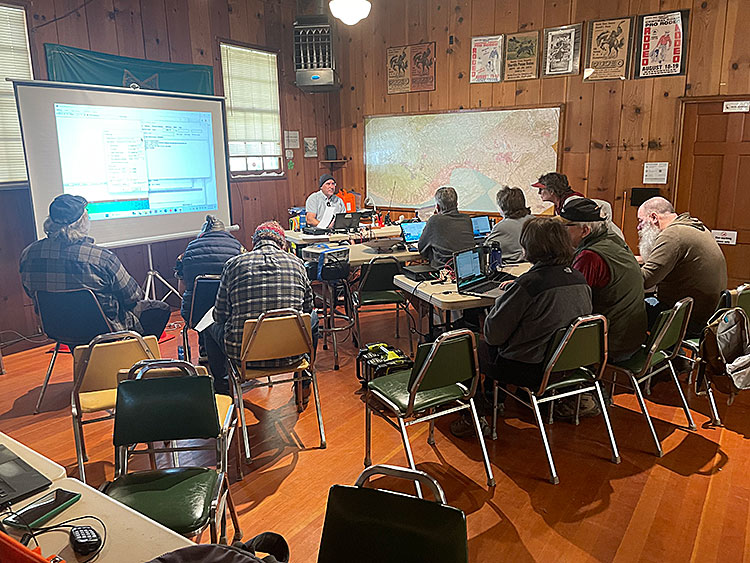 The Association and individual clubs around the globe strongly encourage ham radio operators to practice portable emergency communications in winter environments, as freezing temperatures, wet conditions, snow, ice and other hazards pose unique operational challenges. In the event operators are called upon to provide communication support during an emergency, the skills required to quickly establish radio communications can save lives.
In times of crisis, local volunteer organizations such as Santa Cruz Communications Support and Santa Cruz County Amateur Radio Emergency Service (ARES) supplement critical public safety communications. Disaster response readiness is their mission when other forms of
communication have been disabled or when operating in remote locations. These volunteers coordinate with other first responders and organizations such as the Community Emergency Response Team (CERT) when called upon for assistance or search and rescue.
Wason, who is also a member of CERT and ARES, knows the importance of this all too well. “This part of the world is the Disneyland of natural disasters”, he explains. “Between the San Lorenzo River, San Andreas Fault, wildfires, winter storms, mudslides, we have just about everything here.”
“We need to practice and be ready,” said Wason. “Like the recent search for the missing woman in Bonny Doon, I threw my radio and gear into the truck, and within an hour and half of getting the call we had a dozen radio operators up there and went into the field to help with search and rescue and radio communications. We wouldn’t be able to do that without practice, practice, practice. And every situation is different.”
Wason pointed out that this network of volunteers and radio enthusiasts can always use new members and volunteers.
“Amateur radio has a reputation as an older guy’s hobby. Our club has been operating for 110 years, one of the oldest, started by Melvin Wilder of Wilder Ranch,” he said.
Membership has fluctuated over the years, but lately the clubs have seen an uptick in interest from the next generation, including students from UCSC who are bringing new energy and interest. That’s important, not just from a club membership standpoint, but also as a future resource for emergency communications expertise.
In between disasters, ham radio operators do enjoy the lighter side of the hobby. As Wason points out, you get a chance to communicate with like-minded people on the other side of the world.
“Every afternoon a Japanese operator checks in and wants to talk, so it’s always nice to talk to him and find out what’s going on in Japan,” he said. “It’s fun to make long distance contacts. Yesterday I contacted Turkey, and after that New Zealand. That’s the essence of ham radio. We have certain rules and regulations, but nothing is encrypted. It’s open source and world’s our oyster. We can play with everything.”
•••
For more info about amateur radio or local club membership, contact the Santa Cruz County Amateur Radio Club and/or the San Lorenzo Valley Amateur Radio Club.