
WATSONVILLE — Santa Cruz County agriculture reached a record gross value of $762,956,000 in 2025, driven by a nearly $60 million increase in strawberries, according to the county’s latest crop report. It’s the highest total in the county’s history.
The 2025 total was up $21 million, or 2.8%, from the record $741,917,000 set in 2024. Before that, the record was $683,012,000, set in 2018.
 “Strawberries had an exceptionally strong year, but the report also shows how much conditions can vary from crop to crop,” Agricultural Commissioner David Sanford said in a county news release. “These figures reflect what growers produced and its estimated gross value, and do not account for the substantial costs of growing, harvesting and bringing products to market.”
The record does show how much the farm economy has grown in dollar value. The total was about $152 million in 1987. It passed $500 million in 2010, $600 million in 2014 and $700 million in 2024.
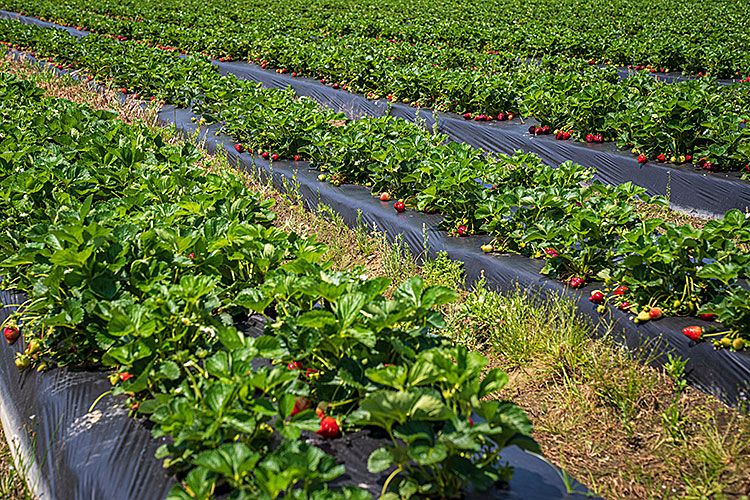
Strawberries have remained the county›s leading crop for decades. Their value rose 27.4%, from $218.9 million in 2024 to $278.9 million in 2025. Growers harvested 108,930 tons, up 24.4% from the year before. Acreage rose 3.4% to 2,730, and the estimated price increased 2.4% to $2,560 a ton.
The strawberry value was the highest ever recorded by the county, topping the earlier peak of $229.1 million in 2016, but it was not a record harvest. Growers produced nearly 129,800 tons in 2018. All berries together were worth $490.3 million, or about 64% of the county total. That’s about a 10% increase over 2024.
Blackberries were the clearest long-term climber. The county began listing them separately from other bush berries in 2010, when they were worth $34.2 million on 763 acres. The latest report shows their value has more than tripled to $106.4 million on just 1,240 acres. Blackberries moved ahead of raspberries for the first time in the reports, becoming the third-highest item on the county’s crop-value list behind strawberries and nursery stock.
Raspberries moved the other way. Their value fell 15.7% from last year to just under $105 million. That was 37.7% below their archive high of $168.5 million in 2018. Raspberry acreage fell about 40% over the same period, from 2,314 acres to 1,380.
Vegetables also lost ground in 2025. Their value fell 15.8% to $82.5 million. Head lettuce dropped 27.2% to $11.1 million, while leaf and romaine lettuce fell 24.5% to $9.2 million.
Broccoli was a bright spot, climbing 65.2% to $8.3 million as acreage and production increased. Brussels sprouts rose 15.2% to $10.3 million.
Nursery crops remained the second-largest broad category, but their value fell 5.3% from last year to $153.8 million. Nursery stock has still grown 35.2% in value since 2020. Cut flowers and cut greens increased 4.8% in 2025 to $7.5 million, but their value was about 71% below the $25.8 million reported in 2021.
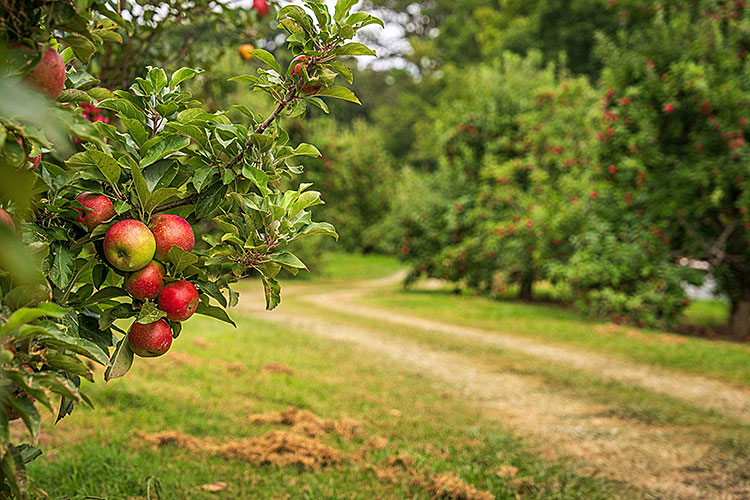
Apples show a mixed picture. Their value rose 5% from last year to nearly $14 million, the highest since 2019.
Production also edged up even though apple acreage fell 10% to 1,610, the lowest figure in the archive. The 1987 report listed 5,200 total apple acres and 70,300 tons. In 2025, growers produced 33,290 tons.
Organic production was also up. The value of 2025’s organic production was $143.9 million, compared with $142.6 million in 2024. The number of registered organic operations increased from 138 to 146 with 6,174 acres in production.
The county began tracking organic production in 1990. That report recognized 50 organic farms, and noted that annual organic sales might soon exceed $1 million. Since then it has blossomed. Organic value passed $100 million in 2014 and reached an all-time high of $147.67 million in 2019.
Among smaller categories, poultry, livestock and animal products rose 23.5% to $11.8 million. Wine grapes fell 20.4% to $4.6 million, and timber dropped 12.5% to $5.5 million.