

By Jon Chown
SANTA CRUZ — Santa Cruz County faces a $30 million budget shortfall next year that could grow into a combined $285 million gap over six years if spending and services do not change.
County Executive Officer Nicole Coburn gave that warning during the county’s first State of the County address held Sept. 29 at the Board of Supervisors chambers. She said the county is spending more than it receives and has already used millions of dollars in reserves and other one-time money to balance its budget.
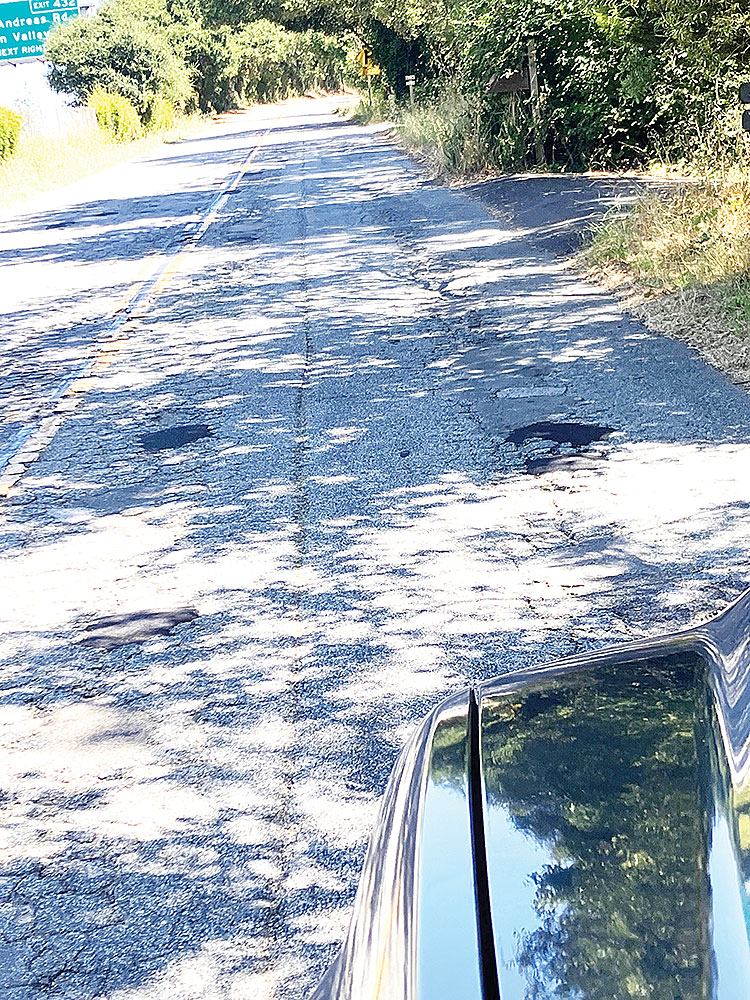
Crumbling roads in unincorporated areas are just one sign of the county’s budget woes.
The county also faces major federal funding cuts, growing labor and service costs, overdue repairs and financial trouble at Watsonville Community Hospital. Coburn said two numbers show the size of the overall problem: $30 million and $285 million.
The county expects a general fund shortfall of about $30 million in the next budget year. If the county continues operating as it does now, it will get worse and in six years that deficit could total about $285 million, she said.
The county approved a $1.4 billion budget for the 2026-27 fiscal year. That includes an $861 million general fund budget. Officials balanced this year’s budget without laying off current employees. However, they eliminated nearly 62 vacant positions and used more than $44 million in one-time money. That included $30.5 million taken from general fund reserves.
“The 2026-27 budget is balanced, but the underlying structural problem is not,” she said.
County expenses are expected to grow by about 6.1% each year. Revenue is expected to grow by only about 5%, Coburn said. That difference becomes larger each year.
The financial forecast also assumes the county will not add workers or face a recession or another major disaster.
It does not include the full cost of overdue repairs, new government requirements or projects included in the county’s strategic plan.
The county has already limited hiring and travel and is reviewing programs to decide which ones provide the best results and which might be cut. They are also looking for new sources of local revenue.
Federal policy changes could make the budget problem worse. Coburn estimated that federal funding cuts could reduce money for county health and human services by about $25 million each year. The total effect on the county’s health care and social service system could be more than $200 million a year, she said.
About one-third of county residents are enrolled in Medi-Cal. About one in five receives CalFresh food benefits. Medi-Cal enrollment has already fallen by more than 9,500 people, or about 12%, since December 2024, Coburn said. New federal work and eligibility rules could cause enrollment to fall by as much as 32%. That could affect about 25,000 county residents.
“When the funding goes away, the need doesn’t go away with it,” Board of Supervisors Chair Monica Martinez said.
Coburn also warned about the financial condition of Watsonville Community Hospital. She said the Pajaro Valley Health Care District recently reported that the hospital had enough cash to cover only about eight days of expenses. The hospital was losing nearly $86,000 a day, she said. Without immediate help, it could be at risk of closing within six to 12 months.
Before the dire financial warning from Coburn, Martinez started the evening by highlighting new programs and projects.
“When I became chair of the board this year, one of the things I wanted to do was create a chance to talk directly to you, the people we serve, about how the county is doing,” Martinez said. “This is your county and I think you deserve to hear directly from us about the work we’re doing on your behalf.”
Martinez began by discussing the new pump track in Felton. She said the project took years of community work, fundraising, permits and partnerships.
For the children using the track, the result was all that mattered.
“They just knew that somebody had built a place for them,” Martinez said. “This is really what government is supposed to do.”
Martinez also pointed to several new health and housing programs as signs of progress.
Hope Forward, also known as Esperanza Adelante, opened in Live Oak to provide crisis care for children and young adults. The center has an eight-chair area where young people can receive immediate care. A 16-bed residential crisis program is also planned.
The center served 145 young people under age 20 during its first five months, Martinez said. Fifty-five percent were younger than 15. About 77% returned home after receiving care, while 21% were sent to hospitals for more treatment.
The county also opened Bridge House, a 32-bed temporary housing center on Soquel Avenue. It provides housing and mental health services. Martinez recalled that one resident told a county worker, “Last night was the best night’s sleep I’ve ever gotten.”
In Watsonville, the county opened HOPE Village. The 34-bed center provides temporary shelter and services meant to help people move into permanent housing.
Martinez also discussed Veterans Village in Ben Lomond and Park Haven Plaza in Soquel. Both housing projects faced financial problems.
The county has also added recreation projects. Martinez highlighted Valle del Pájaro, the first new county park in more than 20 years. She also mentioned a planned bike park at Pinto Lake, batting cages at Anna Jean Cummings Park and new trails at the Pace Family Wilderness property near Quail Hollow Ranch.
Martinez said the county must prepare for wildfires, floods, landslides and other disasters. Roads are especially important because they provide access to schools and emergency services. They are also needed during evacuations. Measure Q, which provided about $2.74 million in its first round of grants, will help, she said, but won’t solve everything.
“We have hundreds of miles of roads and decades of accumulated needs,” she said.
Coburn ended the address by telling residents that it will be a challenge, but to not despair.
“The numbers tell us how difficult the road ahead will be,” she said. “They do not tell us where we are going.”