
A Half-Century of Service to the Santa Cruz County Community
By Jon Chown
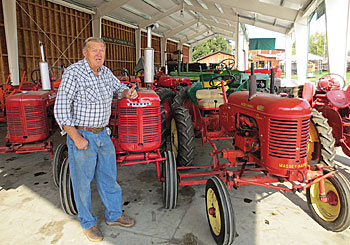 WATSONVILLE — John Kegebein first started working at the Santa Cruz County Fair in 1963 when he was put in charge of maintenance. Now, 50 years later, it’s still easy to find Kegebein; most any day you will find him at the fairgrounds working on something.
“John’s always been the same — he’s a hands-on, get-the-job-done, humble person,” said Chuck Allen, who started working as the fair manager in 1965. “He’s meant everything to this fair.”
Kegebein was born and raised on a dairy farm in Crystal Lake, Illinois and wound up in Santa Cruz County after being discharged from the Army at Fort Ord. It was winter and much warmer here than back home, so he decided to stay. After a short stint working at Marinovich Cold Storage, he joined up with the fair and 21 years later, retired, but stayed active as a volunteer.
There were many memorable moments, Kegebein said, and he has seen many changes and improvements. The Crosetti Building was constructed in the ’70s; the livestock area has been expanded; and the bathrooms have all been updated. Most importantly, Kegebein said, the fairgrounds was connected to the city sewer system. The septic tank system had been a real mess, he said. One year, it almost killed him.
Kegebein said one year a pipe that led to a 1,000-gallon septic tank from the concessions and barns area plugged.
“Gravel got in there, so I crawled down to ram it with something, to break it loose, not realizing that this pipe was filled all the way up a hill. When it broke loose, it just all came at me. If I’d not had two guys up top pulling me out of that hole, I would have been dead,” Kegebein said.
It might have eventually meant the end of the fair as well, for Kegebein is partially credited with saving the community event.
In 1991, Kegebein came out of retirement to be fair manager. After decades of growth and improvement, the 1989 Loma Prieta Earthquake shook things up and the fairgrounds needed a boost. After seven years, things were looking good and Kegebein retired again, but only as fair manager. He was still working full time to build up the Agricultural History Project (AHP) on the fairgrounds.
Kegebein was elected president of AHP in 1986 and, with a group of dedicated volunteers, constructed the AHP’s four buildings — 20,640 square feet that house agricultural artifacts and exhibits. More than 40 restored tractors, several wagons and buggies, a caboose and various other antique implements previously used in local agriculture are stored there.
But while Kegebein toiled at the AHP, finances at the fairgrounds went back into a slide. In 2007, Kegebein came out of retirement once again, this time to volunteer his time as the fair’s CEO. After two years, and with the fair’s finances back in the black, he retired again.
“John has meant everything to this fair,” said longtime fair supporter Loretta Estrada, who has also served on the fair’s board of directors for many years. “There might not be a fair if not for what John did.”
In 2009, he retired again. Now, his son David has stepped in to fill his shoes, leading a volunteer management team that keeps the fair going. It’s far different today than decades ago, Kegebein pointed out. The state doesn’t support fairs the way it used to and it’s a little more difficult to draw the public in. Kegebein said he remembers when more than 300 head of cattle would fill the barn, but this week there probably won’t be more than 40. Ponies, as well as cars, used to race on the track; apples used to fill the Harvest Building, now its berries.
“I have a lot of good memories here, watching kids grow up. I’ve seen three generations of kids grow up out here,” he said.
David was one of those kids. His first job at the fair was picking the heads off of dead petunias.
“And now he’s managing the fair,” Kegebein said. “I think David and the volunteer crew have done a tremendous job of cleaning this place up and I’m hoping people will come out and enjoy the accomplishments that have been made this past year.