
SANTA CRUZ — The Resource Conservation District of Santa Cruz County has secured a $7 million Forest Health Grant from CAL FIRE for projects designed to improve the health of forests on both public and private lands in the Santa Cruz Mountains.
The work will take place on 830 acres of high-priority landscapes that will form a “ring” around populated areas in Santa Cruz County, covering a broad geographic area, from the northern coastal regions of the county, through the City of Santa Cruz, across the San Lorenzo Valley’s rare Sandhills habitat, and up into the higher elevations of the Forest of Nisene Marks State Park.
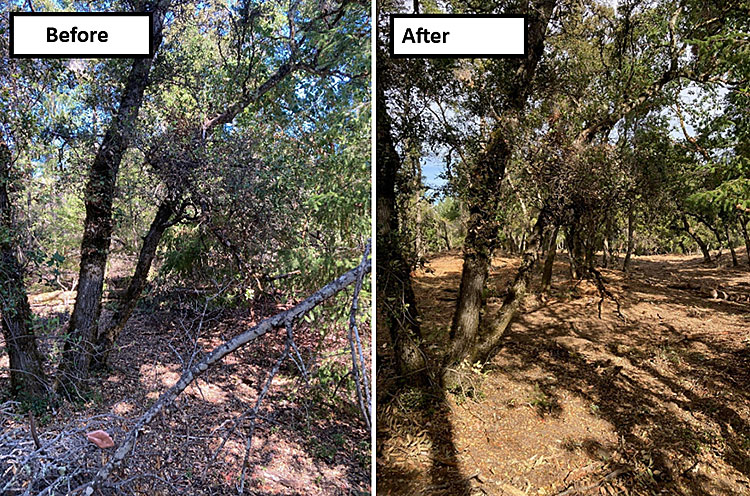
 Treatments range from continuing post-fire reforestation and invasive species removal to thinning encroaching conifers and conducting prescribed burns — all designed to reduce hazardous fuels, restore native habitats, and build landscape-scale resilience to wildfires.
“This project is about creating a connected, resilient landscape,” said Lisa Lurie, executive director of the RCD. “By working across property lines and jurisdictions, we can make a lasting impact on forest health, biodiversity, and community safety in the face of increasing wildfire threats. This award reflects the RCD’s long-standing role in uniting people and resources to protect our region’s land, water, and wildlife. It’s a powerful example of what we can achieve when communities come together.”
This partnership represents a diverse group of stewards and landowners where the projects are taking place, including the Land Trust of Santa Cruz County, California State Parks, UC Santa Cruz, Cal Poly’s Swanton Pacific Ranch, and the City of Santa Cruz Parks Department.
 “This grant will enable us to continue active forest management in the unique sandhills ecosystem, protecting both the rare biotic resources and the surrounding human communities,” said Matthew Timmer, director of land stewardship at the Land Trust of Santa Cruz County.
These projects will be implemented over the next several years and aim to serve as a model for integrated, landscape-scale forest resilience.
Building on past work and local residents’ own actions — like planting natives, clearing brush, chipping debris, and hardening homes.