
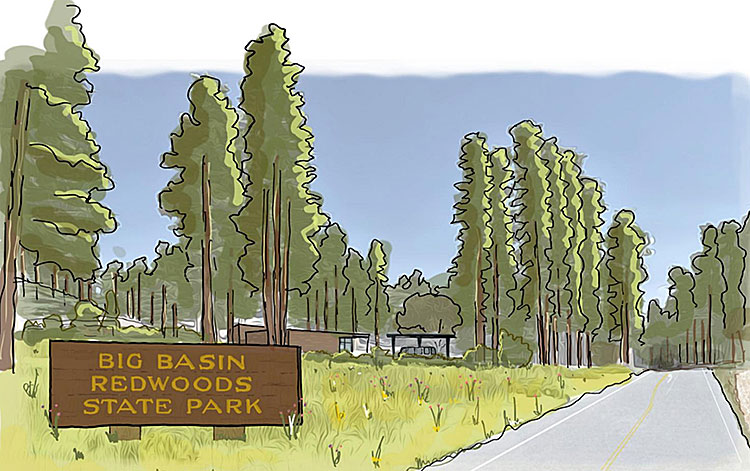
California State Parks has released the draft Facilities Management Plan for Big Basin Redwoods State Park, nearly five years after the devastating 2020 CZU Lightning Complex Fire destroyed most of its infrastructure. Both a summary and the complete study can be viewed at reimaginingbigbasin.org.
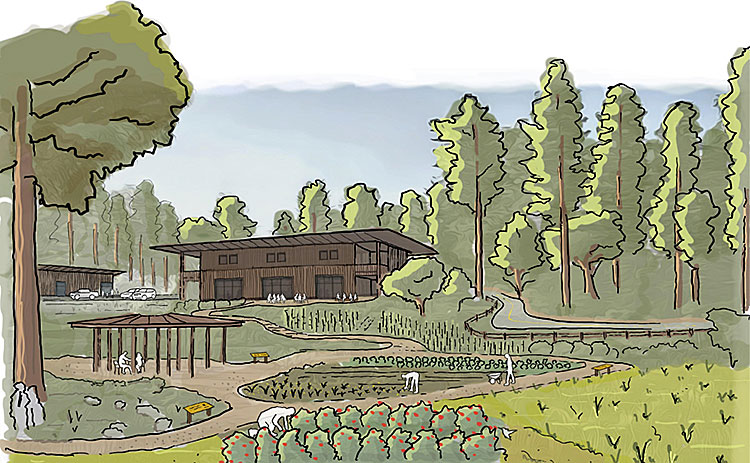
A cultural center and mixed Tribal use area is proposed at Little Basin for indigenous groups to highlight their culture.
A public webinar is scheduled for July 10 from 6 to 7:30 p.m., to share plan details and invite input on the environmental review process. The updated Facilities Management Plan aims to restore access while also respecting natural ecosystems and cultural heritage.
Big Basin Redwoods State Park is California’s oldest state park, established in 1902. It holds significant natural and cultural value. Once home to the Quiroste and Cotoni tribes, the land is culturally important to the Amah Mutsun Tribal Band and the Muwekma Ohlone Tribe.
California State Parks Director Armando Quintero emphasized that the park’s renewal is about rebuilding, while creating a future focused on old growth forest health and inclusive public access. The plan incorporates technical evaluations and public feedback received earlier in 2024.
The recovery strategy reimagines the park’s layout to reduce environmental impact and enhance visitor experiences. It includes reconstruction of campgrounds, day-use areas, transportation infrastructure, and visitor facilities, all designed to protect and highlight the park’s ancient redwood ecosystem.
Old Growth Core and Day-Use Hub
The former park headquarters will be transformed into a day-use activity hub with minimal paving and structures to reduce ecological disturbance. Most parking and visitor services will be moved to the park’s edge, and the old site will be restored to native habitat. Educational signage and natural interpretation features will help visitors appreciate the old growth forest.
Campgrounds on the Edge
Camping will return in a reconfigured layout that avoids sensitive old growth zones. New campgrounds will be developed at Huckleberry, Lower Sky Meadow, Upper Sky Meadow, Sequoia Group Camp, and Little Basin.
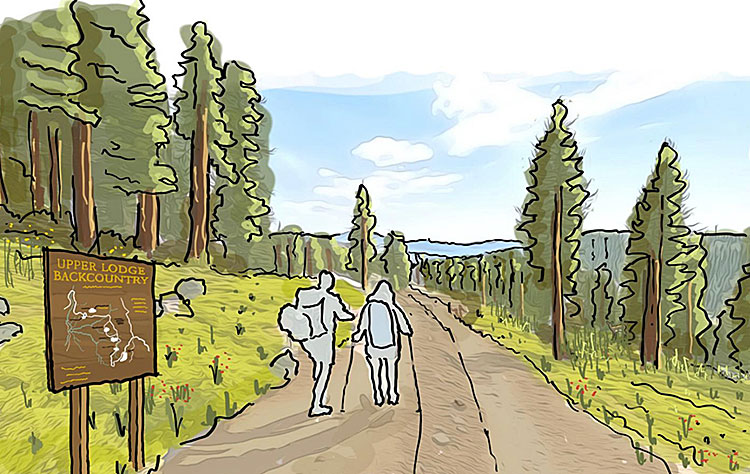
The proposed Upper Sky Meadow Area will allow visitors to escape the busier areas of the park for a hike along Upper Lodge Road to the walk-in campsites.
These will offer a variety of options, including car camping, cabins, small and large group sites, walk-in locations, and backcountry trail camps.
Importantly, former campgrounds in high-sensitivity areas such as Blooms Creek, Sempervirens, and Wastahi will be removed and restored to their natural state, protecting the old growth redwoods. Despite these changes, the total number of camping opportunities will remain similar to pre-fire levels.
Saddle Mountain Welcome Center and Shuttle System
A new Welcome Center will be built at Saddle Mountain, located outside the sensitive core. This will serve as the main visitor entrance, offering a visitor center, café, store, and weekend shuttle service. Visitors will park at Saddle Mountain and take a 15-minute shuttle ride into the old growth area.
The shuttle will operate year-round on weekends, with potential expansion depending on demand. To further ease congestion, California State Parks will partner with Santa Cruz Metro to enhance public bus service from the Scotts Valley Transit Center and nearby areas.
Little Basin Tribal and Recreational Center
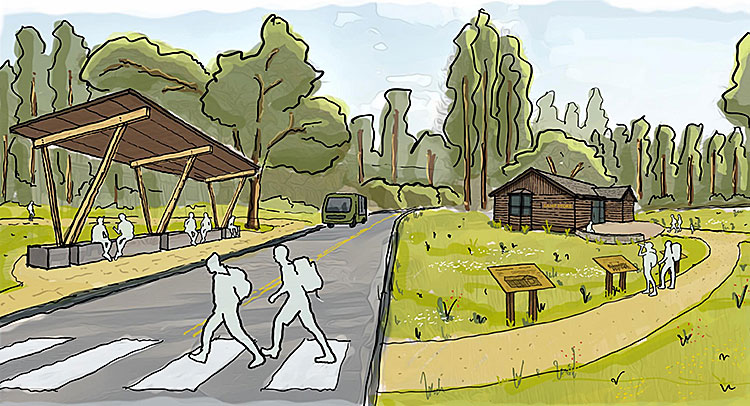
The proposed Sky Meadow campgrounds will be connected to other areas of the park by a shuttle system.
The Little Basin area will be transformed into a multi-use site combining public recreation and Indigenous land stewardship. Plans call for a new cultural center developed in collaboration with tribal partners. This center will support ecological restoration, traditional ceremonies, and cultural education and activities.
Much of the area will be restored by removing pavement and aging facilities to allow for the recovery of meadows, streams and wetlands. Group camps, cabins and tent sites will be rebuilt for public use alongside tribal uses.
EIR Process
A Supplemental Environmental Impact Report will be created to analyze the plan’s potential environmental impacts and propose mitigation measures. A Notice of Preparation has been released and the public can submit comments on the scope of the EIR through July 18. The final Facilities Management Plan, General Plan Amendment, and Supplemental EIR are expected to be released late 2025, followed by another public comment period.
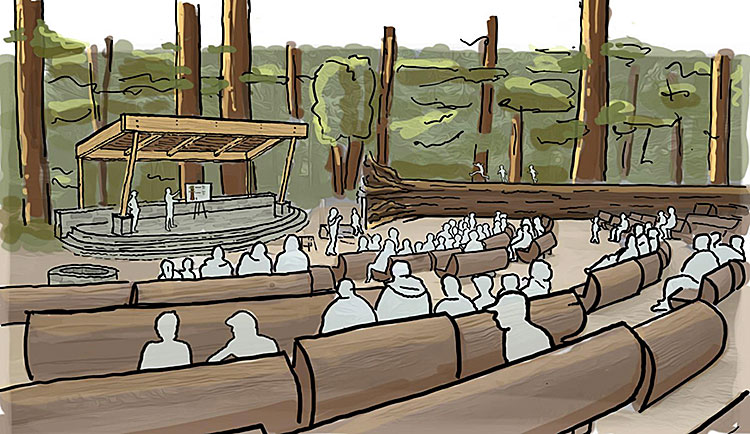
The proposed plans include rebuilding a small amphitheater for park programs and events at the site of the former campfire center.
Although full reconstruction will take years, public access is gradually expanding. Since reopening in July 2022, the park has welcomed more than 150,000 visitors under a limited day-use reservation system managed by Friends of Santa Cruz State Parks. More than 14 miles of trails and 25 miles of fire roads are currently open. However, there is no potable water available, and parking is limited, especially on weekends.
A pilot shuttle program already improves weekend access, and Santa Cruz Metro buses also connect the park with Scotts Valley. Currently, camping is available only on the coastal side at Rancho del Oso, via an interim walk-in campground. Visitors must reserve day-use parking or campsites in advance via the Friends of Santa Cruz State Parks website.
•••
To view the project summary, webinar details, environmental review documents, and submit public comments, visit ReimaginingBigBasin.org. To make park visit or camping reservations, go to ThatsMyPark.org.
TOP PHOTO: The proposed Saddle Mountain welcome center would provide an entry to the park and shuttle parking to access the park on weekends.