

By Jon Chown
Public access to Rio Del Mar Beach has prevailed. A decision handed down Sept. 25 by the 6th District Court of Appeals gives Santa Cruz County a right-of-way easement through what’s known as the 37-foot walk.
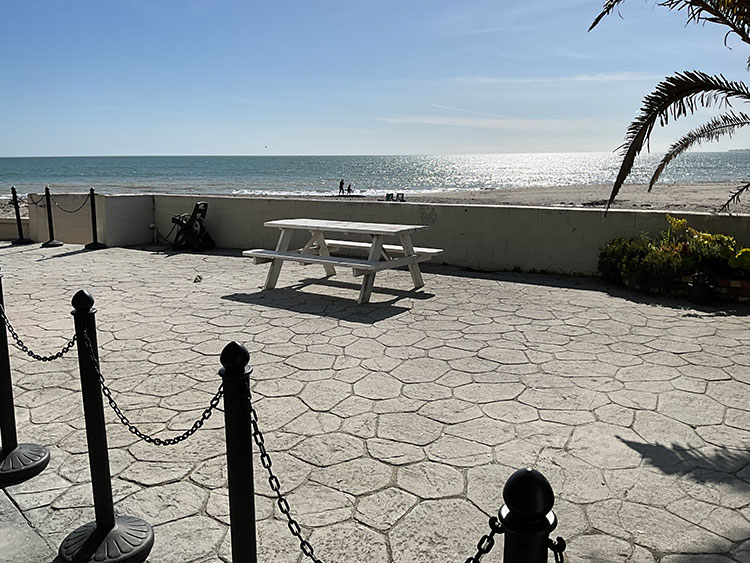
Originally 37 feet wide, the 786-foot long walkway runs along the seaward side of a block of homes from 202-300 Beach Drive. It has narrowed due to erosion and the creation of a seawall.
The county has long maintained that the path is essential for safe access to the beach from the nearby parking lot, but it runs behind the homes and the homeowners use the area as patio space.
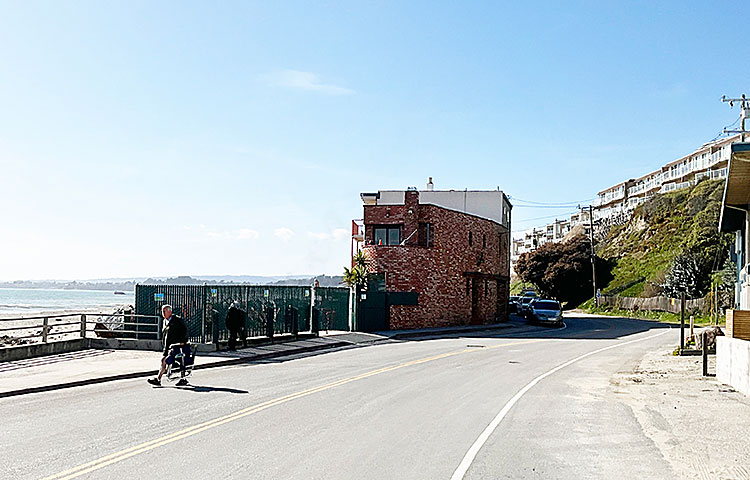 The dispute over who owns the land and whether the public has access has been in court for many years. A Santa Cruz County Superior Court decision in February 2024 ruled that the county had no title or interest in the strip. The judgement also stipulated damages of $3.7 million and granted homeowners permission to build temporary fencing to block public access to the walkway. The 6th District Appeals Court reversed that decision, granting the homeowners title to the land, but subject to the county’s right-of-way easement.
Eric Miller, a spokesperson for plaintiffs’ attorneys Nossaman LLP, said the firm is discussing with the plaintiffs whether to now appeal the decision to the California Supreme Court. County Counsel Jason Heath had no comment. The lead plaintiff, Christopher Weseloh, did not return a call seeking comment.
The decision in the case, Christopher J. Weseloh et al., v. County of Santa Cruz, retells the long history of the dispute, which starts with the 1928 subdivision map recorded by the original developer. It included an offer to dedicate the 37-foot walk to the county for streets and highways. The county never chose to do so.
According to the Sept. 25 decision, the Santa Cruz County Board of Supervisors, in 1929, adopted official plans for the 37-foot walk, but they were not specific beyond “that the numerous improvements planned for certain streets would include constructing concrete walks and steps and an asphaltic macadam sidewalk. The trial evidence did not show that any of improvements planned for the 37-foot walk were ever constructed by the County.”
Access to the walkway has been intermittent over the decades, but homeowners have been using it as their private areas since at least the ’60s and have been paying property taxes on the land for decades. According to court documents, local historian Sandy Lydon “recalled walking on the 37-foot walk in 1970 through the patios and around barbecues and chaise lounges. He did not see any fencing.”
 In 1973 the county attempted to give the land to the state through a deed of conveyance, which stated that as part of a redevelopment plan a 12-foot walkway would be relocated to the seaward side of the 37-foot walk. However, the state declined to accept it because a title report showed the land was encumbered. The county then asked the property owners to quitclaim their interest in the 37-foot walk, but nothing was settled.
The issue came up again in 1980 when the Coastal Commission issued a permit to the HOA for construction of the seawall in front of the homes and replacement of eight feet of patio at the rear of each home. According to court documents, the commission’s comments on the permit state that the sea wall is located on “an existing 37-[foot] wide public easement. …Historically, however, this easement has been partially covered by a 20-[foot] concrete path (used by the residences as private decks), and it would appear that the remainder of the easement was covered by an ice-plant vegetated berm. The County is exploring their interests in the easement. …. Those members of the public who walk down to Seacliff State Beach will still be able to walk onto the beach at the end of the seawall without obstruction.”
But as years passed, barriers were erected and the Coastal Commission took notice around 2015. One homeowner received notice that her furniture and privacy walls obstructed the public’s access to the beach. Furthermore, she had an exterior staircase, which had been permitted by the county, that also encroached. If all this was not removed, she would face fines of up to $11,250 per day. More notices followed and court proceedings followed those. In 2018, the county forced the issue by removing fences and even a brick wall. According to a subsequent lawsuit filed by homeowners, after the county restored access in 2018 the foot traffic through the area grew unsafe. They sued to close access and for the county to pay damages.
The homeowners, all members of the Rio Del Mar Beach Island Homeowners’ Association, first won in court in 2022, but in December of 2023 the California Coastal Commission levied a fine of $5.2 million on the HOA for closing access. The Coastal Commission said state law required the access to remain, despite what the court said. The homeowners sued and the fines were stayed until a decision on the 2022 lawsuit made its way through the appeals process. The homeowners are now left with legal bills, possible fines from the Coastal Commission, and face the loss of any money invested in improving what is technically their land, but can’t be fully used by them.
“We recognize the significant impact of our decision on the Homeowners, who have invested substantial resources into the 37-foot walk. We express no opinion as to any further proceedings in this matter that may occur to alleviate that impact,” the decision from the 6th Appellate Court reads.
TOP PHOTO: Beach access is blocked at Beach Drive “Island” in Rio Del Mar in April 2024.