
By Jon Chown
The key environmental study that government agencies will use to determine any long-term response to the January 2025 fire at the Vistra energy plant in Moss Landing has found no significant impact from the chemical blaze that burned tens of thousands of lithium ion batteries and spread ashes for miles.
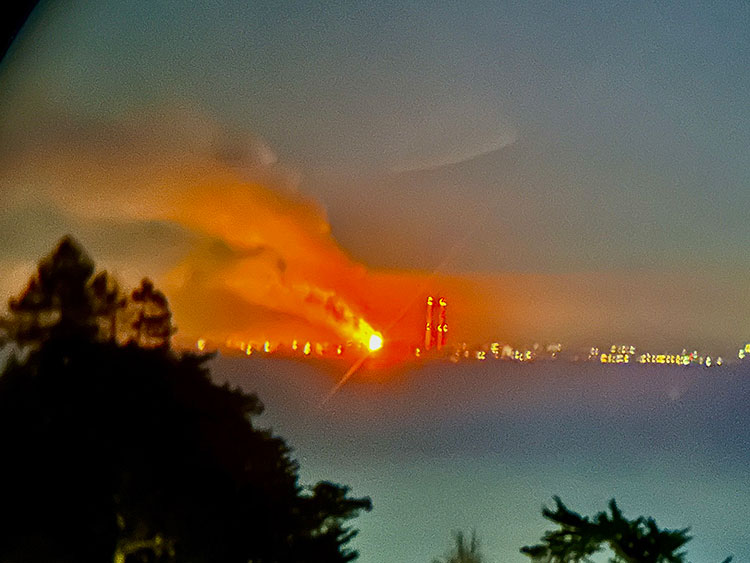
 On Jan. 16, 2025 a fire destroyed about 75% of the Moss Landing Battery Energy Storage System plant. The fire burned for two days and then reignited weeks later. Cleanup at the plant began not long after the fire was extinguished and will continue through this year.
Two phases of testing were scheduled to study the environmental effects of the fire. Phase I found little significant pollution. The Phase II results, which were presented Jan. 6 to the Monterey County Board of Supervisors, echoed Phase I.
The study was conducted by Vistra’s consultant Terraphase Engineering Inc. The study concluded that any concentrations of metals or pollutants detected were not caused by the fire and were not high enough to affect humans or wildlife, with higher levels attributed to “marsh geochemistry.”
“The observed concentrations of metals, PAHs (polycyclic aromatic hydrocarbons), and dioxins/furans do not indicate impacts related to potential aerial deposition from the fire,” the study concluded.
The completed study, along with comments from federal, state and local agencies, will be a key factor in decisions about further testing or potential cleanup. It will also play a role in any litigation involving Vistra.
Monterey County supervisors only offered one comment when the results were presented on Jan. 6.
“The county is not really engaged in the cleanup. This is the EPA. They’re federal. They’re the ones that have primary authority,” said District 2 Supervisor Glenn Church, who represents Moss Landing.
Just four residents commented and all were upset. “All of us are being poisoned,” said Lorna Moffet. “The careless disregard of this government towards its people is just astronomical and tragic.”
Two Studies, Two Results
Vistra’s results and conclusions differ greatly from the study completed by researchers at San José State University’s Moss Landing Marine Labs. That study was published in peer-reviewed journal Scientific Reports, published by Springer Nature. Dr. Ivan Aiello, who led the research, said, “our data show evidence of battery fire metals up to four kilometers away from the storage facility.”
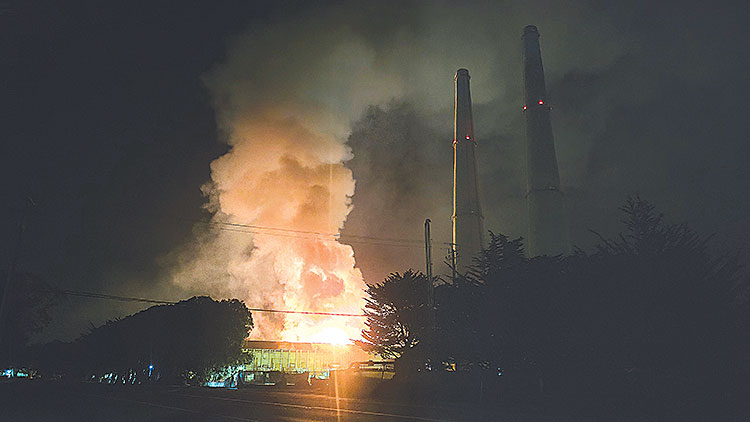
Moss Landing BESS plant fire • Photo Credit: Alekz Londos
He and his team discovered that surface concentrations of nickel, manganese, and cobalt increased dramatically — in some areas 10 to 1,000 times above pre-fire levels — with pollution clustered in distinct hotspots. The researchers estimated that roughly 55,000 pounds of heavy-metal-laden particles fell across the slough. According to Aiello, the full extent of the pollution would have gone unrecognized without baseline environmental data, rapid testing, and new data collection methods, including the use of a portable fluorescent X-ray machine.
“There are lots of details and lessons to be learned from our study, including the nature of the metal deposit — a very thin dust layer that is hard to detect with conventional sampling — and the fact that much of the signal decreased in the Elkhorn Slough wetlands after the rain and we would have missed it if not for the rapid sampling we did after the fire,” he said.
He may have been proven correct. Conventional sampling methods used by Vistra’s researchers did not detect the “very thin dust layer” of heavy metals identified by Dr. Aiello’s group, which was located 2 to 5 millimeters (0.08 to 0.2 inches) below the surface. Vistra’s Phase 2 sampling dug 76 millimeters (about 3 inches) into the soil, likely diluting any metal concentrations that might have been present.
Government Agencies Mostly Mute
State regulators failed to note the discrepancy between the two studies, and gave the Phase II results a positive review. The Human and Ecological Risk Office, after reviewing the study, also concluded that concentrations of metals found within and outside the fire’s plume zone “may not be related to the facility fires that occurred in January 2025,” and that “based on the sediment and surface water sampling results … the levels of chemicals of potential concern are not expected to cause human health risks from chronic exposure.”
The County of Monterey Health Department did not request any revisions to the study either, but did ask for a “written technical rationale explaining why specific recommendations or analyses were not undertaken.”
The Central Coast Regional Water Quality Control Board was the only agency to firmly question the results and request revisions. In comments, Senior Engineering Geologist Greg Bishop wrote that the board disagreed with the conclusion that no further sampling was needed and noted differences in the methods used by Dr. Aiello and his researchers.
Bishop also wrote that pore water analyses, where water is collected from the soil, were not conducted as scheduled.
Because the results from the two testing methods differed so greatly, Bishop wrote that the Phase II results were suspect.
“It’s unclear how effective the use of the Phase II samples are for a human health risk assessment. The Central Coast Water Board believes the data presented in the Nature Report provide compelling evidence that additional sampling is necessary to characterize the impact of the fire within the study area, and possibly further, to fully assess human health, ecologic, and water quality risks.”
The Phase II results, along with Phase I soil sampling data and agency input, will be evaluated together in a forthcoming Preliminary Environmental Assessment report. The PEA report will determine if any further action regarding testing or cleanup is needed.
TOP PHOTO: The Moss Landing BESS plant fire is captured from across the Monterey Bay.