
By Jon Chown
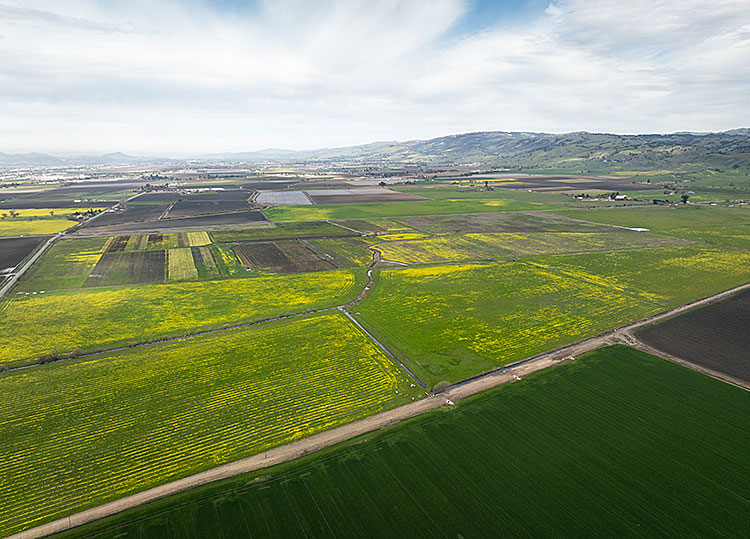
The Peninsula Open Space Trust has acquired 668 acres along the Santa Clara and San Benito county line, a series of connected farmlands and ranches that conservationists say could become a model for how sustainable agriculture and environmental restoration can coexist.
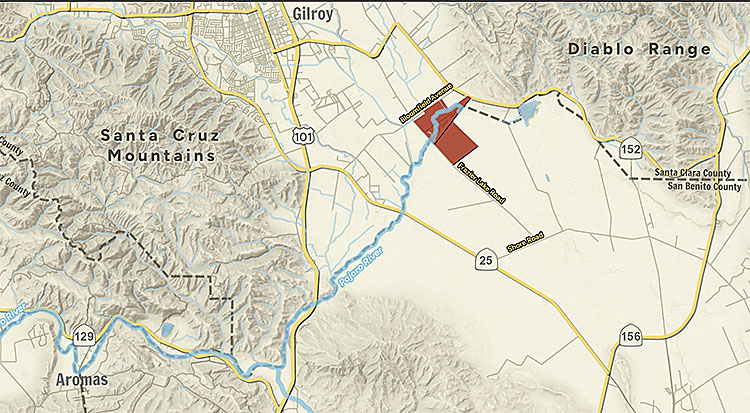 The nonprofit completed the $7.8 million purchase through three separate transactions involving Bloomfield South Farm, Gonzales Ranch and Ojeda Ranch — all situated in the Upper Pajaro River Valley within the Soap Lake floodplain.
“This area is one of the most important ecological linkages in the region,” said Gordon Clark, president of POST. “Working with local partners to restore this landscape over time will support a mosaic of agricultural and natural lands that benefits biodiversity, climate resilience and sustainable working lands.”
The acquisitions are the result of a multi-agency effort involving The Nature Conservancy, the Santa Clara Valley Open Space Authority, the San Benito Agricultural Land Trust and others. A grant from the state’s Wildlife Conservation Board will help fund restoration and land-use planning for the three sites.
A Watershed of Regional Importance
The Pajaro River watershed supports an agricultural economy that produces nearly $1 billion in crops each year and supplies water for thousands of residents. But decades of development and river diversions have altered the area’s natural hydrology. Seasonal flooding, worsened by climate change, continues to challenge both agriculture and nearby communities.
The river begins near Soap Lake in the Santa Clara Valley and winds west to Monterey Bay. Historically, its surrounding floodplain absorbed heavy rainfall, reducing flood risk downstream. That function has been diminished over time by canals, levees and land conversion for crops and grazing.
The floodplain also holds deep cultural significance. The surrounding region forms part of the ancestral lands of the Amah Mutsun people, who stewarded the area for generations before European settlement.
In 2023, severe storms inundated portions of the watershed, causing an estimated $790 million in damages to agriculture, housing and local businesses. POST officials say restoring the river’s natural features — while maintaining productive farmland — could help mitigate such impacts in the future.
An Important Connection
The three properties have been purchased over time, with the Gonzalez Ranch just recently bought on Oct. 2 to complete the connection.
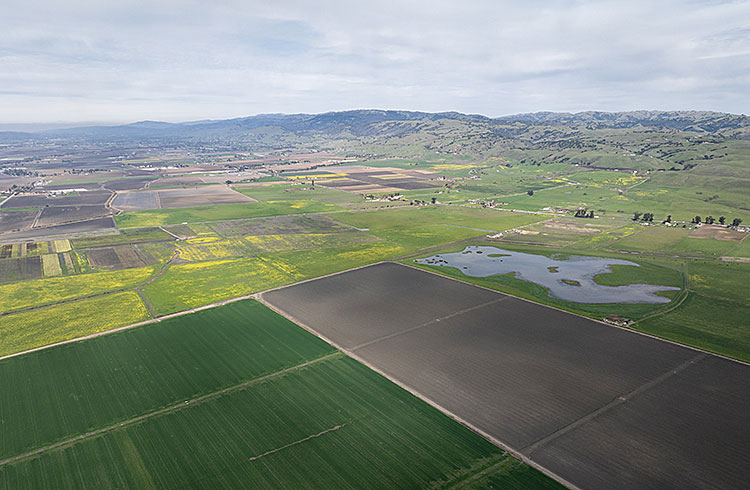 Bloomfield South Farm, a 185-acre parcel entirely within Santa Clara County, was acquired by POST in late 2024 for $2.4 million. The property, protected since 2003 under a conservation easement held by the Open Space Authority, remains in active row crop production. More than half a mile of the historic Pajaro River channel crosses the site, creating opportunities for riparian restoration.
Immediately south of that property lies Gonzales Ranch, a 165-acre parcel spanning both counties. POST partnered with The Nature Conservancy to purchase the property on Oct. 2 for $667,000. The land includes a 130-foot-wide vegetated buffer planted with native riparian species as part of a previous restoration led by Point Blue Conservation Science’s STRAW program. It is now leased for seasonal regenerative livestock grazing.
The southernmost of the three, Ojeda Ranch, covers 318 acres within San Benito County. POST purchased it from the Fehlman family in April for $4.77 million. Though the ranch lacks direct river frontage, it lies within the Soap Lake floodplain and frequently experiences seasonal flooding. The land is currently used for hay and vegetable production.
“Our family owned and cared for this land for over 30 years, and there’s no question that seasonal flooding is a real challenge and only getting worse,” said former owner Kathy Fehlman in a press release issued by POST. “We are pleased that POST will continue what our family started and that they will explore the current water and land use challenges so that sustainable agriculture can continue to thrive here.”
A Vision for Restoration and Resilience
Conservation leaders say the combined properties offer an opportunity to link restored riparian zones with working farms, strengthening wildlife corridors. POST plans to work with local land trusts, tribal representatives, conservation scientists and existing leaseholders to decide on future uses for the properties, according to a press release from POST.
Officials said community collaboration will be a key part of the process, with consultation from the Amah Mutsun Land Trust and other regional organizations.
“Our goal is to demonstrate how land can be managed in a way that supports both nature and the people who depend on it,” Clark said. “It’s about building resilience — for ecosystems, for farms and for communities.”
•••
Founded in 1977, POST is a Palo Alto-based nonprofit land trust that has protected more than 93,000 acres across the Peninsula and South Bay. The organization partners with private landowners, public agencies and other conservation groups to safeguard open space, farmland and wildlife habitat for future generations.