
Santa Cruz County crews are preparing roads, drainage systems and flood-control infrastructure for winter weather, with seasonal monitoring and expanded after-hours response generally beginning in October.
The annual preparations include inspecting culverts and levees, clearing drainage channels, testing pump stations, training road crews and preparing more than 40,000 sandbags for community distribution and emergency flood fighting.
 Major capital projects and extraordinary repairs are not included in the county’s annual winter preparation work.
County road, drainage and emergency response operations generally go on winter watch in mid-October. Staff monitor weather forecasts, watershed conditions and locations with histories of flooding, erosion, debris flows and road damage.
Before the rainy season, the county inspects, services and positions road, drainage and flood-response equipment so crews can respond quickly. The county also maintains supplies for flood fighting, traffic control, debris removal and emergency repairs.
Flood-fighting containers and portable barriers are positioned in vulnerable areas. Sand and empty bags are delivered to local fire departments, and more than 40,000 sandbags are prepared or replenished.
Community distribution locations are listed on the County Public Works website.
Sanding equipment also is prepared for possible snow and ice in mountain areas.
More than 70 road and drainage crew members receive annual training in flood fighting, swift-water awareness and rescue, confined-space procedures, fall protection and the safe operation of emergency equipment.
Roadside preparation includes inspecting culverts, ditches, overside drains and other stormwater facilities. Crews remove sediment, vegetation, trash and other material that could block drainage and hydro-flush culverts where debris or sediment has restricted water flow.
Additional attention is given to known flooding locations and low-lying roads. Crews and equipment are prepared to respond to localized flooding, fallen trees, slides, washouts and damaged road surfaces.
The county also visually inspects drainage channels and stream beds before the rainy season. Logjams, fallen trees, excess vegetation and other blockages are removed where the work is authorized and necessary to maintain water flow.
More than 160 bridges and large culvert crossings are inspected, with drainage and wood debris removed when it could contribute to flooding. Targeted dredging or sediment removal may be conducted where material has significantly reduced channel capacity and the required permits are in place.
In the Pajaro Valley, the county coordinates with the Pajaro Regional Flood Management Agency, the city of Watsonville and other agencies on the Pajaro River levee system and nearby channels. The agencies identify priority work, review emergency plans and coordinate responsibilities for maintenance and flood response.
The work continues throughout the rainy season, with crews inspecting facilities before, during and after major storms. They clear new blockages, monitor trouble spots, deploy barriers, pumps and sandbags, and assess damage.
Levees countywide are inspected for erosion, settlement, animal burrows and other problems. When possible, erosion is repaired and affected areas are compacted before winter. Levee surfaces and access routes are maintained for inspections and emergency response.
The county also inspects flood-control pipes and culverts, repairs damaged facilities and removes material that could restrict water flow. Pump stations serving flood-prone areas are tested, while pumps, generators and electrical equipment are serviced. Backup power systems are checked before winter.
Residents are encouraged to keep drainage areas around their properties clear, prepare emergency supplies, monitor official alerts and avoid flooded roads and waterways.
The county advises motorists never to drive through moving water or around road closures and barricades.
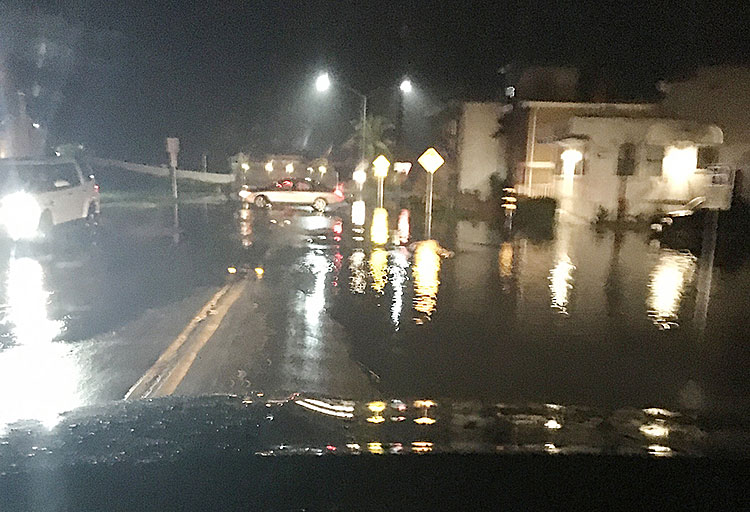
TOP PHOTO: Heavy rains in 2020 flooded county roads. • Photo Credit: Steve Allen