

As summer temperatures rise and vegetation begins to dry across Santa Cruz County, fire officials are urging residents to prepare now rather than wait for the next red flag warning or evacuation order.
 For many local residents, memories of the 2020 CZU Lightning Complex Fire remain vivid. The fire burned more than 86,000 acres across Santa Cruz and San Mateo counties, destroyed more than 1,400 structures and forced widespread evacuations. While winter rains have helped maintain green hillsides this year, fire experts caution that California’s wildfire threat never truly disappears.
The California Department of Forestry and Fire Protection, commonly known as CAL FIRE, says the most effective protection begins long before smoke appears on the horizon.
The agency recommends a combination of defensible space, home hardening and family evacuation planning to improve the odds that homes survive a wildfire.
Defensible Space Remains the First Line of Defense
One of the most important wildfire prevention measures is creating defensible space around homes and other structures.
California law requires property owners in many fire-prone areas to maintain up to 100 feet of defensible space around structures. The goal is to create a buffer between buildings and surrounding vegetation, slowing the spread of fire and providing firefighters with a safer area to work.
CAL FIRE divides defensible space into zones, with the first five feet around a home considered the most critical. This area, known as Zone 0, should be kept as ember-resistant as possible because flying embers are responsible for igniting many homes during wildfires. Dry leaves, pine needles, wood piles, bark mulch and other combustible materials should be removed from this area.
Officials also recommend mowing grasses, removing dead vegetation and trimming tree branches. Grass should generally be kept at four inches or less during fire season, and combustible materials should be moved away from structures.
For rural property owners in areas such as Bonny Doon, Boulder Creek, Ben Lomond, Felton, Corralitos and the Santa Cruz Mountains, maintaining defensible space can be especially important because homes are often located near dense forests and wildland areas.
Hardening Homes Against Embers
Wildfire preparation does not stop at landscaping.
CAL FIRE officials emphasize that embers can travel long distances ahead of a wildfire and ignite vulnerable parts of a structure even when flames are not nearby. Home hardening focuses on reducing those vulnerabilities.
Among the agency’s recommendations:
- Clean roofs and gutters regularly to prevent the buildup of dry leaves and debris.
- Install noncombustible gutter covers.
- Upgrade attic and crawl-space vents with ember-resistant designs.
- Seal gaps where embers could enter a structure.
- Consider replacing older windows with dual-pane tempered glass windows.
- Remove combustible items stored beneath decks and porches.
- Replace aging or damaged deck materials with ignition-resistant products when possible.
The roof is often considered the most vulnerable part of a home during a wildfire. California building standards now require Class A fire-rated roofing materials for new construction and many roof replacements.
Recent wildfire research has reinforced the value of these measures. A study led by researchers at the University of California, Berkeley found that combining defensible space with home-hardening improvements can more than double the likelihood that homes survive major wildfires.
Have an Evacuation Plan Before You Need One
Emergency planners say one of the biggest mistakes residents make is waiting until a fire is visible before preparing to leave.
CAL FIRE and local emergency officials encourage families to create evacuation plans well in advance. Residents should identify multiple evacuation routes, prepare emergency supply kits and establish communication plans with family members.
Important items to include in a go-bag include medications, important documents, cell phone chargers, flashlights, clothing, pet supplies and enough food and water for several days.
The City of Santa Cruz also advises residents to monitor reliable local information sources whenever a wildfire threatens the area and to leave early if they feel unsafe rather than waiting for mandatory evacuation orders.
This advice can be especially important in mountain communities where narrow roads and limited evacuation routes can become congested during emergencies.
Outdoor Activities Carry Risks
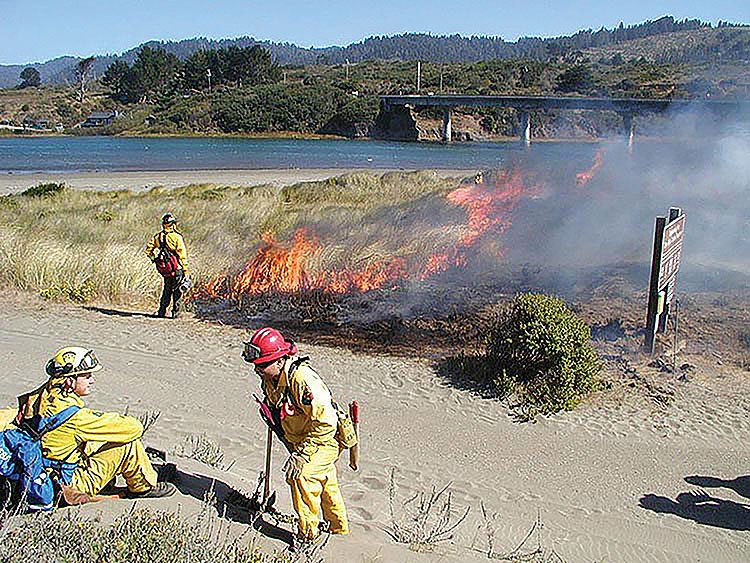
CAL FIRE performs regular controlled burns to try and prevent uncontrolled fires.
Summer recreation can also contribute to wildfire danger.
CAL FIRE’s fire safety outreach programs remind residents and visitors to use campfires responsibly, follow local restrictions and fully extinguish fires before leaving recreation areas.
Even a small spark from a campfire, vehicle or piece of equipment can ignite dry vegetation under the right conditions.
Residents are also encouraged to pay attention to restrictions on outdoor burning and fireworks. Illegal fireworks are prohibited throughout Santa Cruz County and can quickly ignite vegetation during hot, dry weather.
Community Preparedness Matters
Wildfire experts increasingly emphasize that protecting homes is not solely an individual effort. Neighborhood-wide preparation often produces the best results because fires can spread from one property to another.
Research shows that community-level mitigation efforts, including defensible space and home-hardening projects across entire neighborhoods, can significantly improve survival rates during major fires.
For Santa Cruz County residents, that means talking with neighbors and addressing hazards before fire season reaches its peak.
The lesson from recent California wildfires is clear: preparation works. While no action can guarantee a home will survive a major wildfire, experts agree that creating defensible space, hardening structures and preparing for evacuation can dramatically reduce risk.