
By Jon Chown
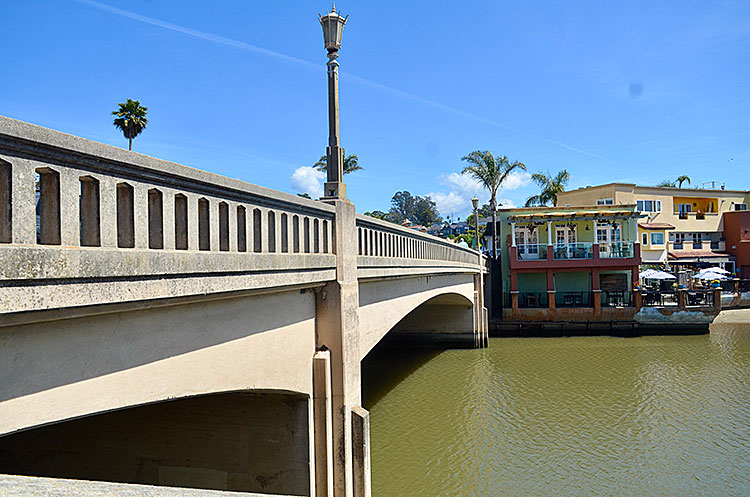
Engineers have found widespread corrosion in the rebar of the Stockton Avenue Bridge, giving it 5-10 more years of service. As a result, the Capitola City Council recently directed city staff to return for a proposed contract to evaluate options for the future of the bridge.
The motion, approved by the council on April 9 on a 4-1 vote, calls for a contract that will deliver preliminary plans and analysis for multiple bridge replacement options, including variations in design and width.
The analysis is also expected to include cost estimates, potential grant opportunities, construction timelines, environmental constraints and permitting requirements.
 The problems with the historic bridge, built in 1933, were discovered by engineers who were performing a scour study, looking at erosion issues at the base of the bridge. Tom Swayze, structural engineer with Biggs Cardoza, told the council members that the bridge was scour critical, that the velocity and volume of the water coming through the creek was eroding the sand around the individual piers, creating an instability problem.
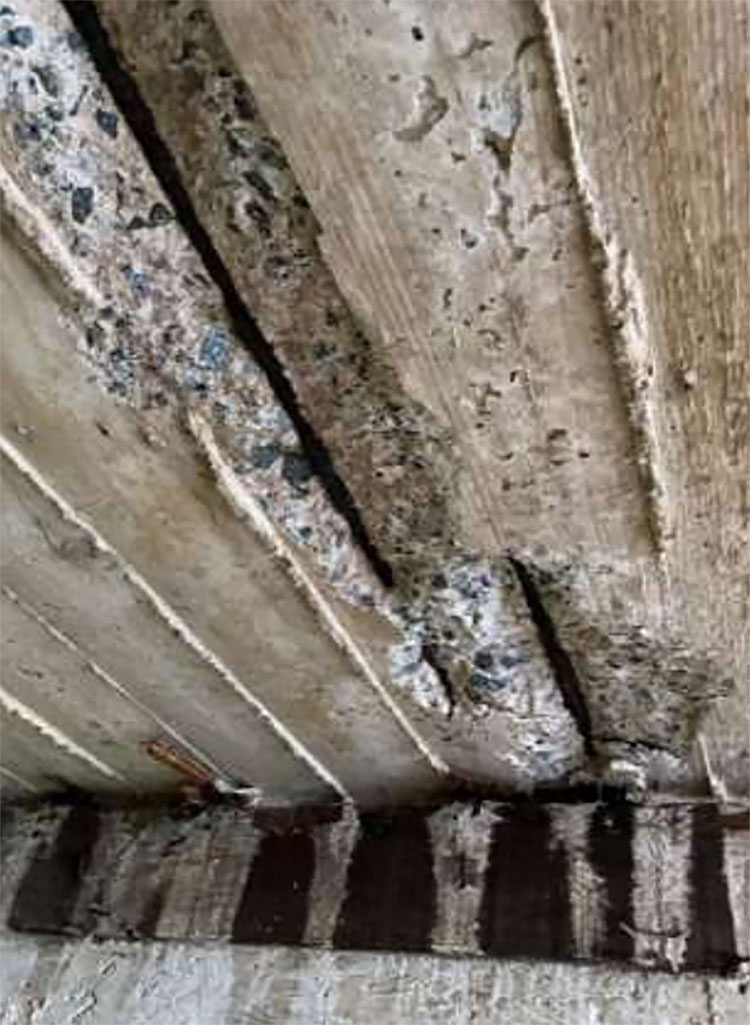
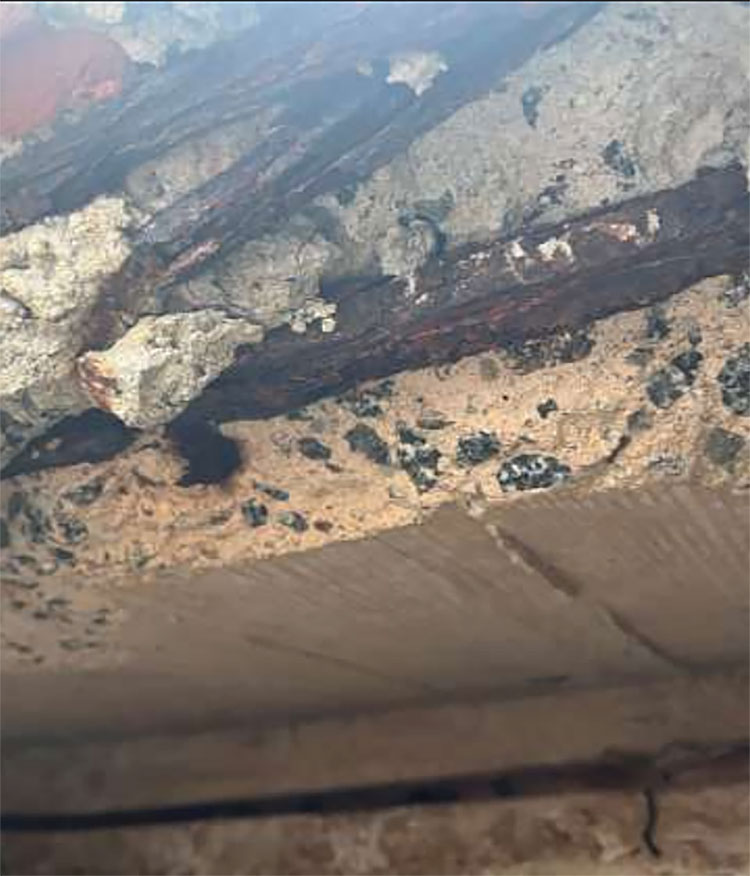
To know how to correct that, the engineers needed to know how much structural integrity the bridge had. The answer: Not much. They looked inside the underside of the bridge slab and found corroded rebar running all through the concrete. “Once the rebar starts to corrode, it expands and pops the concrete off,” Swayze said.
Fortunately, he said, the girder reinforcement is in good shape, so the bridge doesn’t merit immediate closure. He estimated it had 5-10 years left, though an earthquake could shorten that timeline, as seismically, it wasn’t sound at all.
Repairing the rebar, Swayze said, is not very effective. “Caltrans already rates the bridge deck as Poor because of surface cracking, but once they see the amount of exposed reinforcement and the corrosion that’s going on inside, they’re going to lower the superstructure rating to Poor, which would be an impetus for them funding a replacement,” he said.
Swayze suggested Caltrans, with funding supplied from the federal government, might pay for as much as 90% of the overall costs of replacing the bridge, which Biggs Cardoza engineers estimated would be “significantly more” than the $15-$18 million they estimated it would cost just a few years ago. Caltrans would determine which route it would take, replace or repair, based on its own cost-benefit analysis.
 Because rehabilitation would be so complex, and cost a lot, while failing to resolve the broader issues of the bridge’s age and design, it’s unlikely Caltrans would take that route unless the bridge were deemed so historically significant that it couldn’t be replaced, advised Swayze. Repairs would also not address the seismic deficiencies of the bridge, which Swayze said were significant.
“We normally expect a piece of infrastructure like this to last about 75 years,” he said. “And this bridge is 93 years old.”
In addition to structural concerns, the bridge carries multiple utilities — including sewer, water and electrical lines — some of which show signs of corrosion, cracking and aging.
The contract resolution passed by the City Council will require an evaluation of both replacing the bridge and repairing it. The motion also directs staff to look for grant funding and to provide a long-term plan for project development and implementation, including a traffic flow strategy as appropriate. Staff will also be required to present a plan to evaluate the Capitola Trestle for potential use as a temporary pedestrian and bicycle route during construction to help reduce impacts to Capitola Village.
“How do we no create, you know, Murry Street Bridge 2.0 is a good way of looking at it,” said Council Member Jerry Jensen. “What steps can be taken?”
City staff said they were looking at the feasibility of one-way traffic, along with pedestrian access, throughout the project. Swayze said that since there wasn’t really a viable detour, it would definitely have to be done that way.
Swayze advised the council to not delay long, as the process for replacing the bridge would take 2-3 years.
“I think this is a priority for our city. We need to get this moving to a point where if something happens, we have the plans and funding to replace it,” said Council Member Melinda Orbach.