
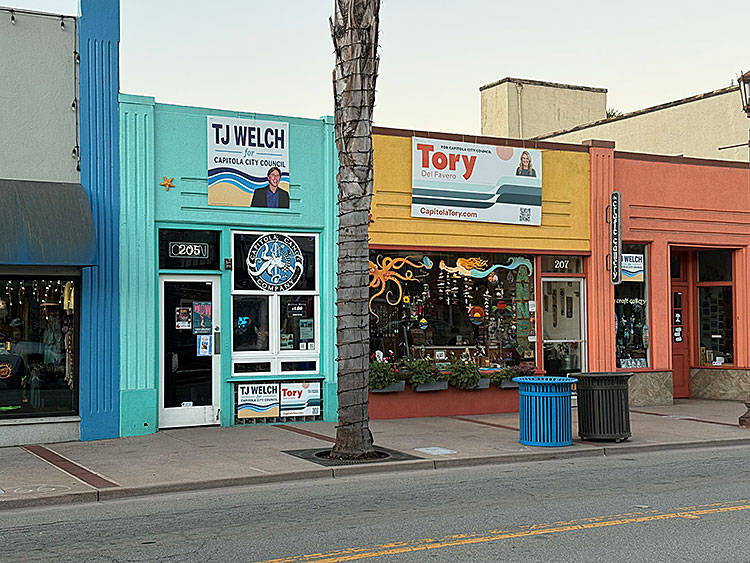
There are five candidates running for three seats on the Capitola City Council: Joe Clarke, the lone incumbent, with challengers Cami Corvin, Tory Del Favero, Peter Wilk and Troy Welch Jr.
Unfortunately, our efforts to reach Mr. Welch, who had no contact information listed with the elections department, failed.
We asked three questions.
Peter Wilk
Retired Engineering Manager
What would a Capitola Mall redevelopment proposal need to earn your support, and what compromises involving building height, housing density, retail space or traffic would you reject?
I helped develop our Housing Element that specifies the limits of development in Capitola. The state is therefore allowing us to maintain control of our growth. Additional requirements such as a hotel or architectural style will drive away developers and we will lose control.
Affordable housing and family-oriented housing, as well as retail, bus and housing mix, are in line with both state and local needs.
Capitola needs to become more resilient against growing storms; Stockton Ave. Bridge will need to be replaced soon, and it faces the erosion of the bluffs beneath Cliff Drive as well as Depot Hill Bluff. Which project should be the city’s highest priority, and how should these be funded?
Cliff Drive is the highest priority since it is in the most immediate danger.
Rerouting the drive instead of armoring the cliff would be the preferred solution. Work with the RTC and get Caltrans funding.
What specific steps would you take to keep Capitola financially stable while maintaining police, public works, recreation and other essential services?
We need to develop and communicate a process to get to a balanced budget rather than propose solutions at this point.
That process needs to include community outreach in order to establish priorities for funding, challenges to staff to propose department efficiencies, best- and worst-case scenarios, and a range of funding options.
Tory Del Favero
Human Resources Manager
What would a Capitola Mall redevelopment proposal need to earn your support, and what compromises involving building height, housing density, retail space or traffic would you reject?
The 43-acre Capitola Mall site is one of the most important properties in the City of Capitola, not only because of its size and location, but because of its potential to provide both housing and future revenue.
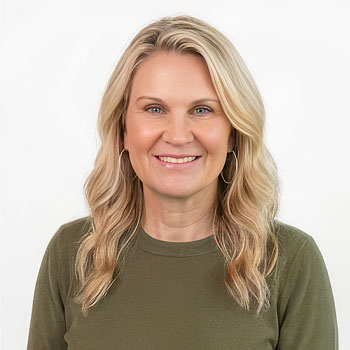
Tory Del Favero
The City adopted a very detailed set of standards for the mall site on March 26, 2026, which included a three-tiered system. This was part of the requirement we needed to meet from the State for our housing element. Each tier established setbacks, design standards including building articulation, height, housing density, affordability requirements, and parking standards. Tier 2 and Tier 3 include requirements for hotel and commercial development.
Any project that conforms to the adopted development standards for any tier should result in City approval. Much of the work on the future of the mall and the standards that were set was done before a new council will be sworn in from this upcoming election in November. If a developer wants to change from those standards, there would be an opportunity to negotiate further additions or concessions with a future council.
Partnering with and listening to community members to see where we can add value and mitigate challenges in the areas at and around the mall, and for the City as a whole, will be critical.
Capitola needs to become more resilient against growing storms; Stockton Ave. Bridge will need to be replaced soon, and it faces the erosion of the bluffs beneath Cliff Drive as well as Depot Hill Bluff. Which project should be the city’s highest priority, and how should these be funded?
The highest priority project for Capitola is the Stockton Avenue Bridge. This bridge is the only way for vehicle traffic to cross Soquel Creek within Capitola city limits. The freeway bridge is controlled by Caltrans and is part of the state highway system.
The City must work with Caltrans, which will be a major funding partner for Stockton Bridge repairs, refurbishments, and replacements, to ensure we have this vital option to get across the city. The City must also be prepared to look for grant funding and have some of its budget go toward the bridge.
Bluff erosion will be a challenge for Capitola and all of California. Changes on Cliff Drive could affect traffic patterns in Capitola. We will need to work with agencies such as the RTC and the Coastal Commission to try to mitigate what Mother Nature brings our way and plan for what’s next. Depot Hill is a lovely and historic part of Capitola. The City should guide and support homeowners where it can.
Creating a comprehensive umbrella project that ties together all of our shoreline would be beneficial to know our options with sea level rise and bluff erosion.
What specific steps would you take to keep Capitola financially stable while maintaining police, public works, recreation and other essential services?
City staff are the engine that makes Capitola move, providing essential community services and public safety. Budget realities require that the City of Capitola constantly evaluate how it is providing services and look for efficiencies.
We must not kick the can on future obligations and need to be honest about our fiscal health. The cost of providing city services also increases with inflation, just like our citizens’ bills do too. It’s more expensive to feed our families, and it is more expensive to run a city. The hard truth is we are out of runway on constantly raising city sales taxes on residents to cover gaps.
We are going to have to look at improving efficiencies and increasing revenue through economic development that increases sales tax and Transient Occupancy Tax.
Cami Corvin
Paralegal Business Owner
What would a Capitola Mall redevelopment proposal need to earn your support, and what compromises involving building height, housing density, retail space or traffic would you reject?
I support housing, but not at any cost. California requires Capitola to plan for additional housing, and the Mall will be a major part of that planning. However, meeting our housing obligations does not mean accepting a project without adequate infrastructure, sound fiscal planning, and consideration of Capitola’s character.
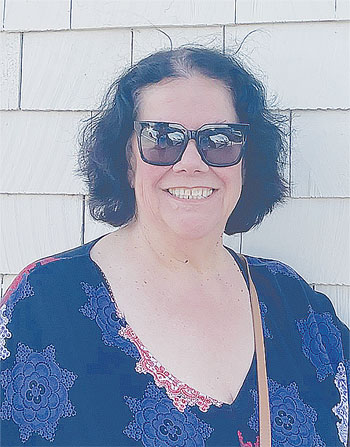
Cami Corvin
To earn my support, a proposal must be a genuinely balanced mixed-use development. It must address traffic, parking, pedestrian safety, emergency access, water and sewer capacity, public safety, and the cumulative effect on 41st Avenue and surrounding neighborhoods. These issues must be evaluated before approval, not postponed until after the housing is built.
Adding approximately 1,200 housing units will significantly increase Capitola’s population and the ongoing cost of police, public works, recreation, and other City services. The City needs a complete fiscal analysis showing how those costs will be covered without shifting the burden to existing residents.
That means retaining enough productive commercial space to protect Capitola’s sales-tax base. I also support seriously evaluating a hotel as part of the project because hotel stays generate transient occupancy tax that can help support City services. The development must contribute appropriately toward the infrastructure and service demands it creates.
I am open to density, but building height must be handled through a varied, layered design — not a uniform wall of tall buildings. Taller portions should be placed carefully, with buildings stepping down toward surrounding streets and neighborhoods. Varied rooflines, architectural breaks, landscaping, public spaces, and pedestrian connections can help a large project feel less imposing.
The architecture should also reflect Capitola’s coastal history and character. A redevelopment of this size should not look like it could be anywhere. Keeping Capitola Capitola means accommodating needed housing without erasing the qualities that make our community recognizable.
I would reject height or density added simply to maximize the number of units without providing meaningful public benefits. I would also reject a major reduction in revenue-producing commercial space or a plan that assumes already-congested intersections and streets will somehow absorb the additional traffic. We need to plan for the entire project and its long-term effects now, not later.
Capitola needs to become more resilient against growing storms; Stockton Ave. Bridge will need to be replaced soon, and it faces the erosion of the bluffs beneath Cliff Drive as well as Depot Hill Bluff. Which project should be the city’s highest priority, and how should these be funded?
Cliff Drive should be the City’s highest immediate resilience priority because continued erosion threatens a public roadway, utilities, neighborhood access, and an important evacuation route. The first objective must be stabilizing the bluff and protecting essential infrastructure. Any additional features should be evaluated against safety, cost, neighborhood impacts, and voter requirements, but they should not delay the work necessary to protect the roadway.
I would not assume that the Stockton Avenue Bridge must automatically be replaced. On September 10, the Council voted to move forward with a Caltrans-recommended polyester concrete overlay. This is a short-term preservation measure intended to protect the bridge deck and potentially extend the bridge’s useful life by approximately 10 to 15 years while the City evaluates its long-term options.
Engineering and design work still must be completed before the overlay can be constructed. At the same time, rehabilitation, seismic retrofit, deck replacement, and full bridge replacement remain under consideration. No final long-term alternative has been selected.
Before committing to full replacement, I want an apples-to-apples comparison of rehabilitation or retrofit versus replacement. That comparison should include cost, additional years of service, seismic and scour protection, construction time, traffic disruption, future maintenance, and the consequences for emergency access and Village businesses. If engineering eventually shows that replacement is the only safe and financially responsible option, we can make that decision based on evidence. It should not be treated as the answer before the alternatives have been completely analyzed.
Depot Hill Bluff also requires continued monitoring, engineering, and long-term planning. Priorities should be based on immediate risk to life, public access, infrastructure, and whether delay will substantially increase the eventual cost.
Capitola cannot pay for these projects through its General Fund alone. We should aggressively pursue federal highway emergency-relief funds, FEMA and state resilience grants, Caltrans bridge programs, coastal-protection funding, and regional partnerships. Local funds may be needed as matching money, but grants are not free if they create maintenance obligations Capitola cannot afford. Every funding decision must include construction and long-term maintenance costs.
What specific steps would you take to keep Capitola financially stable while maintaining police, public works, recreation and other essential services?
My first step would be to use a realistic multiyear financial plan that identifies expected revenues, operating costs, infrastructure obligations, staffing needs, and reserve requirements. A balanced budget for one year is not enough if today’s decisions create expenses the City cannot support five or ten years from now.
Police, public works, recreation, roads, storm drains, and other essential services must come before discretionary projects. I would examine contracts, consultant expenses, sole-source agreements, and major capital projects to determine what the City is receiving for its money. I would also require clear reporting on project costs, changes in scope, deadlines, and long-term maintenance obligations.
Selecting Capitola’s next City Manager will be one of the next Council’s most important decisions. I would support a broad professional recruitment for someone with strong municipal-finance, staff-leadership, infrastructure, and project-management experience. The Council sets policy, priorities, and the budget; the City Manager carries them out. Council should establish measurable goals, conduct meaningful performance evaluations, and hold the manager accountable without micromanaging City employees.
Capitola must also protect and strengthen its revenue base. My approach is “retain first, attract second.” We should listen to existing businesses, make City processes easier to navigate, protect productive commercial space, and attract businesses that fit Capitola. A carefully planned hotel could provide significant transient occupancy tax revenue, but any proposal must be evaluated as part of the City’s overall economic and land-use strategy.
New development must be evaluated for both the revenue it generates and the services and infrastructure it requires. Existing residents should not be expected to subsidize growth. I would also protect prudent reserves and avoid committing recurring revenue to expenses the City cannot sustain during an economic downturn.
Fiscal responsibility does not mean automatically saying no. Sometimes investing in maintenance, staffing, or infrastructure today prevents a much larger expense later. It means setting priorities, planning ahead, and making sure taxpayer dollars are producing real value for Capitola residents.
Joe Clarke
Incumbent
What would a Capitola Mall redevelopment proposal need to earn your support, and what compromises involving building height, housing density, retail space or traffic would you reject?
The City has been working on the future of the Capitola Mall for many years, dating back well before COVID-19. As a city leader, it has been frustrating at times to have our ability to shape development constrained by state housing mandates.
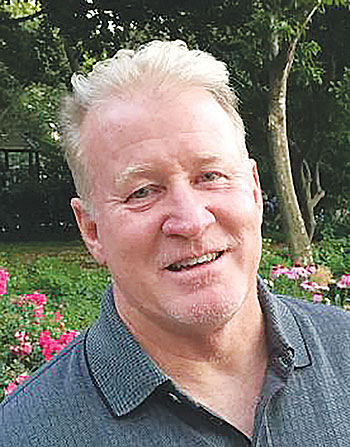
Joe Clarke
That said, I believe the mall owners recognize that the City has gone out of its way to make Capitola an attractive place for a strong, responsible development. The City has listened and responded to the owners’ requests regarding building heights, housing density, and reducing the amount of retail space.
I will continue to advocate for a responsible project that addresses traffic, infrastructure, and environmental concerns.
We absolutely need more affordable housing, but I believe we can achieve that while also being responsible stewards of our community. As a City Council member, it is important that we listen to residents and take their concerns and priorities seriously.
Capitola needs to become more resilient against growing storms; Stockton Ave. Bridge will need to be replaced soon, and it faces the erosion of the bluffs beneath Cliff Drive as well as Depot Hill Bluff. Which project should be the city’s highest priority, and how should these be funded?
Our Governor has already issued a state of emergency related to El Niño. I was here when Capitola experienced significant El Niño storms in 1982 and 1997, and the storms expected this year have the potential to be even more severe.
As city leaders, we need to look at best practices and take additional steps to protect our community. That means keeping the Soquel Creek waterways clear of debris and ensuring Public Works personnel are on standby during major storms. We also need to closely monitor the Stockton Bridge and areas where water runoff has historically created problems, including Cliff Drive and Depot Hill.
I believe we need to take a comprehensive approach to storm preparedness rather than focusing on just one issue. With the Governor having declared a state of emergency, we should also look to the State for financial assistance and other resources to help Capitola prepare and respond.
What specific steps would you take to keep Capitola financially stable while maintaining police, public works, recreation and other essential services?
The 41st Avenue area generates roughly three-quarters of the City’s annual budget, which brings me back to the importance of finding a path forward for the Capitola Mall.
The City needs to continue working collaboratively to develop a project that makes sense for the mall owners while also serving the residents and long-term interests of Capitola.
Public safety also needs to remain a priority. Capitola police officers are among the lowest-paid in the area, and I want to work toward bringing their salaries more in line with those of neighboring agencies so that we can recruit and retain quality officers.
Capitola has a deep history and a unique way of life that residents value. We need to protect what makes our community special while ensuring that essential services, including Public Works, remain fully staffed and prepared to respond to storms and other emergencies.
Ultimately, the City’s top priority should be making sure our revenue streams keep pace with the ever-increasing costs of operating a city. We need to be thoughtful about development, responsible with taxpayer dollars, and proactive in protecting the services and quality of life that Capitola residents depend on.